The NYCDOE’s Reopening Playbook for Principals
This is the playbook Carranza gave principals.
Think getting your opponent’s playbook might give you some insight, help you defeat them?
I’d like to believe that – but I don’t see much here. Please though, take a look, and share what you find. I’ll take a look too, and get back to you.
Without further comment at this time: playbook-for-principals-2020-2021-school-reopening
How many NYC parents chose “blended learning”?
This is easy.
There are 1.1 million students in New York City.
The mayor and Chancellor want blended learning (hybrid) to take place in September. The Mayor has been boasting about it. The Chancellor has been boasting about. The Mayor and Chancellor have been pushing hard. There is not a strong, centrally organized resistance*.
.Which means the Mayor and the Chancellor have been able to rig things.
June Survey Results
| How comfortable are you going to in-person school every day this fall, if there are health and safety measures like social distancing? | Citywide Average |
| Very comfortable | 25% |
| Mostly comfortable | 31% |
| A little comfortable | 27% |
| Not at all comfortable | 17% |
Does the chart look unfamiliar? Yes – I have easy access to 6 – 12 data. The k – 12 data I believe is even more wary.
You probably know, the Mayor and Chancellor dishonestly added the first three categories to claim a very high rate wanted to go back. They included “A little comfortable” – how is that honest?
We could also add the bottom three, and claim that the vast majority have questions.
Or we could do what most math-y people do, and make Very comfortable = 3, Mostly comfortable = 2, A little comfortable = 1, and Not at all comfortable = 0, and take the average. The citywide 6 – 12 average was 1.64. My school’s average was 1.79.
Why do I write “was”? Because these surveys were filled out in June. People are more nervous today.
Every Family Selected Hybrid!
Well, that’s obviously false. Some want remote. But the Mayor and the Chancellor rigged the results. By making hybrid the “default” they could claim a high number of parents are choosing hybrid.
Why didn’t they report 100%? Because they knew you wouldn’t believe them.
Has anyone selected hybrid?
Yes. 109,000 families have selected hybrid. That is about 10% of the total.
We could add to them the other million parents – that’s kind of what de Blasio and Carranza did – claiming that the default was a choice. But that’s not honest.
When do parents select remote?
Any time they want. So far 212,000 have chosen remote. That’s almost 20%.
What about the 70% of parents who have not yet spoken?
We do not know what they will do. The Mayor and Chancellor have dishonestly claimed they are choosing hybrid. They have not made a choice. We can’t say that they are choosing remote either.
Here’s part of an email I received the other day:
And FYI, from a parent’s perspective (albeit elementary school child), we chose hybrid for now, because at any time we can switch to remote, but only at specified times can you move from remote to hybrid. We’ll be … making our decision most likely in early September.
How did they get just 30% return on a survey?
It was not a survey. There was not a deadline.
The DoE kept changing what they said it was. Safer that way to make any claim they wanted to after the fact.
This was an opt-in to blended learning.
Opt-in to remote learning can happen at any time.

So how will we know what the actual number of families opting for remote is?
Keep looking for updates. The number will rise every week. The biggest jump will happen at the start of September, right before school.
That is, if the Mayor and Chancellor’s really dumb plan to try to open is still in play. With some luck and hard work we have switched to full-remote well before then.
(* The UFT president also wants blended learning to take place in September – at least that is what he said in a message to members, and has not retracted or contradicted that. However the UFT president has been expressing doubts based on safety. This needs to be the subject of a longer post.)
Six thousand school doors
That might be the number of public school doors in New York City. There are over 1800 schools, but some are in leased buildings, and some are “campuses” which in New York means one building shared by several schools. In the rest of the country a campus is one school spread into several buildings. The New York City Department of Education claims 1557 buildings. That’s from a survey from last year, the number is probably pretty close to reality.
My first school had eight doors. Or was it six? My current is a leased building, but has two doors. I’m guessing four might be near the average, which is how I get 6000. If you told me I was wrong, that it was actually 5000, or 9000, I would not be shocked. But we get the idea. The NYCDOE has in the neighborhood of 6000 doors to the streets.
It’s a good thing that we do not need a separate hybrid plan for every door. That would be a lot of plans. But we do need a separate hybrid plan for each school. And at nearly 2000, that’s still a lot of plans.
You know what every plan needs? Every plan needs to include doors. Let’s talk about that for a moment. Let’s talk about morning entry.
Friday July 31 New York City had an outline, not a plan, as one of Cuomo’s aides accurately pointed out. Then Friday they submitted a new plan. Last Friday they turned in 32 pages. Small towns were turning in over 50. Yonkers was over 100. This Friday the NYCDoE turned in 109 pages.
Are there any English teachers reading this? Let me know if you’ve heard this story before. This one is 109 pages – but 33 are a list of every school in New York City, and another 18 are title pages and index – sound familiar? – large font, generous margins, most sections end with 5 lines eating up a full page?
But there is enough content this time that just maybe it will be considered a Citywide plan. OK, so what does it say about doors? Hmm. Check that. What does it say about “entry”? The word shows up five times:
- Every school will be required to ensure that all individuals stay at least six feet apart at all times, including at building entry…
- Students and staff will need to thoroughly clean their hands as soon as possible upon entry to the school building.
- Afterschool program staff who work at a location or school other than where they are supervising afterschool activities/coaching are required to follow daily entry protocols upon arrival to the afterschool site.
- The BRT will be responsible for managing and supporting the school’s response to any incidents related to the COVID-19 pandemic. This includes collaborating with the principal to plan
and execute morning entry plans. - When BRT is activated to address COVID-19 related incidents (“COVID-19 activation”), team members will assume the following additional responsibilities: BRT Leader: serves as the point of contact for all team members during entry, dismissal,… Special Needs Coordinator: For the purpose of COVID-19 activation, manages the school staff assigned to conduct temperature screening at each point of entry.
Point of entry! Those are doors. They mention doors! Not 6000 times, but they mention them. And what is the plan for the doors? “Every school will be required to ensure…” “Students and staff will need to thoroughly clean their hands…” But how do we maintain 6 foot separation? How do we line kids up to use the bathroom to wash hands before going to class?
The DoE still has an outline! They have guidelines! It’s not a plan.
This matters. A solid entry plan does not guarantee that a school can operate just fine (I doubt many will be able to), but lack of a solid entry plan guarantees that social distancing will be massively violated before a single student has planted their behind in a socially distanced classroom chair.
What needs to be in an entry plan?
Time; Number
An entry plan must include time that each entry begins, and how many students are entering. For example, a 6 – 8 school of 1350 students, might be operating in three cohorts, of 450 each. Bringing in 450 all at once would likely cause the crowd to smoosh together. Perhaps the school brings in 150 7th graders at 8, 150 8th graders at 8:30, 150 6th graders at 9:00. That’s the beginning of a plan. Has your school begun a discussion that looks like that? No? Probably very few have.
Doors
Will your school be using one entry door? More doors would allow quicker entry, but see “Post-Entry” below for complications. Also, multiple doors require more staff.
Gathering Location
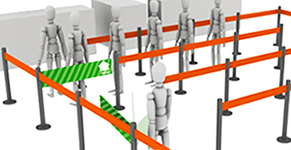
An entry plan must include where the children are prior to entry. What if your school always had kids come hang out in the playground or school yard? Issue, right? Ever try to keep middle schoolers from touching each other? Who will keep them socially distanced in a school yard? Or perhaps they should be lined up from the moment they arrive? (I was getting to that). A six foot distanced line for 150 students is about 900 feet (almost 0.2 mile). That’s approximately one full avenue block in Manhattan, or 3 1/2 short street blocks. Is there adequate sidewalk space? Are there issues with driveways? Perhaps the street could be shut off from 7:30 – 10:00 for entry, and a zigzag Disneyland-style (but with much more space) line could be constructed. Maybe there is a nearby parking lot? The least of the problems are putting down marks and cones.
Line mechanics
A sidewalk line with markings doesn’t have to be reset each day. Blocking off driveways does. Blocking off a street and putting up cones or stanchions and ropes does. That’s not the hard part, but it’s part. Much more challenging, as students arrive, moving them to the right spot, and getting them to stay there. Assume our 900 foot line has been folded so that it is 150 feet, zigzagging about 25 feet in the street (making a rectangle). There is work to do monitoring the line (from outside the line), maintaining spacing, moving students forward. These are serious assignments. If a person assigned is a teacher, this is not prep time.
Entry duration
I have no idea how long it takes to bring 150 students into a building while maintaining social distancing. I am here assuming that 30 minutes is more than enough time – but do I know that? No. And see “Post-entry” below, which could slow things down. If 30 minutes are insufficient, the “stagger” might need to be greater. I can’t imagine that less than 15 minutes is possible.
Post-Entry
As a student enters the building, the DoE requires they wash hands. Where are your bathrooms? How will the student reach the bathroom? How long will hand washing take? Will you create a line outside each bathroom? How long can the line be before you cause crowding / lose control? Remember, social distancing must be maintained in the hallways and lines and bathrooms, not just the classroom. The answers to some of these questions may lead you to slow entry, to keep the numbers under control. Also, if you are using multiple entries, how will you coordinate to prevent pile-up in the hallway?
Wrong Day Richard
Students will arrive on the wrong day. It will happen by mistake. It will happen intentionally. The student might miss school. The parent might seek to drop off the child because there is no one to watch her. How will the school verify that the correct students have arrived? What will happen to the student who arrives on the wrong day? And here, I’m sorry, the answer can’t just be “call the parent to come pick him up” – where will the child stay in the meantime? One option in regular times that is not an option today: no mass preps in the auditorium without violating social distancing.
Takeaway?
Maybe a school could use my list, or a better one, and answer these questions and be completely ready. Maybe they could write it up and put it in the NYCDoE’s actual plan that eventually gets submitted to New York State (because their 109 pages, actually 58, large margins, lots of half pages, big font, – it’s still an outline/guideline, not a plan). But coming up with the entry plan for each school is not enough. There are logistics issues, and few schools have even started. There is a real space problem with Wrong Day Richard. And there are staffing issues, and staffing is already a problem. Even with a good entry plan, this hybrid approach is wrong. And we do not have 1800 good entry plans for 6000 doors.
– – — — —– ——– ————- ——– —– — — – –
Oh! There’s the first day! What were you going to do the first day? We can talk about that another time.
6 in 10 with Kids at Home are not Confident that Schools Can Safely Reopen
I get commercial pieces in my in-box. I usually don’t reprint them (maybe I never have?) but this one is from a fairly reliable source – Consumer Reports – and it is highly relevant.
Pay close attention to the section on the “racial divide” – the New York Times would have you believe that getting Black and Brown children back into school is a civil rights issue – the Times, that great self-appointed voice for justice. Actually, Black and Hispanic families with children are most OPPOSED to sending kids in today.
Majority of Americans “Very Concerned” About Spread of Virus in Their Communities
YONKERS, NY — The dawn of the new school year finds Americans sharply divided on how K-12 schools should best reopen, according to a new nationally representative survey from Consumer Reports, the nonprofit consumer research, testing, and advocacy organization. A majority of Americans with school-aged children in their homes (62 percent) say they are “not too confident” (30 percent) or “not confident at all” (32 percent) that schools can prevent the spread of COVID-19 among students, teachers, and staff if they reopen for in-person classes.
The CR American Experiences Survey was fielded between July 9 and 20, following the surge in cases being reported across the nation. It included questions on the pandemic’s impact on consumers’ attitudes, behaviors, and finances. In broad terms, respondents are growing increasingly concerned about the potential threat posed by COVID-19 to their communities, and many reported taking some sort of action in response to the growing number of cases, and deaths, across the U.S.
Among all Americans, about a third (35 percent) of Americans think schools in their local area should remain closed with students taking all classes online, another third (33 percent) think they should open partially with students splitting time between in-person and online classes, about two in ten (19 percent) think they should reopen fully for in-person instruction, and the remaining 13 percent are unsure. When comparing the 35 percent of respondents who have preschool or K-12 aged children living in their household to those without, there are no significant differences in opinion on school reopenings.
“Like many other issues involving COVID-19, we see deep divides among Americans on the question of if and how schools should reopen, reflected in the difficulty school administrators are facing finding consensus among local parents on the best path forward,” said Consumer Reports’ Chief Research Officer Kristen Purcell. “And this does not just affect families with school-aged children, it’s a community health issue. Americans without school-aged children at home are also divided on how schools should reopen.”
Racial Divide on School Reopenings
White Americans are more likely than Blacks and Hispanics to prefer full school reopenings with in-person classes (24 percent white versus 7 percent Black and 10 percent Hispanic), whereas Black and Hispanic Americans are more likely than whites to prefer that schools remain closed with students taking all classes online (57 percent Black and 52 percent Hispanic versus 25 percent white). Among whites, the most commonly chosen option for school reopening, selected by 37 percent, is a partial or hybrid model blending some in-person learning with classes taken online.
Rising Level of Concern Over COVID-19
Most Americans continue to be concerned about the spread of COVID-19 in their communities, and the percentage of those who are “very concerned” has spiked. A majority of Americans (82 percent) remain concerned about the continued spread of the disease in their local area, including 53 percent who are “very concerned.”
While the portion of Americans “very concerned” was unchanged from the survey findings for the May to June timeframe, the July survey results show a dramatic increase—up 12 percentage points from 41 percent in June. July’s survey results continue to show levels of concern varying significantly across different racial/ethnic groups, with Black (73 percent) and Hispanic (64 percent) adults more likely than white adults (47 percent) to say they are “very concerned” COVID will continue to spread in their communities.
The rising level of concern might explain why more Americans say they personally are following recommended safety measures most or all of the time compared with last month. For example, 72 percent now say they “always” wear a mask at indoor public spaces (up 18 percentage points, from 54 percent in June). The change was largely driven by people in the Western states, the Midwest, and the South (up 31 percentage points, 20 percentage points, and 16 percentage points, respectively), which have reported an uptick in cases. Black and Hispanic adults are more likely than whites to report wearing a mask most of the time or always when in an indoor public space (93 percent and 93 percent versus 81 percent, respectively).
Financial and Emotional Impacts of Pandemic
Early in the pandemic, lost wages hit Hispanics particularly hard, as shown in our April results. While more Hispanic Americans still say they’ve lost wages during the pandemic compared to whites, July’s survey results indicate that racial and ethnic gaps on this financial impact measure have narrowed to some degree (lost wages were reported by 26 percent among whites, 27 percent among Blacks, and 34 percent among Hispanics). However, both Black and Hispanic adults are more likely than white adults to report cutting expenses to pay their mortgage, rent or other expenses (26 percent and 28 percent versus 16 percent, respectively). Black adults are more likely than whites to report falling behind on their rent or mortgage (14 percent versus 6 percent), with Hispanics landing in between (9 percent). Similarly, while the percentage of adults reporting experiencing anxiety or depression held steady in July at 38 percent, reports of depression and anxiety continue to be especially high among women (45 percent) and the lowest-income Americans (43 percent).
About Consumer Reports American Experiences Survey
Consumer Reports’ American Experiences Survey (AES) is conducted monthly to track consumer attitudes and behaviors over time. It was fielded by NORC at the University of Chicago to a nationally representative sample of 2,031 US adults. The margin of error for the sample of 2,031 is +/-2.95 percentage points at the 95 percent confidence level. The survey was conducted from July 9 to 20, 2020. Interviews were conducted online and by telephone, in English and in Spanish.
About Consumer Reports
Consumer Reports is a nonprofit advocacy organization that works side by side with consumers to create a fairer, safer, and healthier world. For 80 years, CR has provided evidence-based product testing and ratings, rigorous research, hard-hitting investigative journalism, public education, and steadfast policy action on behalf of consumers’ interests. Unconstrained by advertising or other commercial influences, CR has exposed landmark public health and safety issues and strives to be a catalyst for pro-consumer changes in the marketplace. From championing responsible auto safety standards, to winning food and water protections, to enhancing healthcare quality, to fighting back against predatory lenders in the financial markets, Consumer Reports has always been on the front lines, raising the voices of consumers.
AUGUST 2020
© 2020 Consumer Reports. The material above is intended for legitimate news entities only; it may not be used for advertising or promotional purposes. Consumer Reports® is an expert, independent, nonprofit organization whose mission is to work side by side with consumers to create a fairer, safer, and healthier world. We accept no advertising and pay for all the products we test. We are not beholden to any commercial interest. Our income is derived from the sale of Consumer Reports® magazine, ConsumerReports.org® and our other publications and information products, services, fees, and noncommercial contributions and grants. Our ratings and reports are intended solely for the use of our readers. Neither the ratings nor the reports may be used in advertising or for any other commercial purpose without our prior written permission. Consumer Reports will take all steps open to it to prevent unauthorized commercial use of its content and trademarks.

Some District 75 Concerns
A (different) teacher contributed these words. He prefers to remain anonymous)
It is nearly impossible to practice social distancing when most, if not all, of our students require hand over hand prompting with everything from washing their hands, to wiping their bottoms to completing classwork. These children unfortunately won’t wear masks so the classroom is going to be extremely unsafe; yet D75 is telling parents they can come to school 5 days per week. Many of our students are in diapers and paraprofessionals are required to change their diapers in unventilated bathrooms.
Like many community schools, our classrooms are also unventilated but they are much (much!) smaller than any regular DOE classroom.
A very challenging part of our day as D75 educators is when a child is going into crisis; we often get bit, spit on, kicked…you name it! The scary behaviors not are spitting and biting; that is so unsanitary for everyone in the classroom (reminder: they don’t only spit on the teachers who will be provided some sort of PPE).
During fire drills our students need their hands held at all times and they need to be in close proximity to an adult. The same goes for shelter in place drills/lockdowns. Since we will be hybrid we will be having twice the amount (at least) of fire drills and lockdowns since a certain number need to be conducted every single year and the kids of course need to participate so this means we will be in extremely close quarters with our students very often.
“Mr. Mulgrew, please walk this back” – letter from a teacher
Dear Mr. Mulgrew,
Today is my birthday. My 53rd. I woke with the confidence that you are fighting for our safety and for our quality of life as NYC teachers. I believed you when you said in our town hall a few weeks ago that because remote and in-person teachers must be in “lockstep”, we would need extra co-planning time and that you were advocating for four periods of instruction and then to send the kids home, giving teachers the rest of the day for co-planning. If there must be mask-to-mask teaching, that made some sense. But today I woke up to this letter from you and all I can feel is bereft; abandoned; hopeless.
For the four months we were teaching remotely, I spent close to an hour a day contacting families and several hours a day tracking down students who for myriad reasons were not attending my office hours or synchronized classes. Now I have 20 minutes. I will have 30 minutes of “prep” to co-plan with colleagues in the morning. 30 minutes is barely enough to set an agenda, as you may recall. It certainly is not enough to plan in “lockstep”. I will be expected to teach straight through the day, and if I am an art teacher or something similar, I am expected to teach in a classroom full of kids without masks who are focused on their lunches and their friends. If I am not one of the unlucky teachers trying to instruct while kids eat, then I get to walk back into a room where aerosols are hanging in the air, as per the University of Minnesota research. Then I get to bring home all of the droplets I have walked through and breathed through my NOT N-95 MASK, risking everyone in my household, and use my other 30 minutes of prep (plus countless hours) to actually plan, grade, co-plan, and prepare.
Even in New York, adults can’t wear masks consistently. We know kids won’t. But now we’re giving them time without masks. Don’t you see how that will undermine everything else? If they can have masks off while eating while we teach, then there is zero reason for them to wear masks the rest of the time when we teach.
In short, my teaching day is longer, my preps are shorter, and I AM NOT SAFE. No day is safe when there is time spent with people who are not wearing masks. It’s that simple.
Please, this is not acceptable. Not even close. Please walk this back. Save our lives and those of our families and our students’ families.
Sincerely,
An Alternative Approach – Skip the Backroom Deals
The custodians union president advised his members to suck up the unsafe conditions, but they could leave 30 minutes early.
Actually, no. Here’s what the custodians got from their president. Seems like a real president:


h/t Jessica Klonsky
High School Students Implore Cuomo – Move NYC to Remote for September
This letter was signed by a bunch of student government leaders, representing about 15% of NYC high schools, and then by about 1300 more students and parents. They sent it off to Cuomo on Wednesday August 5, because of the August 7 deadline. That’s a shame. While the letter makes good points, the authors managed to make a different one: they excluded the majority of NYC high schools that are majority Black/Brown. I don’t think it was intentional – I’m almost certain that it was not. But this is a reminder that it is not good enough not to be racist, we need to be actively anti-racist.
In any case, here’s the letter. I hope different leadership, inclusive leadership, takes up the mantle. Being inclusive takes work. It is a pretty gross display of privilege to say “we don’t have time to include Black and Brown voices.” And there is time – when NYC failed to submit an actual plan last Friday (it was an outline, not a plan) the deadlines got pushed back.
Dear Governor Cuomo,
Over the past few weeks, Mayor de Blasio, Chancellor Carranza, and the NYC Department of Education have created a blended learning model, under which at least 33% of students are expected to attend each day and no school is permitted to conduct fully remote learning. However, this “one size fits all” model is not suitable for NYC high schools specifically. We believe that each NYC high school should be fully remote during this fall, especially schools with over 2,000 students, regardless of how other schools operate.
First, New York City high school students have longer and riskier school commutes. While most elementary and middle school students in NYC attend schools within their own districts, high school students apply to and end up in schools all over the city. As a result, over 300,000 high school students consistently commute on crowded buses and trains, thus increasing chances of contracting and transmitting the virus to their families, schools, and communities. This is especially dangerous because students between ages 10 and 19 contract and transmit the virus as well as adults do.
Second, blended learning intensifies the inequity in our education system. In this model, schools will be required to spend valuable resources on actions such as power washing and PPE replenishment, instead of ensuring that every student has access to a laptop and the internet— a necessity for students in any scenario. Seeing as current DOE guidelines call for a school to close if it reports just two positive cases, there is no feasible way for NYC’s largest high schools to go even a few weeks without reverting back to a fully remote model with no time to prepare. This will force schools to repeat the problem-ridden asynchronous remote learning experience that occurred in the spring, preventing low-income students from gaining access to whatever online learning experience is rolled out. If schools inevitably close down, we must prioritize a remote learning model from the beginning to give teachers and schools the most amount of time possible to prepare.
Even if schools manage to stay open, having both remote and in-person classes creates a two-tiered system of education. By not prioritizing funding and resources for online learning, the DOE is preventing students who attend school remotely from accessing the same quality of education or even the same teachers as their peers. In their own plan, there is not even a mention of how remote learning will work for these students. This especially impacts immunocompromised and other medically-vulnerable students, who will be forced into this inferior second tier. As a result, the DOE’s proposed model runs afoul of Title II of the ADA. A fully remote model ensures equal education for not only these students, but also District 75 students, IEP students, and students with other learning disabilities, for whom in-person learning is a necessity. The empty high school buildings in a remote model can be used to teach these students, ensuring that they can practice safe social distancing measures while not sacrificing any of their critical in-person instruction, as they would have to do in a blended model.
As you and your Administration are well aware, the COVID-19 crisis is far from over. With the threat of a second wave looming and a vaccine unlikely by the end of 2020, every policy action can determine whether New York continues on a positive trajectory, or we re-experience the horrors of April and May. If we proceed with the blended learning model, we make a massive second wave more likely. If that happens, schools across the state will be forced to quickly put together a remote learning model that lowers the quality of education and wastes the numerous resources already utilized. The virus will spread throughout the city, with us high schoolers as the carriers, and more students, teachers, and parents could suffer and die. Fortunately, over the next month, there is ample time to put together a coherent, cohesive, and comprehensive remote learning model for schools, improving upon the model used in the spring and avoiding the negative consequences of a hasty reopening. The health and educational harms of a second wave far outweigh any of the short-term learning losses that may accompany another few months of remote high school learning. As your constituents and soon-to-be voters, we urge you to supersede the dangerous order put in place by Mayor de Blasio. By doing so, you have the ability to prevent NYC from becoming what would be the definitive epicenter of any second wave in New York State.
Sincerely,
Gov, Mayor, Chanc., Pres. – keep us all alive: shut us down now
Today’s letter to Cuomo
(this is not by me, as you can tell from the opening line. The author is a teacher who raises important questions. She wrote similar letters to de Blasio, Carranza, and Mulgrew)
(The biggest question? Why not remote? Why not start work on it today? – jd)
Dear Governor Cuomo,
I have admired and respected your leadership during this pandemic, despite serious disagreements with many of your education policies, and I was counting on your reliance on science and good sense to prevail over plans for reopening school buildings. I was very disappointed by your message yesterday, which sounded much like an abdication of your responsibility, leaving to parents and schools the task of keeping COVID numbers down and people alive.
I have sent you numerous letters citing flaws and unresolved questions in NYC’s opening plans and begging you to allow teachers to do the best by our students and staff by spending August preparing to teach fully remotely. No plan put forward has begun to reassure teachers or parents that students and staff will be safe, or that hybrid mask-to-mask learning, which is FAR from face-to-face learning, is any better than fully remote instruction.
Schools have been reopening around the country and within days students and staff are sick. The University of Minnesota has demonstrated the lack of efficacy of open windows for ventilation. And ALL plans for safety go out the window when you have students taking off masks to eat together in classrooms or lunchrooms.
Not only is instruction while students are eating lunch ineffective (and no, it is not the same as grab and go breakfast which is also disruptive, because students are accustomed to and will need a reprieve during lunch), but it is inequitable and DANGEROUS to any staff in the room. Spending the day trying to teach fully masked students is risky enough, but spending time in a room with students without masks, who will be yelling across the room at each other to socialize, is simply the epitome of danger and to ask any staff member to be in such unsafe conditions is completely unacceptable.
Please, keep us all alive: shut us down now and let us use the month we have to focus on making fully remote instruction as effective as possible.
Sincerely,
Contact tracing is hard – harder if you don’t know how high school works
The NYC DoE wrote this about contact tracing:
Tracing: In the event of a confirmed COVID-19 case in a school, NYC Test + Trace and NYC Health will investigate to determine close contacts within the school. All students and teachers in the classroom with the confirmed case are assumed close contacts and will be instructed to self-quarantine for 14 days since their last exposure to that case. In older grades where students may travel between classes, this applies to all classes that the confirmed case was in.
In older grades where students may travel between classes, this applies to all classes that the confirmed case was in.
Help me out here. “all classes that the confirmed case was in” – what do they mean? The rooms? Did they mean to say “all students who shared a class with the person with a confirmed case?” + “all teachers who taught that person?”
Why am I convinced that no one working on the NYCDoE plans has ever been to a high school?
Teachers need real prep time, not release time
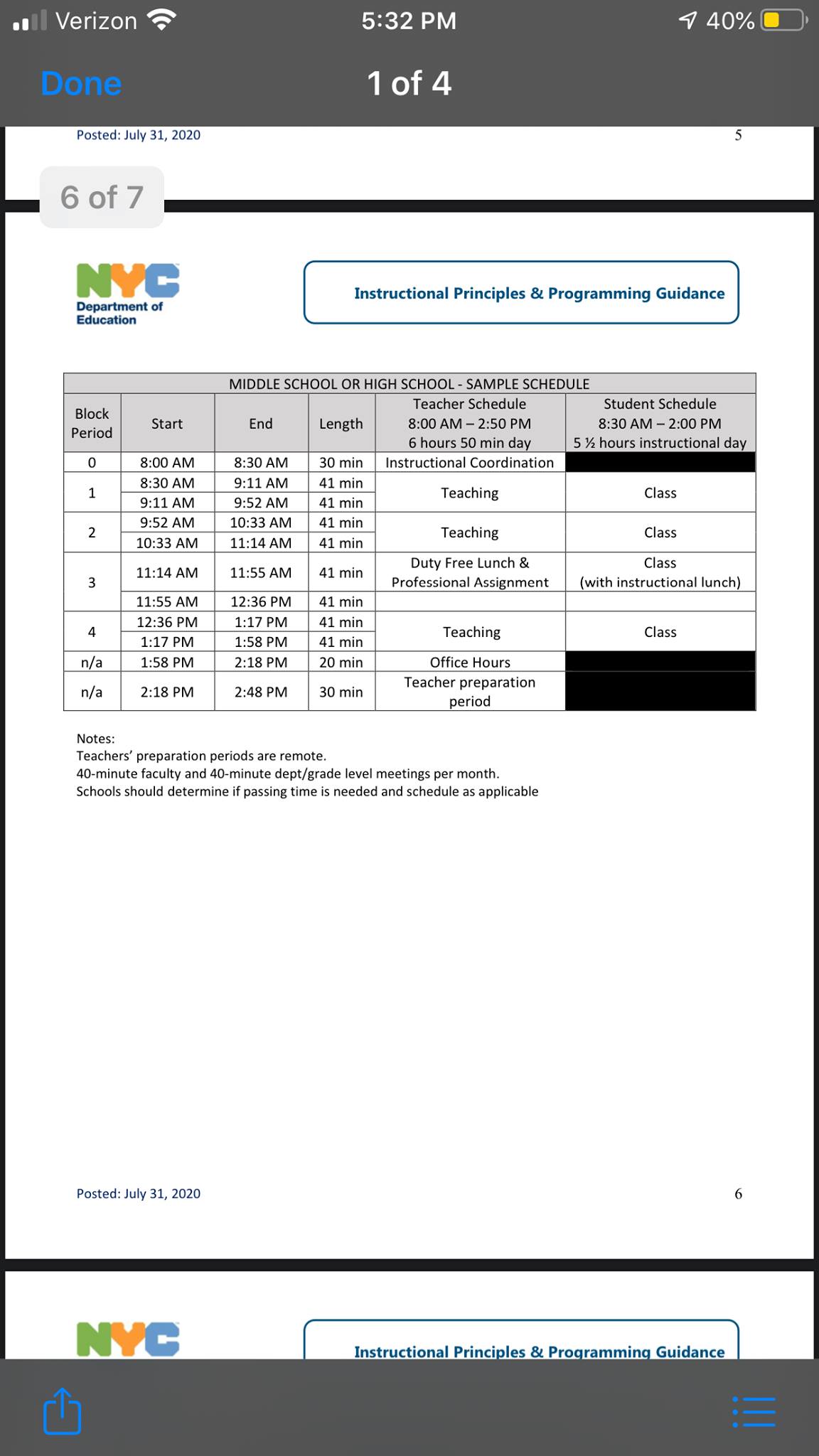
The New York City Department of Education has scheduling guidance. But nothing to get excited about.
A new DoE document is floating around – I’ll get my hands on a copy tomorrow. It is called “Instructional Principals and Programming Guidance.”
People are focusing on the model schedules. Since I only have screen shots, that’s what I will start with.
In the Programmer’s Group, first comment? “I love how non-programmers program” So, no, not good. Not usable for most of us.
Preparation Tiime
The worst part? Teacher prep is 30 minutes per day, moved to the end of the day, with the expectation that teachers can prep at home.
We know we never get enough time for preparation. It would have been nice, you know, pandemic, remote learning, that sort of stuff, if they had actually given us a tiny bit more prep time, since it takes about twice as long to do everything. But ok, we can save that for another day.
So instead of more prep, they are going to generously allow us to prep, for half an hour, at home?
Do these people think we are so dumb that we will overlook the serious safety problems if we can leave half an hour early? What insulting garbage.
Message for your UFT Reps
Mulgrew did good on Friday, telling the DoE and us, no we are not going to return to schools without real safety in place:
“the city’s safety proposals fall far short of anything we would agree to.”
Tell him he needs to do it again. We want plans that work, we want safety to really be dealt with. We are not sure the DoE can pull it off. But we’re sure as hell not going to smile and say ok and forget about safety in the face of this pandemic because they let us leave a few minutes early.
Email your chapter leader, your district rep, your borough rep, your VP, and Mulgrew. Let them know:
We will not trade our safety and the safety of our students for anything. We will not trade safety for time.
And
It is time for the DoE to stop insulting teachers’ intelligence, and get to work preparing for September. They are way behind.
New York City Department of Education has scheduling guidance. But nothing to get excited about.
A new DoE document is floating around – I’ll get my hands on a copy tomorrow. It is called “Instructional Principals and Programming Guidance.”
People are focusing on the model schedules. Since I only have screen shots, that’s what I will start with.
In the Programmer’s Group, first comment? “I love how non-programmers program” So, no, not good. Not usable for most of us.
Preparation Time
The worst part? Teacher prep is 30 minutes per day, moved to the end of the day, with the expectation that teachers can prep at home.
We know we never get enough time for preparation. It would have been nice, you know, pandemic, remote learning, that sort of stuff, if they had actually given us a tiny bit more prep time, since it takes about twice as long to do everything. But ok, we can save that for another day.
So instead of more prep, they are going to generously allow us to prep, for half an hour, at home?
Do these people think we are so dumb that we will overlook the serious safety problems if we can leave half an hour early? What insulting garbage.
Message for your UFT Reps
Mulgrew did good on Friday, telling the DoE and us, no we are not going to return to schools without real safety in place:
“the city’s safety proposals fall far short of anything we would agree to.”
Tell him he needs to do it again. We want plans that work, we want safety to really be dealt with. We are not sure the DoE can pull it off. But we’re sure as hell not going to smile and say ok and forget about safety in the face of this pandemic because they let us leave a few minutes early.
Email your chapter leader, your district rep, your borough rep, your VP, and Mulgrew. Let them know:
We will not trade our safety and the safety of our students for anything. We will not trade safety for time.
And
It is time for the DoE to stop insulting teachers’ intelligence, and get to work preparing for September. They are way behind.


Top 13 NYC’s School Reopening “Plan” Problems
These are my first notes on the New York City Department of Education’s September 2020 School Reopening Plan. It has glaring problems.
I am referring to the 32 page plan that the DoE submitted to NY State Friday evening. I am referring to the Entry/Exit policy, and the Health. And I’m referring to the School Building Reopening preliminary plans, guiding questions, and FAQs from July.
In Mulgrew’s email to members, he identified turnaround-time for tests and contact tracing, lack of randomized testing, and lack of a nurse in each school as big problems. They are indeed big problems. He added:
“Even if there are stronger safety standards in place, we still have grave concerns about the city’s ability to effectively enforce them in every school to protect students and staff.”
Here are some serious problems with what the DoE has proposed.
Where’s the plans?
These are not plans. They are outlines of ideas. Jim Malatras, Empire State College President, said so (he’s right) and compared the 32 pages unfavorably to far more detailed, longer plans for far smaller districts. Almost nothing has been fleshed out.
1800 plans?
There are over 1800 public schools in New York City. That’s over 1800 principals. That’s a lot of bell schedules. A lot of entry procedures. A lot of isolation rooms. A lot of procedures for moving in the buildings.
There need to be 1800 plans. In detail. Take just the morning entry portion. It is not good enough to write “staff will ensure that students wear masks and maintain social distancing during entry” – there has to be a plan for how that will be done. A school of two thousand that brings in 650 students each day. Hmm. Stagger entry (how? how long will each cycle take?) Say three entry times, 8, 8:30, 9. 200 – 250 kids each cycle. Six foot distanced. 400-500 yards. Is there enough sidewalk space? Driveways? Intersections? How many staff members will be needed to supervise each line? Is half an hour per cycle really enough? Hmm. And that’s just entry…
And then we have to believe we have 1800+ principals who will faithfully execute these plans. It is true, I have met some talented, conscientious NYCDOE principals. But I have met others, as well.
If you have any idea how many principals violate good and fair programming guidelines when they are not being watched, you would have some idea why I think this whole idea is such a very, very bad idea for students and staff.
3%
The DoE says that they are using 3% positive citywide as their threshold for reopening. But some of us work or live in neighborhoods that have much higher rates, and are concerned. It should be by zip code or neighborhood
Testing/Closing procedures
As Mulgrew spelled out (and Cuomo as well) the City does not have a plan for contact tracing, and testing turnaround time is too long. Way too long. Teachers are concerned with quarantining procedures, and with closures. The city claims that it can close classrooms, not schools. We are skeptical. The city wants to keep classrooms open when a case is reported, but not yet confirmed.
Look at that for a moment. Say there are ten unconfirmed reports, and nine of them are false. This means that Bill de Blasio has continued hybrid learning for about 100 kids, while getting 10 of them sick, with a chance to infect family members. Not right.
On quarantining, there’s a question that should be easy to resolve, but it hasn’t been yet. A teacher exhibits symptoms. Stays home, gets tested. Tests negative. Comes back. Do those days come out of their sick bank?
On closures, the City failed to follow its own procedures in March. They were willing to put staff and students in harm’s way. The closure procedures in the plan have way too much wiggle room to be executed by those people. Read this:
If two or more confirmed cases present within seven days of each other, NYC Test + Trace Corps and DOHMH begins investigation immediately and makes every attempt to conclude the investigation within 24 hours.
If the final plan says “makes every attempt” I will urge my union to keep 100% of teachers out. That is completely unacceptable. It asks students and staff to trust the good will and competence of a department that has given us reason to question both.
Ventilation
I think the DoE has agreed to upgrade some ventilation systems – but I know of nowhere where the work is going on today. I am in a leased building, and of course we have heard nothing from the DoE. I got a 2-day old message today from MS324 in Washington Heights, terrified about bad ventilation. I hear that the DoE is inspecting interior, windowless rooms, trying to get them “okayed.” I hear that they are recommending open windows in most schools, no matter the weather, which seems nuts – and the letter I published yesterday cites a University of Minnesota source saying this is a bad idea.
The feeling I get is that the DoE cares about approved ventilation, not adequate ventilation. Roll that around – they care about approvals, not whether the air is healthy. And for a counterpoint, try this Atlantic article. We believe airborne transmission is the greatest threat, but the DoE is acting as if getting approval for their ventilation plans is an inconvenience.
Self checks
This is huge. The DoE wants staff and students to check their temperature each day before they come to school. However, on any given day, pre-pandemic, some parents would lower their child’s fever and drop them off at school. I understand the motivation. We all do. How can we ask children and families to temperature screen at home when everybody’s safety is at risk? And don’t forget, teenagers forget…
Nurses
We should have a nurse in every school. The DoE plan says that’s unnecessary. Honestly, we should have a nurse in every school even without Covid. But that has not been a DoE priority, and the pandemic has apparently not changed their minds.
Isolation Rooms
Without nurses in every building, they are assigning teachers? This is not okay. We are not health professionals. I am very worried for colleagues who are afraid to say “no” or even “I am very uncomfortable with this.”
And in the event that a cluster occurs, and this is a “1, 2, many” situation what happens? These isolation rooms, we are planning space for just 2 people in most schools.
And on the planning side, the space for the isolation room… that reduces, properly, available space in the building, and must be taken into account.
Lunch
Lunch in the classroom? Masks off? Indoor dining is not ok in NYC. And we share space with other diners for a limited time. Spending a full day in a classroom with the same group of people, including a maskless lunch, seems like a really good way to guarantee that if a positive gets into the room (asymptomatic or pre-symptomatic) that it will be spread to the entire room.
High Schools
Beginning to end, these plans have been written (poorly, incompletely) for elementary schools, and for middle schools where kids stay with their class all day. The scheduling options – none of them fit high schools. The safety planning – all are written (very badly and incompletely) for elementary school. Our kids change classes, and mix. There goes closing a classroom instead of a school, right out the (open for ventilation) window. Or, maybe we could keep a group of 10 kids bubbled in a single room, and rotate teachers. So in case of a case, you could shut that classroom and send 8 teachers home for two weeks? Schools can’t function with that sort of unpredictable high level of teacher absence.
D75
There’s barely a word about our special education schools – but detailed plans are critical. Some children will require closer contact than in other schools – making the need for proper protective equipment even more critical. And if the need is so high that teachers need to be suited up like emergency room workers…
Transportation
Where the hell are they on busing? What accommodations? What spacing? Why haven’t they said? (Unaddressed)
Faculty and students who commute on public transportation – what steps are being taken to keep them safe during their commutes? (Unaddressed)
And a combined quarantine/transportation question: since the DoE cannot enforce social distancing at a child’s home, each child is potentially in contact with friends and family members who do not attend the same school. While there is still community spread, our transport system and schools provide a large network of contacts to further that spread. There is nothing here for the DoE to address. It’s just a general statement about what a horrid idea this is.
Blended learning
This is perhaps the biggest problem of all. Not because blended learning is intrinsically horrible, but because the DoE’s approach has made it so.
It was not designed for high schools or middle schools where kids change classes. This is not me moaning because I might have to schedule it (I’m not sure I would), this is the reality of scores of high schools moaning that they can’t see how it could be made to work.
The DoE decided to promise that students would receive instruction on days they were not in class, creating an instant teacher shortage (worse than the one we already have, as the DoE systematically overcrowds schools and classrooms).
The DoE decided to maximize the number of students who would fit in a building. This is their habit. High school class size limit is 34 – do they seek an average of 28, allowing the occasional class to go to the limit? No, they plan for schools to put every class at the limit.
The DoE did not create any model programs and safety plans for other schools to copy. Each principal is on their own (or with their planning team, on their own).
But the DoE, ducking responsibility by saying principals know their own schools best, rejected plans from principals who actually know their schools better than the DoE does.
No matter how well-intentioned the initial idea to created blended learning was, it is now clear that the DoE’s “blended plans” are an impediment to reopening. They will create chaos. They will compromise safety. They should be dropped.
The DOE’s plan fails NYC students and teachers – a Teacher’s Letter to Anyone Listening
I was trying to write something like this, when I stumbled across this letter. The author is a teacher in the Bronx – I got permission to repost but forgot to ask for permission to use their name (I’ll update if they give it) – jd
I read the DOE’s 32 page “plan” this morning. It is abysmal and puts NYC students and staff at risk. A few points which really must be addressed:
1. Does Mr. Carranza know that middle school and high school students can’t remain in single cohort classrooms because they don’t all take the same classes? There is no way for cohorts not to mix.
2. Given #1, there is no way for a teacher and cohort to isolate if someone is suspected or confirmed to have COVID—that teacher would be needed to teach multiple other classes to other cohorts who are in the building. There aren’t enough adults to monitor students in class if the teacher is awaiting test results or becomes ill.
3. Given that teachers will be exposed to multiple cohorts, any exposure for that teacher means that multiple cohorts will need to isolate and be tested; it’s impossible to close one classroom.
4. How is the teacher or staff member in the room supposed to remain safe when students take masks off to eat?
5. Has Mr. Carranza ever met students? They WILL put fingers under their masks; they WILL take masks off to sneeze or even just to breathe; they WILL tease each other or bully each other—or staff—by removing masks and breathing, coughing, and even spitting.
6. What happens during scanning into the building? Our building, the Theodore Roosevelt Campus, holds more than 3,000 students. Even if we divide into thirds, one thousand students will be entering each day. Even if we stagger school entry times so that only a few hundred students are entering at a time, it is impossible for those students to maintain 6’ social distancing, with full masks, and go through scanning…and certainly not in a reasonable amount of time.
7. The plan continues to rely on open windows for ventilation, without regard for temperature. That is unreasonable. it is also inadequate, as per a study released yesterday by the University of Minnesota.
8. No information about the toxicity of the chemicals in the electrostatic sprayers has been provided. That could be a very serious health risk.
9. The Janitorial Union has said that the deep cleaning is impossible to complete without much more money and many more staff. If you are unaware of the inadequacy of cleaning on a regular basis, please be advised that what we are being told will happen is humanly impossible for our janitorial staff.
10. The complete focus on safety will completely preclude effective instruction. We still have a month to focus on improving distance learning for our students. We need PD. We need time to plan. It is impossible to teach well when we never know from one day to the next where we’ll be, and it is impossible to continuously pivot between open and closed classrooms and schools as people become ill. The students will suffer both emotionally and academically far more than if we simply commit to teaching remotely and put all energy and training into doing that as well as humanly possible.
There is much more, but this short list is more than enough to reject the DOE’s failing plan to reopen NYC school buildings.
NYCDOE’s Farcical Plans and Proposal to NYS, w/o further commentary
Commentary will come later. Here are the documents:
This is the 32 page submission to New York State for reopening: nyc-doe-state-doh-reopening-plan-7-31
This is the DoE’s “health and safety” policy: health-safety-policy
This is the NYCDoE’s entry/exit, circulation, common areas doc: entry-dismissal-circulation
How can I write about Carranza’s latest mistake when they come so fast?
The DoE has an idea of what schools should do when there’s a COVID case.
I wasn’t going to write about that. I was going to write about blended learning (‘hybrid schemes”) and remote learning. I was going to compare them. I was going to explain that there was almost no advantage to hybrid, and many disadvantages. I was going to beg, please let us move onto planning remote teaching, let us plan, let us figure out how to do better than the spring, let the schedulers make schedules that work… I was going to demand again that Michael Mulgrew walk back these dumb, counterproductive words: “We believe a blended learning model, with students in class on some days and remote on others, balances our safety concerns with the need to bring students back.”
But no, I’m not going there. Not today. Richard Carranza had other ideas.
He was supposed to have a meeting with principals about the calendar. We don’t have a calendar yet for the year. We don’t even know the first day. September 10? 17? 21? 24? 28? October 1? October 5? I should be selling boxes. Could still do it, since he moved his morning meeting to 4 in the afternoon, and then skipped the calendar issue altogether.
Carranza talked about whaat to do if there were a COVID case. He described a quarantine procedure for elementary schools.
He didn’t actually say elementary schools. But he described described small groups of students, with one teacher. He never addressed high schools.
In a high school where kids change classes, if there is a case, the whole school is exposed.
In a high school where they keep the kids in small groups that don’t move, but the teachers change (this is not normal, but the DoE has implied that they might encourage it??? I really don’t know.) if one group were exposed, that would lead to quarantining ten kids and seven or eight teachers. Think of the mini-school with 500 – 600 kids and 30 – 40 teachers – how do they function with a quarter of the teachers quarantined?
But it doesn’t matter. He was not talking about high schools. He made a huge policy announcement, and he forgot about a third of the schools.
All of New York City should be worried. In Carranza’s rush to implement de Blasio’s political-motivated policy, he makes mistake after mistake, passes responsibility to the schools, and prepares to blame the principals.
Eleven Vacuous Truths, and One Lie
The NYC Department of Education falsely claims that Hybrid is easy, but Remote is very tricky.
In reality, they are both tricky. Remote did not go well this past spring. It is imperative that it be improved. But Hybrid if completely untried, and involves complexity beyond what Tweed can handle (which is why the execution is pushed off on principals.)
In the hybrid models they are pushing, one teacher will teach the kids on the days they are in school, and another will teach them when they are home – and these teachers will coordinate. I’m not sure exactly how, or who has the responsibility for overall planning, marking, etc.
In an alternate that is much-discussed, a teacher does both the remote and in-person teaching for a class (probably by not really teaching remotely – just assignments). In that case, four different groups of kids, or three, rotate the in-person class, while nominally continuing their work at home. Let’s say there are three groups, and you and me are in different groups. That means we will each have about 20 in-person classes in the fall – but whatever you learned in person – I didn’t, and whatever I learned in person – you didn’t. Not sure how a teacher can keep a class on one pace this way.
In short, the idea of hybrid teaching is very tricky. And all of that effort – while classes stay two-thirds or three-quarters remote. That’s quite a trade off for very little in-person class. And of course there is more to the trade-off in the form of safety, but this post is not about safety…
Remote, on the other hand, one teacher plans for a full class. Teaches a full class. Grades a full class. It did not go so well in the spring, but the logistics are not complicated.
And with either remote, or “hybrid” – we have to work on improving the remote parts.
Eleven Vacuous Truths, and One Lie
In my last post, I looked at the NYCDOE’s – Academic Policy FAQs for Return to School 2020. Here’s the document: academic-policy-faqs-for-return-to-school-2020
For 11 questions the answers were vacuous. 180 minutes, or something that feels like 180 minutes. Do your best. Make it feel similar to a regular class. And my favorite – we will get back to you. But one question stood out, #3:
Let’s look closely at #3, as they discuss whether a principal can offer a course fully remotely.

Can schools offer fully remote courses?
…
Principals must carefully weigh the decision to provide fully remote courses to ensure that the course can still be delivered with comparable scope and rigor to a traditional course. Considerations for offering fully remote courses must include the following:
- The extent to which the learning experiences required in the course can be readily adapted to a fully remote learning environment,
- The extent to which students have access to materials, technology, and supports needed to be successfully in a fully remote learning environment for an entire course,
- The extent to which the school has prepared students to be successful in a fully remote course, including pre-requisite academic experiences and learning habits, and
- The extent to which each student’s overall academic program incorporates remote learning experience to meet their individual needs.
Did you see what I am referring to? “Principals must carefully weigh the decision to provide fully remote courses to ensure that the course can still be delivered with comparable scope and rigor to a traditional course.” They are comparing a remote course to a traditional course, and saying, if the remote is not comparable, then you have to do hybrid. There is nowhere any attempt to compare a hybrid course to a traditional course, except their refrain of “Schools must ensure that X courses are of comparable scope and rigor to those traditionally offered but are not required to meet the exact instructional time requirements”
The underlying assumption would be hilarious, if we and our students were not being set up to be the victims. They doubt a remote course can match a regular course, but are fully confident that a hybrid course will be fine. That’s one day in person, followed by 1 – 3 days remote, different remote content for each cohort of students. The choreography would challenge a pro – and the people coming up with this at Tweed (remotely) – not pros.
NYCDOE – Academic Policy FAQs (but no real answers)
When the DoE puts out information, I jump on it. Teachers, principals, programmers – we don’t know what the DoE policies will be for September. We want to know their intentions. We need it for planning. Actually, many of us want the DoE to just get it over with and switch us to fully remote. We know they will eventually. But for now we want their interim answers and guidelines.
And so when I found an official NYC Department of Education “Academic Policies for Return to School 2020: Frequently Asked Questions” document in my inbox, I dropped what I was doing and began reading. Carefully. Deeply. Looking, but perplexed. Where were the answers? They asked some wrong questions. But mostly they did not give meaningful answers. Let’s look together.
Proudly publishing questions without answers falls in the same category . They are all equivalent to advertising that someone famous read your book, or watched your movie, without bothering to mention if they said anything about it.
New York City Department of Education – Academic Policy FAQs for Return to School 2020
First, here’s the document: academic-policy-faqs-for-return-to-school-2020
Let’s take a “deep dive” into it. Only, don’t expect to gain much knowledge.
-
- Must schools meet the unit of study requirements for 2020-21?
It takes them two paragraphs to say “yes” and “3 hours per week or equivalent” without defining the equivalent. - How do high schools award course credits in 2020-21?
They take two lines to say “by passing the course” - Can schools offer fully remote courses?
Yes, if the teacher is fully remote, the student is fully remote, or if the principal has determined that remote is best for that course. So “the principal has determined” is a little interesting. But what comes next is mind blowing. They spend a paragraph, 4 bullet points, and one more paragraph implicitly comparing remote courses against fully in-person courses (which of course we are not offering). The dishonesty is palpable. I will say more in a separate post. - Can schools offer fully asynchronous courses?
Nope, there must be some live time. Principal sets how much. - What are the expectations for science labs?
High quality. Principal decides how much hands on and how much virtual. - What are the expectations for meeting physical education requirements?
Compare your course against what you normally offer, and certify that the time and quality are in the same ballpark. - What are the expectations for meeting art requirements?
Compare your course against what you normally offer, and certify that the time and quality are in the same ballpark. - What are the expectations for meeting pEnglish as a New Language requirements?
Compare your ENL and Bilingual courses against what you normally offer, and certify that the time and quality are in the same ballpark. - How will the remote learning programming models be reflected in STARS? We’ll get back to you.
- Which grading policies will apply for the 2020-21 school year?? We’ll get back to you.
- How will schools make promotion decisions in 2020-21? Holistically. We’ll get back to you with actual guidance.
- Will graduation requirements remain the same in 2020-21?? Yes.
- Must schools meet the unit of study requirements for 2020-21?
For September – All Remote? How about Almost All Remote?
Mayor de Blasio is ordering schools back in session for September – and Carranza insists that each school gets to make its own decision – by choosing from among his unworkable models, or jumping through hoops for an exemption.
What should we do? Fight de Blasio’s tone-deaf incompetence? Yes.
And in the meantime? Apply for an exemption? That sounds like the wise course, for the moment. But what sort of exemption?
Four Cohorts? A/B/C/D?
There are a bunch of schools that will ask for 4 cohorts instead of the 2 or 3 the Chancellor pre-approved. In fact, slick move, if the “cohort models” worked (which I don’t think they will for most schools), more schools would need 4 (requiring an exemption), than would need 2… but it would have been bad PR to put out 4 as an option (what, a child goes into the building just 16 times before Christmas? Why are we fighting so hard for so little???). In any case, if you are applying for an exemption, it might as well be for something that would let you run a schedule. A fourth cohort wouldn’t do that. And, if you are applying, it would be nice to protect people. That’s not a case for a fourth cohort.
Fully Remote
So this option makes sense. It keeps everyone safe. It allows teachers to actually begin planning. And it allows some serious teacher conversation – how can we make remote teaching into something more substantive than what we did in the spring? But the DoE has said, no. One strategy might be to force them to say, no. And then, no. And no again. And bombard them with requests. I think this might work, but I’m not so sure that principals are up for this sort of brinksmanship.
Mostly Remote
So this is what I want to talk about. What if we project a bunch of school functions still being in school? Some guidance? Some special services? Some social supports? Some clubs? Meal pick-up? Maybe some therapy that can’t be delivered remotely? IEP services? Socially distanced physical activity? Advisory? AIS?
In other words, what if we planned for a host of academic, emotional, and social supports, in person, in the building? And what if we kept classes remote? Oh, and what if our buildings’ wifi networks were available for those kids who cannot access their classes from home?
We would be projecting a much better plan than the mayor, the chancellor, or their over-priced consultants have conceived of. There would be consistency and reliability. Teachers could begin planning, now. Schools could create schedules that actually work. The reasons that students need to come into the building (aside from childcare), those needs could be partially met (and met far better than under the Carranza Cohort nonsense, with its daily chaos by design). And people would be safer than under de Blasio’s politically motivated scheme. Not as safe as staying 100% at home, but there would be fewer commuters, and social distancing could be well-maintained in the school buildings.
The DoE is terrified of reasonable alternatives
How could the DoE say no? Easily. Because their plans are motivated by politics, and not by care about children or care about safety, they will reject plans that make sense.
Stuyvesant proposed fully remote. Rejected. Except I think they included Academic, Emotional, and Social supports in the building. NEST+ proposed fully remote. Rejected. Except I think they included Academic, Emotional, and Social supports in the building.
There are at least 3 dozen more schools planning similar proposals. I would be surprised if the number does not turn out to be much higher. A principal could put forward a reasonable proposal, that does not directly contradict the DoE, and that makes sense, is workable, and keeps more people safe. Or that principal could implement Carranza’s plan and be held responsible for the inevitable September chaos and sickness that will result.
More Reasonable Alternatives
Two very different proposals have just been floated
Mark Treyger, the chair of the New York City City Council Education Committee, released this weekend: Creative Thinking on School Reopening is Necessary to Prioritize Safety and Student Well-Being. Treyger calls for a later start to the school year to allow time for planning, real safety guidelines with thoughtful, careful implementation, and for the youngest and neediest children to go to school full-time, starting with elementary students, and students with IEPs.
Public Advocate Jumaane Williams rolled out his White Paper on Opening New York City’s Schools, today. it is a careful and cautious plan, that builds up infrastructure first, then brings in elementary school, and only as that stabilizes does he bring in middle school and high school. I would describe it as comprehensive and thoughtful. There is an eye on detail, including waiving state testing, including regents, increasing access to mental health, rent moratorium, providing child care, improving remote learning.
I don’t love either of the politicians plans – but I credit them for being serious, for being concerned with safety, and for being far less political than the Mayor’s disaster. Either plan could be the starting point for a serious public discussion of what we should do. And I trust both Treyger and Williams to actually engage in thoughtful conversation. Carranza and de Blasio? Nah.
I also appreciate the implicit comment both men have made: we need a new plan, because the Chancellor’s plan is not a plan.
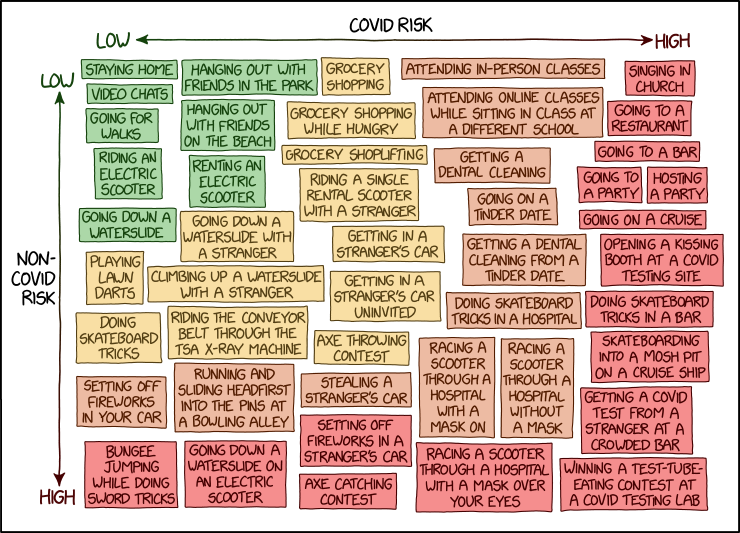 (This doesn’t really fit, but it’s colorful, and about COVID risks, and you should really be supporting geek comics by visiting yourself. It’s xkcd.com. By the way, I’m glad I don’t have to pick one corner of the chart and live there. Except I kind of am.)
End Game
Is it possible that a “mostly remote” approach takes hold, that Carranza adopts it, and that we run it in September? Yes. Or could one of the new plans get taken up, and that we are implementing one of them in September? Yes. But more likely, by the time we get there, that the pandemic is spiking and we all stay home. Most thinking people expect New York City schools to be fully remote come September. We see what’s going on in the rest of the country. Our numbers got low, and stayed there. The virus is not – poof – going away. The Carranza plans are unworkable.
But in the meantime, it’s worth talking about “mostly remote”: It’s a serious conversation. It allows teachers to make real plans. It protects principals. And it keeps many more people much more safe.
Heroes Act? Yes. And Budget Justice? Budget Justice?
Inequality. We know it exists. We, most of us, know it’s not right. But did you know there is a serious push to attack inequality, right here in New York State?
A package of legislation, collectively known as “Budget Justice” is in the State Senate and Assembly. Take a look:
List of Demands:
(1) Pass the Fund Our Future legislative package to avoid +$10 billion dollars in budget cuts. Package includes:
-
Ultra-millionaires Tax (S.8164 / A.10364): Tax increases on those earning above $5 million, $10 million and $100 million per year
-
Billionaires Tax (S.8277 / A.10414): Outlaws unjust tax shelters to make billionaires pay income tax
-
Pied-a-terre Tax (S.44 / AA.4550): Sliding-scale tax on non-primary residences worth over five million dollars
-
Stock Transfer Tax (S.6203 / A.7791): Repeals rebate of .25% state sales tax on stock trades
-
Stock Buyback Tax (S.7629 / A.9748): New .5% sales tax on stock buybacks
-
Mezzanine Debt / Preferred Equity Tax (S.7231 / A.9041): Fee on mezzanine debt and preferred equity financing equal to mortgage recording tax
(2) Invest new revenue into addressing the systemic and accelerating inequities in our K-12 and Higher Education, Healthcare, Housing, and other Public Services as well as solutions to tackle growing crises like Climate Change and our crumbling Democracy.
(3) Pass the Budget Equity Act to amend Article VII of the New York State Constitution to give the legislature equal powers to the governor in the annual budget process. The elected legislature should be accountable for the funding future of our communities.
Wow! Maybe this is fringe-legislation, with no real backing?
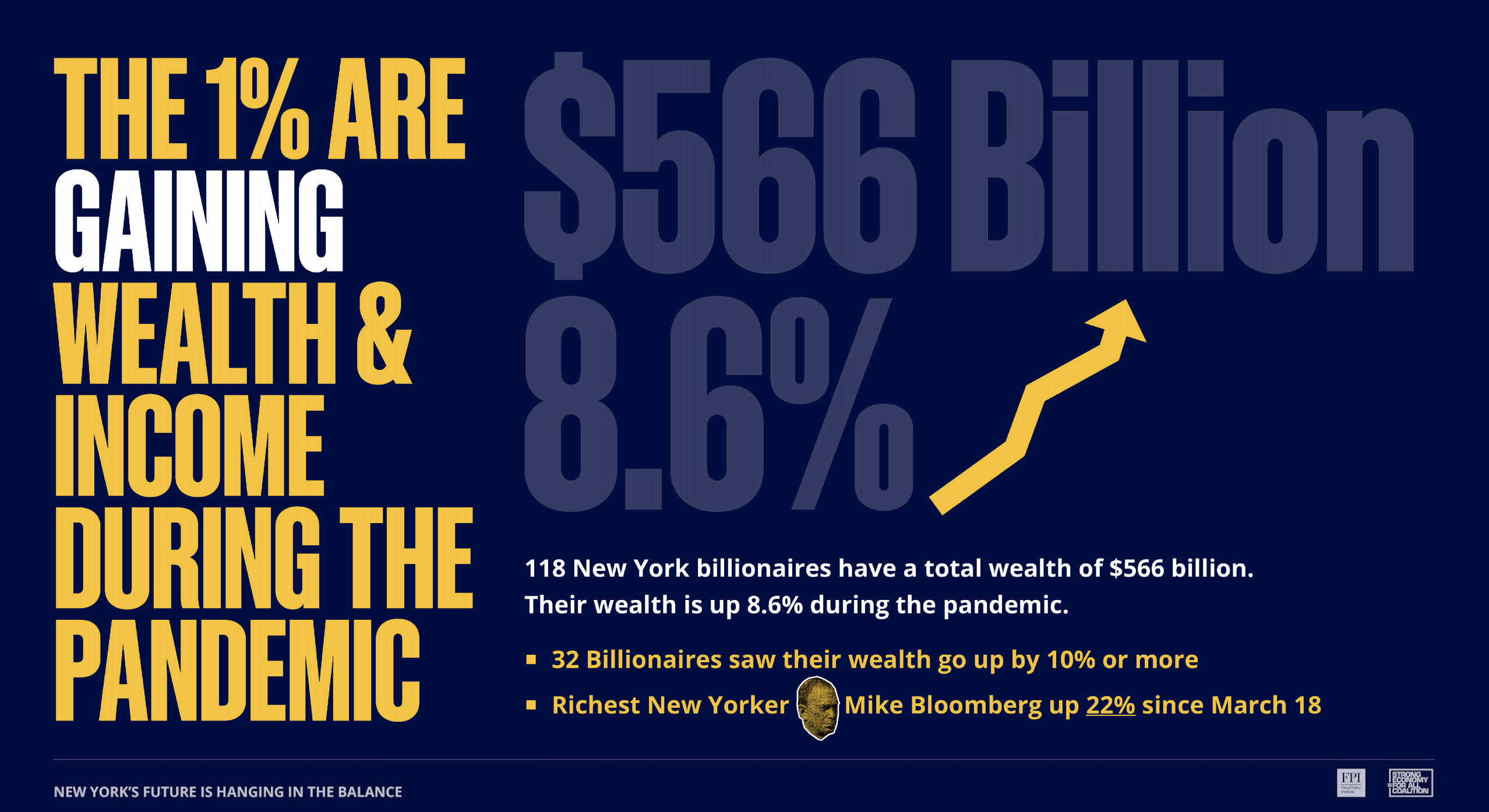
Well, no. Each seems to have a substantial number of sponsors. Many are sponsored by anti-IDC insurgents. I see Biaggi a lot. And Jackson.
My State Senator, Jamaal Bailey, is a cosponsor of S.44. There’s over 20 sponsors in the Senate on that bill. They call it the “Pied-a-terre Tax” – but they picked the wrong name. They should call it the “Hideous Pencil Tax” – to remind people that we are taxing millionaires and billionaires who paid for those hideous pencil buildings to scar the NYC skyline, while not even living in NY.
He’s also co-sponsor on the Billionaires Tax, which closes loopholes and directs the revenue into a worker bail-out fund.
That Ultra-billionaire Tax, love the name, but it doesn’t do enough. The highest rate in New York State right now is 8.82%. The bill would make it 9.32% on income over $5,000,000 (five million), 9.82% on income over $10,000,000 (ten million), and 10.32% on income over $100,000,000 (one hundred million). Those increases are 1/2 of 1 percent, 1 percent, and 1 1/2 percent. Not enough, but I’ll take them!
Here’s some quick slides that explain each tax – and how easing the burden on counties and the middle class by making the wealthy pay more makes sense.
Heroes Act
The Heroes Act would infuse the states with a huge one-time pot of cash, that is desperately needed during this crisis. Budget Justice, on the other hand, would create an ongoing flow of money, that would ease the tax burdens on the poor and middle class, and would allow state aid to localities grow (localities across the state, not just NYC, have been crushed by this governor’s regressive approach to financing.) Both Heroes Act and Budget Justice are vitally important.
Where are the Budget Justice bills now? I don’t know. I don’t get how NY State government works. I hope they are making their way forward.
Here’s more to think about:
Don’t New Yorkers already pay too much in taxes?
Middle-class and lower-income New Yorkers do. New York’s property taxes are the highest in the country, in fact New York State faces a property tax crisis that affects owners and renters alike. This was created by Republican Governor George Pataki and State Senate Leader Joe Bruno, who cut taxes for rich New Yorker in the 1990s and shifted much of the costs of state services onto local governments. Counties and towns were forced to shoulder a much greater burden for key services like road repair, school aid, libraries, and elder services than almost anywhere else in the country. To meet these costs, local governments have had no choice but to steadily raise property taxes and assess fees even as services have declined. A report by the New York State Commission on Property Tax Relief found that low- and middle-income taxpayers pay property tax rates that exceed their income tax rates. The capping of SALT deductions has increased the average New Yorker’s overall taxes even more. This unfair tax system, combined with rising home costs from gentrification, puts home ownership increasingly out of reach for most New Yorkers, damaging the health of our economy.
But the wealthiest New Yorkers and large corporations pay too little. Recent research shows that in 2018, after decades of tax cuts, the ultra-wealthy now paid a lower tax rate than the bottom 50% of Americans. At the same time, subsidies allow large corporations to get away with paying very little in state taxes. We need to reform our revenue system to increase the share paid by billionaires, mega-millionaires, and large corporations, and to reduce the unfair burden on everyone else.
Here’s some more:
We got rid of the IDC and elected a Democratic majority in 2018. Doesn’t that mean we now have a truly progressive state?
No. Governor Cuomo has manufactured a false narrative of fiscal austerity that maintains the Republican agenda of low taxes on the wealthy and starves our communities of needed funds. In 2011, the Governor imposed a spending cap that prohibits the legislature from increasing the state budget more than 2% annually. But this spending cap is not law, nor is it based on sound economic principles. As long as our lawmakers refrain from challenging it, we cannot fund the many progressive changes voters have demanded.
George Thomas: An Old Dead White Guy who could use a Statue
(This is not my usual entry – it’s a bit about a little-known Civil War General – if it’s not your thing, no worries – I’ll be back with regular writing tomorrow. – jd)
I’m all for tearing down confederate statues. I’m all for taking their names off of buildings and bridges and schools? Who the hell put their names on schools? Slaveholders, racists, subject them to scrutiny, and I’m good with the same treatment if that’s where the discussion goes. And I’m cool with replacing them with abolitionists and revolutionaries, but I’m much cooler replacing them with abstract themes and groups of people – statues of enslaved people freeing themselves, workers on strike, native people refusing to vacate their land. Or how about Emancipation High School, Liberation Federal Building?
History is not a series of names of old famous dead white men, or a series of names of old famous people. Especially in the last century, but I claim further, history is made when the people in the middle or the people at the bottom, nameless, faceless, forgotten, when the majority have had enough, or when the masses move to change things. Wars are won by infantry, not generals. We remember the sweet words of the leaders, but nothing happens with just words – movements of people make change, make history.
But, in a contrary thought, I want to talk about a neglected dead old white guy – George Thomas. Let me make the case – if there’s an old dead white guy we should build even one monument to, it should be him.
Not making the case – Thomas’ early career
George Thomas was from Virginia. His family owned other people. He went to West Point. He fought in the Seminole War in Florida, where the US tried to forcibly remove native people from Florida. He fought in the war against Mexico (and in fact served alongside of Braxton Bragg, whose name currently stains a fort in North Carolina) as the US annexed vast parts of northern Mexico. He returned to duty in Florida, and then trained officers at West Point, where he was friends with Robert E. Lee, where Lee put him in charge of cavalry and artillery training.
I haven’t made much of a case yet, have I?
An aside, about this man who seems on course to be a despicable footnote in history, his specialty was artillery, and tactics, and he was good, and methodical. He jury-rigged artillery with ropes, to bring guns into line of sight, fire, and pull them immediately out of line of fire in Mexico. There are battles that would have gone the other way without him. At West Point he taught artillery. He was methodical. On riding, he would not allow cadets to gallop when they were supposed to ride at a trot, and he was nicknamed “Old Slow Trot Thomas.” He had a reputation for being deliberate.
Ok, that doesn’t help the case either. Let’s push on.
Not as bad as his peers – Not much of a case
So it’s 1861. The slaveholders’ begin their rebellion. They capture control of one southern state after another, and the allegiance of one army officer from the south after another. There’s one high-ranking officer left, and one state: Robert E Lee, and Virginia. On April 4 a Virginia convention votes to remain in the United States. Another vote, April 17, and Virginia joined the slaveholder rebellion. And on April 20 Robert E Lee resigned from the United States Army.
On April 21, 1861 George Thomas was the highest ranking southern officer to remain in the United States Army. And he remained so, until the end of the Civil War. But that’s like being the highest ranking member of an organized crime family not to have murdered someone. Being less bad is not really a claim to fame.
A key victory – OK, he’s competent
The Civil War began. We learn about it as a two-front affair: Virginia/Maryland (from Richmond to DC and back), and the Mississippi River (Shiloh, New Orleans, Vicksburg). But there’s another active theater: Kentucky and Tennessee. The former stays in the Union, the latter secedes, but both are divided, and there is active fighting from the beginning of the war. Fighting in the western part of the states eventually led to Shiloh. But we are interested in the moment in the east. There was rich farmland, with provisions that both armies needed. And the east was home to concentrations of Unionists, including the region of Tennessee where Lincoln’s family was from; protecting Unionists was a priority of Lincoln’s.
Through 1861 the United States suffered a series of military defeats. There was a diplomatic crisis with England; the United States backed down. 1862 opened and the confederates tried to invade Kentucky. The first major US victory of the war? Mill Springs, where the confederates were beaten, and driven out of their camp, and Kentucky was protected. The commander? George Thomas. Knock on Thomas? When soldiers took good initiative, it was the field commanders and not Thomas himself who gave the orders. Hmm, trusts his subordinates? How’s that bad? (Aftermath – two more victories, these by Grant, further west in Kentucky). So first major victory – Thomas. But we’d already established he was a competent officer. Does that merit a statue?
What the Hell is Tullahoma?
I’m going to introduce this next story twice, and then not tell it today.
I remember learning about the Revolutionary War in high school. The story jumped around – I remember acutely feeling the lack of narrative thread. The campaigns were disjointed, separate stories, except for Trenton and the Delaware. But one story worked well for me – at Yorktown as the forces came onto the field, and the French arrived, Cornwallis assessed the situation and surrendered. Very satisfying story, though perhaps not very accurate. But where is the equivalent in the Civil War? There is none, except…
DIfferent question. July 3, 4, 1863. Huge days for the Union. Gettysburg victory. Fall of Vicksburg. But something’s missing. In Gettysburg, a raiding party in force accidentally engaged in a 3 day losing battle – 8,000 dead on both sides, but the invasion of Pennsylvania was defeated. Lee returned to Virginia, and not much territory changed hands. Vicksburg? Predicated on the seizure of New Orleans over a year earlier. A month and a half siege, after frontal assaults failed. The result was inevitable, and occurred after almost 1000 US troops were killed (and maybe three times that of confederate soldiers).
But July 3, 1863 was also the culmination of the Tullahoma Campaign. What? You’ve never heard about the largest territorial advance during the entire Civil War? Rosecrans was in charge. But Thomas was responsible for the perfect planning, practice, preparation, and execution. Traitor Braxton Bragg was routed. Realizing his position untenable, he retreated, yielding a thousand square miles, surrendering control of all of middle Tennessee, while barely firing a shot. 83 US soldiers were killed, and maybe 200 rebels. Rosecrans complained bitterly to Secretary of War Stanton: “I beg you…do not overlook so great an event because it is not written in letters of blood.”
I think I want to make some maps and try to tell the story of Tullahoma another time. But here’s a link if you are curious. But the author of the greatest forgotten union victory of the war – worth a statue? Maybe. But probably not worth fussing over.
The Original Rock
Having been driven back to Georgia after Tullahoma, Bragg tried to regain the offensive and retake Chattanooga. He engaged Rosecrans in September, near Chicakamauga Creek. Rosecrans moved the wrong unit in the wrong direction, opened a gap in the line, and a rout began. Rosecrans and much of the Union army retreated north in disorder. George Thomas reorganized the remaining defenders, and held off Bragg for long enough to allow an orderly retreat. Anyway, for calm under fire, methodical organization, executive control of the battlefield, future president Garfield labeled him “The Rock of Chickamauga.” Bravery in a loss? Prevented a rout? Let’s keep that in the history books – not sure it makes the case for a statue.
After the retreat, the US forces were besieged in Chattanooga. Grant took over. After two days of success, they planned to take the heights at the east of town, called Missionary Ridge. Sherman, Grant’s bud, was going to take it from the north. he assigned Thomas to charge the center, right up to the base of the steep slope, and stop. Sherman fights a vicious battle, without success. But Thomas troops take the base of the ridge, and they take the initiative: they scale it, red white and blue colors, with blue coats in “V” shaped wedges behind, moving vertically. Grant blows a gasket. First flag up is the drummer boy from a Wisconsin regiment – it’s General MacArthur’s father. Thomas’s troops rout Bragg’s, and the battle is won. All good stuff – and it’s adding up. But outstanding? Not sure the case has been made yet.
Nashville where the case gets strong
After Chattanooga the US Army pushed south. Grant went back to Virginia. Sherman took command for the “March to the Sea.” And Thomas was left to defend the remaining rebel army, Hood’s Army of Tennessee. Hood pivoted west, and then after resting in Alabama, moved north for another invasion of Tennessee. His fantasy was a drive north though Nashville, onward to Kentucky, then Ohio, then east to meet up with Lee. Reality was a horrific series of charges, Pickett had nothing on the brutality, south of Nashville, against one of Thomas’ commanders, and then a march to Nashville, where Thomas was ready.
There is a common knock on Civil War commanders, that they won a battle, but did not finish off their opponent. It’s kind of unfair – the retreat is easier than the chase; defense is easier than offense. And in a bit of unfairness, southern Generals get a pass on this, even though their record was no better. When did Lee pursue a defeated opponent? Actually, during the entire war, no general followed up a victory by shattering and finishing their opponent. Except for George Thomas, at Nashville. Hood entered Tennessee with 38,000 soldiers, and left with 15,000. Many of his top officers were killed – with war criminal Nathan Bedford Forrest, who was sent away before the rout, a notable exception. The “Army of Tennessee” surrendered a few months later in North Carolina, without seeing another major engagement.
Did I mention anything about Thomas’ views on race? I think he was a racist. I think he thought Blacks were inferior. Nashville changed him. Ordered to incorporate freedmen into his army, he did. There were separate “colored” units, but they trained alongside white units, with the same training. They were seasoned by going out on sorties, side-by-side with white units. And Thomas noted their performance. Our sensibilities might be offended that he was surprised that Blacks fought as well as whites, but surprised or not, he reported honestly. And then after Nashville, among the dead he saw Black soldiers who clearly had held their positions longer, and he noted their greater bravery…
We have a history teacher in my school who is great on this sort of detail. Did he know who Thomas was? Of course – and he rattled off a half dozen notable details. I had been reading, and struggling to learn the little I knew. But this guy had the best stories, including one that was new to me: After Nashville, confronted with the task of burial, he was asked about separate plots for each state: “No, no, no. Mix them up. Mix them up. I am tired of states-rights” – This is political evolution.
I don’t know. Is that enough? Everything already mentioned, plus the most smashing victory of the war, plus positive evolution in his thinking on race, plus a political evolution? We are getting close.
Post-War
Thomas was a military commander after the Civil War, with responsibility in Tennessee and Kentucky, and sometimes other states. He carried out reconstruction faithfully, and aggressively pursued the Klan. He opposed attempts to recast the war as anything but treason, and was a defender of the freedmen. Offered a political appointment, he instead took a military command in California, where he died of a stroke.
Afterwards
At the end of the war Thomas was in the pantheon with Sherman, Grant, and perhaps Phillip Sheridan. These were the greatest generals on the winning side. Sherman proposed that statues of Grant and Thomas be erected side by side. Thomas shows up in a silly wikipedia list – the only North American commander never to lose a battle (don’t know if he really NEVER lost, or if no one else should qualify – it’s wikipedia). It is true that Thomas burned his papers, and did not publish memoirs. And while he was friendly with Sherman, him and Grant, nah. Among other things, Grant was not happy about Missionary Ridge, or how long Thomas took to prepare for Nashville (events showed Thomas was right) or with Rosecrans for Tullahoma (events also bore out Rosecrans’ and Thomas’ decisions).
Thomas was shunned by his Virginia family. He is buried in Troy, NY, with his wife, a Troy native.
Why is he forgotten?
Some say that as a Virginian against the rebellion, his legacy has no natural supporters.
Some say that Grant downplayed his contributions.
Some say that the self-promoting veterans, with their memoirs, outshone Thomas.
Some say that he just fought in the wrong battles. Mill Springs was too early. Nashville was too late. Tullahoma was not dramatic enough, and eclipsed by Gettysburg and Vicksburg.
But I don’t buy any of that. I think it’s political. A southern leader against secession. A man from a slaveholding family, seeing worth in Black lives, even superiority, actively applying reconstruction, standing up for freedmen, battling the Klan. A southerner changing his mind, on politics, on race. When the fake version of the Civil War, “The Lost Cause” was ascendant – George Thomas’ very existence revealed its falseness. He was inconvenient. And conveniently forgotten.
His evolution on using Black soldiers is striking:
The Confederates regard them as property. Therefore the Government can with propriety seize them as property and use them to assist in putting down the Rebellion. But if we have the right to use the property of our enemies, we share also the right to use them as we would all the individuals of any other civilized nation who may choose to volunteer as soldiers in our Army. I moreover think that in the sudden transition from slavery to freedom it is perhaps better for the negro to become a soldier, and be gradually taught to depend on himself for support, than to be thrown upon the cold charities of the world without sympathy or assistance – 1863
Thomas’ early biographer:
“When the enlistment of the manumitted slaves was ordered by the National authorities no department commander performed his duty in giving efficiency to colored regiments more loyally than General Thomas. He gave advice and encouragement to the officers who were engaged in organizing and commanding negro troops in his department. And when these troops exhibited their proficiency in the manual of arms and drill, he was often among the delighted spectators.”
And then the record – no fake assignments, no hopeless charges, this was not Glory – at Nashville Black AND White units together harassed Hood’s right, to allow the balance of Thomas’ army to wheel and smash the left.
And then after the war….
[T]he greatest efforts made by the defeated insurgents since the close of the war have been to promulgate the idea that the cause of liberty, justice, humanity, equality, and all the calendar of the virtues of freedom, suffered violence and wrong when the effort for southern independence failed. This is, of course, intended as a species of political cant, whereby the crime of treason might be covered with a counterfeit varnish of patriotism, so that the precipitators of the rebellion might go down in history hand in hand with the defenders of the government, thus wiping out with their own hands their own stains; a species of self-forgiveness amazing in its effrontery, when it is considered that life and property—justly forfeited by the laws of the country, of war, and of nations, through the magnanimity of the government and people—was not exacted from them. – George Thomas
And there’s his record of actively countering the Klan.
So yeah, I’d put up a statue. No, it’s not the top of the list. But next time we strip Braxton Bragg’s name, or John Bell Hood’s, think about using Thomas to replace them. Or when we topple one of those despicable statues of war criminal Nathan Bedford Forrest, consider George Thomas as a replacement.
I’m driving upstate, one day soon. And I will hit a trifecta: Harriet Tubman (Auburn, near Syracuse), John Brown (North Elba, near Lake Placid), and George Thomas (Troy). Seems fitting.
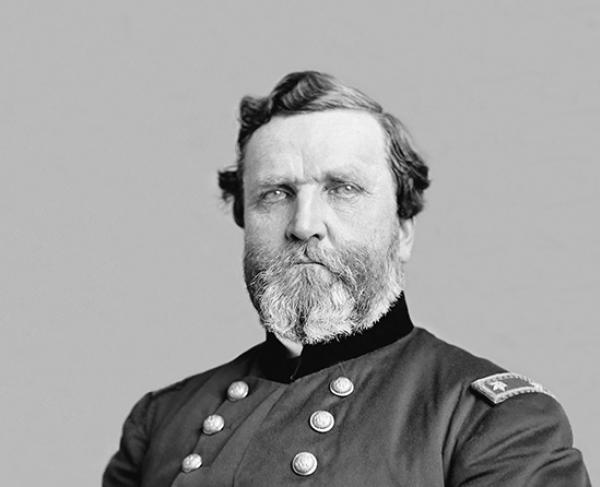
Are principals being set up to take the fall?
I
The mayor was planning to reopen NYC public schools in September. It is a disaster on the NYC horizon. But it is far enough away to be avoided. The mayor now coyly claims he doesn’t know which way he will decide, and that he won’t decide until the eleventh hour. The UFT and CSA (principals union) are talking about problems with plans. The UFT has focused on staffing and safety. The CSA has a broader attack, including how unrealistic the “scheduling models” are. But neither UFT president Mulgrew nor CSA president Mark Cannizzaro have openly come out and called for the plans to be halted. Skeptical, but political. I hate political responses, especially when a right/wrong response (this won’t work, let’s plan for remote) is available.
II
Imagine, if you will, a ‘normal’ year – first day of school. Parents, mostly moms, arriving with kindergartners. Many of the kids are excited. Some are scared, and clutch at their parent’s pant leg. Some are in tears. Introduction. Separation. Some parents leave fast. Others stay…. While five other grades are finding new teachers, new classrooms, and some new classmates. Now imagine this masked. Now imagine some parents there on the A day, when their child is a C. Imagine tiny children confronted by strangers in masks.
Or imagine if you will, the first week of high school. Assume they start September 21. (What, you say, no one has announced a delayed start? Don’t worry, I answer, they will, unless they go all-remote first). Monday teachers meet their classes. And Tuesday teachers meet the next quarter of their classes. Wednesday teachers meet the next quarter of their classes. Thursday teachers meet the last quarter of their classes. Students traveling by subway or bus to get to their schools. And each day, the same problems. Students going to the wrong room. Teachers going to the wrong room. Ineffective social distancing – hard to keep students apart. Nervousness, fear, discomfort. Not too much learning.
By the way, plenty of high schools will be doing (if they can work it) a four day cycle. Let’s think about the days that an A student (cohort A, not letter grade) will be present: Monday 9/21. Friday 9/25, Friday 10/2, 10/8, 10/15, 10/21, 10/27, 11/2, 11/9, 11/16, 11/20, 11/30, 12/4, 12/10, 12/16, 12/22. That’s it for 2020. All this fuss over 16, messed up, in person days.
I kind of imagine elementary chaos, secondary risk of disease spread. The story will be more complex. But we all can imagine it…
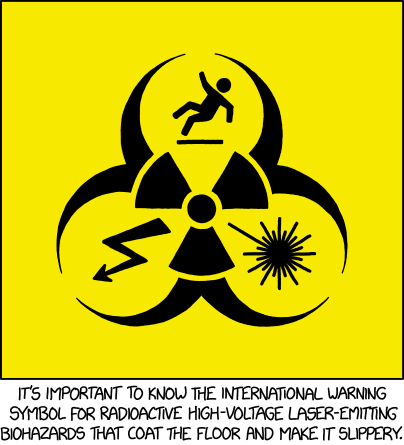
Randall Munroe’s combination radioactive, high-voltage, laser-emitting biohazard (that makes the floor slippery) needs to be updated: the hazards need to be separated by at least six feet, and where’s the mask?
III
The victims of chaos? Everyone involved. If the opening day is a stressful mess, and so is the next day, and the next, the tone is set. We all lose. But chaos also means disorder, and parents clustered to drop off and pick up, and teachers trying to social distance, but with needy young children and nervous adults… This is not a good way to avoid spread. At least for the younger children, they are not effective at spreading the virus. The same is not true of adults, nor of high school and even middle school aged children, who will be mixing on the trains, and despite our best efforts, at school, and on the trains again. We are looking at a source of new clusters.
Who might get sick? Students, but the biggest threat is to families and school staff. New York City already has 70 school dead. I know a few of them. I know someone who is not counted. Every loss is a loss.
IV
Who will be blamed? So here’s the meat of this article.
The Department of Education has devised scheduling models, and has “empowered” principals to choose one. If the principals find something better, they can apply for an exemption, but smart alternates are already being turned down. In other words, Ms. Principal, it is your choice, as long as you choose something unworkable that we have approved.
The DoE will then blame Ms. Principal for the first day chaos.
The Department of Education is developing safety protocols. Here is what the language will look like: “Hallways. Maintain six foot distancing wherever possible in hallways. Where it is not possible, ensure that everyone is wearing masks”. That’s it. The actual implementation of these vague guidelines? That will fall on the principals. How many details will not be spelled out? Will it be possible for principals to actually keep their school communities safe?
No matter, if there is an outbreak, the DoE will blame Mr. Principal for not following their vague protocols.
Will anyone else get blame? Maybe people like me, chapter leaders, since we have some role in the discussions – but I doubt much. It won’t be my name certifying that the plan will work and that the school will be safe.
Carranza? de Blasio? Nah. Their first day motorcades will be directed to the 17 schools where things are running smoothly, not the 1700 others. The press will get them all smiles, divorced from reality.
V
Strange stuff for me to write. Usually I castigate abusive principals, incompetents, inexperienced, poorly trained principals. But this time? The writing is on the wall.
This is why the principals union has the strongest stance so far. <– That link is to an article in the NY Post. I have the full text here: CSA letter. (I’ve reformatted it). The CSA also has a list of hard-hitting questions, here: CSA Questions (I’ve reformatted this one, too)
Think of tearful first day of kindergarten. Think of headlines when a long-commute school has the first big corona cluster.
This is why principals are opting for plans that might work. This is why principals may be willing to defy Carranza.
Carranza is making the principals his fall guy. He’s pushing them under the bus. NYC principals are pretty good at following orders. But that’s a pretty big bus.
1st NYC school planning all-remote for September – more will follow
Gotta start somewhere. NEST+ is planning to go all-remote. Carranza will say no. But that’s only the first.
New Explorations into Science, Technology and Math High School is a highly regarded Manhattan K-12 school. They’re going to get attention. They’re reasoning will be good. They will better serve their community, while keeping their community safe. And Carranza will say no.
There are many other schools that would prefer to be all remote. All of them? Probably not. There’s over 1800 public schools in NYC. Over 1500? Easily. But Carranza’s “models” don’t allow all-remote, and most principals follow directions without question. Good principals.
There are many schools, largely high schools, but some middle schools, who are saying they can’t make a Carranza model work. They are whispering about going all-remote, or almost all-remote. If they apply for an exemption, Carranza says he will say no.
Teachers want to be safe. We want our students to be safe. We are thinking of urging principals to apply for all-remote anyhow. Yesterday Mulgrew told us not to.
Actually, Mulgrew had the perfect opportunity at yesterday’s UFT Town Hall to lead. He could have said “We should go remote” – that’s all he needed to say. Standing ovation. I guarantee it, he would have had one. But he didn’t say that. He said we need to plan for hybrid.
Principals probably want to be safe, too. I bet their union also told them not to apply for all-remote.
But now the ice is broken. We have a school going all-remote. There will be more, many more. Share this, or the NY Post article. Share them widely.
What does Arlo Guthrie sing every Thanksgiving? 1? Sick. 3? an organization? 50? A movement. We need a movement just now.
Scheduling and the UFT Town Hall
Yesterday’s UFT Town Hall was in some ways a breath of fresh air.
Mulgrew shortened his report, and devoted much more time to questions and answers than in the previous Town Halls.
The questions themselves were more focused on broad concerns: safety, schedules, procedures, September.
But some of the answers were concerning. And since I am working on scheduling, that is what stood out the most to me. I have spent more time speaking to more programmers in more schools over the last 4 – 6 weeks than I have ever done before. I think I have some sort of contact with over 100 schools now (weighted towards high schools, but middle schools and elementary schools as well. I don’t know anyone programming D75). And combining my programming work with what I’m hearing from other programmers, well, some of Mulgrew’s comments rang “funny.”
Five Points, with some Commentary
Carranza’s models did not get mentioned
The NYCDoE (Richard Carranza, Chancellor) put out a list of scheduling options for schools to choose from. Schools right now are struggling to find a way to make one of the three models work (two more options for D75) or working towards begging for an exemption. I have been clear – I don’t think they will work in any school. I am more confident about high schools than elementary schools, but in talking to other programmers, there are very few who are getting anywhere (and those who are mostly are doing sketchy stuff). I do not believe Mulgrew mentioned Carranza’s models, or that schools are frantically trying to choose (initial choice is due Thursday.
You will be in-person. or remote. not both.
Mulgrew clearly stated that teachers who are teaching in-person will not be teaching remotely as well. He described a teacher teaching the in-person portions of a class, and coordinating with the remote teacher, who teaches the remote parts. I do not know a single programmer who is planning for the scenario Mulgrew described – and I know a lot of programmers who are planning. There is no evidence in the ‘plan’ that Carranza sent out that there is any agreement about this at all.
1, 2, 3, 4, Lunch, Coordination!
Mulgrew suggested that some schools were finding success scheduling periods 1 – 4, then lunch (I assume he meant a grab and go kind of set-up, but he didn’t say), and that the teacher would use the rest of the day to coordinate with the remote counterpart. Let me first say, this is less unrealistic than what Carranza put out, but unless you have something that’s actually REALISTIC, you don’t get points for being less unrealistic. And second, I do not know a single programmer who is planning with the model Mulgrew mentioned – and I know a lot of programmers who are planning. There is nothing from Carranza that would encourage this sort of planning.
60% chance of being remote. Details at the last minute.
Near the end of his opening talk, Mulgrew guestimated a 60% chance we would be remote, and a 40% chance of being hybrid. Those numbers may be, today, correct. He said not to expect a decision until the end of August or the beginning of September. And today, de Blasio said there would not be an answer until the beginning of August. They seem to be working off the same script.
Preparing for blended and for remote.
Mulgrew repeated that we are working on blended, and that we are working on remote. I’m sure that there are people who do not work in schools who are talking about some big-picture things involving full-remote teaching. But the hardest planning that is going on is at the school level. And we have a mandate to work on hybrid. That’s what we’re supposed to be working on. I don’t know any programmers working on a full remote schedule, unless their school is going to ask for an exemption to go all remote (and Mulgrew strongly discouraged that yesterday). Teachers are in the dark – but most are assuming that they need to do some in-person and some remote teaching – unless they have a medical accommodation. Working on blended and working on remote? I’m going to label that one false.
What’s actually happening?
Schools are scrambling to select one of Carranza’s models. They are running numbers, having trouble making anything work. In the main, they are making plans to assign teachers in-person and remote teaching (50% to 100% over-scheduling teachers) counting on the mayhem of September to save them from grievances. Elementary schools are also more freaked than high schools about safety. Little kids are harder to control. Little kids touch. Little kids get dropped off and picked up. And little kids might get dropped off on the wrong days.
High schools are a little different. Many are working on applying for exemptions. Most are planning to have the teacher of record for a class do both remote and in-person teaching, largely by making the remote asynchronous (and honestly, just be homework or project work). Teachers faced with this are a little freaked, because the in-person lesson will be different for each of the three (or four) groups. Some schools are coming up with really crazy stuff. And some are planning to do the right thing, and apply to be full-on remote, despite Carranza/Mulgrew’s warning that they will be rejected.
No one I know of is working on the 1-4, Lunch, Coordination model Mulgrew projected. No one I know of is working on having the remote and in-person teacher be different teachers, as Mulgrew insisted must happen in most cases. And no one I know of is working on both blended plans AND remote plans, unless they are slyly not writing blended plans at all
What could Mulgrew have said? (but didn’t)
- We should go fully remote.
- We told the Department we should go fully remote.
- We thought we could make blended work. But we have tried. We do not think it will work.
- We told the Department of Education that we have been trying hard to make these blended plans work, but we cannot. We have asked them to drop this approach.
- Teachers desperately want to go back to school… as soon as it is safe. We do not have a plan to be safe in September, so we are trying to convince the Mayor and Chancellor to back down.
- Schools have been asked to submit preliminary plans before they have any idea how many teachers will receive accommodations, or how many students will opt to remain fully remote. We do not believe schools should have to make submissions without that information. We do not believe that information will arrive in time for schools to be able to create functioning schedules. We have informed the Department of this, and are therefore requesting they drop the drive to a blended model.
- Teachers cannot plan for one brand new mode of teaching (blended) and one mode of teaching that we have 3 rough months experience with (remote). The only way to be ready for September is to pick the more likely one, remote, take the other off the table, and give you time to plan and prepare. Remote in the spring was not great, although we improved as time went on. Let’s devote ourselves to making sure remote teaching is much better in September than it was in June.
- Let’s make the best possible decision today – for full remote – and let our teachers, counselors, therapists, paras, secretaries, AND our principals and APs do the best job possible to make it as good as possible.
- We told the mayor that a decision in August is too late for teachers to change gears. Teachers can do two things at once – they often do half a dozen – but remote vs blended are totally different brand new pedagogies.
End
It was, actually, the best Town Hall so far. Mulgrew kept his report shorter, and fielded more questions. But there were many, many more questions than he could get to. The UFT should set up an open board where questions can be posted for all members to read, and answers given. But answering more questions is not enough – the answers need to be good.
Grade for Town Hall: B-
Subscore on scheduling: D+
July 21 UFT Town Hall
A friend took notes
UFT Town Hall : July 21st, 3:15pm-4:45pm
With Michael Mulgrew
We know there are so many unanswered questions.
People got upset at City Hall because Mulgrew said it was 60/40, 60 we are not opening, because we do not have a plan. We are not going to go back to school if the schools are not safe. Every week that goes by, when there is still not a plan, it gets less likely. We are not childcare, we are educators. We know we need good childcare, but it isn’t our responsibility. We are happy to hear the Mayor last week say that he knows it is his responsibility and not ours.
You will be hearing a lot in the news today and tomorrow about the Heroes Act. We can’t do the different things we need to do, remote learning or opening school buildings, without it. Thank you to all the people who have advocated for the Heroes Act, teachers and parents. At this moment, it seems that Democrats and Republicans are fighting over who does more for education, which is a good sign.
Our priorities as always are:
- Safety
- Profession
- B. Livelihood
At this moment, NYC, in the last 14 days, we had 1.17% positive tests, and if we continue on that path, the state will greenlight the city to reopen the schools. The state will evaluate city plans, and if everyone will be safe.
Yesterday, with the AFT, we sued Florida because they want to open schools in 3 weeks and they are at 21% positive cases. These are tough decisions. We have a lower number, but we still don’t have a final plan that makes sure we are safe. Today the governor closed down some bars that were not following guidelines, and added more states to the list that must quarantine when traveled from.
The medical accommodation process has started. We have had 3k teachers apply so far, but it will be many more. You should apply for a medical accommodation if you meet the criteria.
By August 7th, we should have the numbers for which parents are opting for remote only in the Fall.
When we talk about in-person instruction, we are talking about how to make everyone safe. We should not have individual schools deciding this. If we do not open, we are 100% remote. All instruction will be done remotely. If we do open, a minimum of 60% will be done remotely. We are following CDC guidelines. The remote instruction really needs to be built out because that is the majority of instruction that will be done next year no matter what. Their central system can not provide for all schools, so schools will be able to decide on individual systems.
Everyone must wear a mask and stay 6 feet apart in schools. Some teachers or other staff may need more PPE given the risk of the work they do (i.e. nurse getting close to students).
Ventilation and airflow is a very big deal. There are certain schools with a lack of ventilation and airflow that will not be able to open. We are testing all the schools now.
All PPE has been ordered, as has the cleaning supplies, including “liquid covid cleaner,” which they will spray everywhere and kills covid. We are changing the air filters inside the school building, which does not allow covid to circulate.
Should everyone be tested before school starts? We need to do this. If the school opens, what happens? Doctors recommend random intermittent testing in schools. Monitor, monitor, monitor. Monitor neighborhoods with covid numbers.
We have to plan in case we do open. Right now, Mulgrew says it isn’t safe, we could not open today. But we have to plan for it in case.
Remote instruction is clearly going to be the majority of instruction. Accommodation can only be given to teachers with medical conditions, but he’s hoping because we will need so many teachers remotely, that we can accommodate some teachers with family situations who need to work from home – but this is not guaranteed.
How do we coordinate in-person instruction and remote instruction with the multiple people teaching each part? We will need to have common curriculum scope and sequence so that teachers can plan together for continuity of instruction. This is a huge challenge. The frustration is that the DOE has not given any instruction on how to do this to principals.
How do we work with schools that have many teachers who need accommodation, and other schools who don’t need accommodations for teachers, and then we need to share teachers for remote learning.
There is nothing stopping high schools from making certain classes remote only, and some schools are already doing this.
We are better on the safety side, because we have agreements on masks, cleaning supplies, etc. Although we don’t have the money for it, we agree on how to be safe. We are very behind on the instruction side. Principals union is also frustrated, because they feel the DOE is not offering a real plan. So if you ask Mulgrew today, he would say, no we are not opening. But if we can get all these plans together, money for safety, and the DOE meets all the requirements, then we could go back. But we have no trust and no faith in the DOE because of what they did to us in March.
This is not easy stuff. We have never faced anything like this. The biggest fear we have is that because the rest of the country is not doing what they are supposed to do, that the virus will come back into this city, and we will have to shut down anyway.
Priorities! Remember! Safety, livelihood, and profession.
We need childcare for our children. We are working with parents. We have shifted this onto the Mayor, who says he will create a plan. Regardless of if we open or not, we need a childcare plan for the whole city! People need to be able to work.
This is the worst summer of Mulgrew’s professional career.
We are preparing for either option, open or close.
We are not a childcare institution!
We always prepare, and are always ready to move in any direction we need to in order to serve our students. But this is not just about the students, it’s about us too.
We understand there is so much fear right now.
This decision will not be made, to reopen or not, until the last week of August or the first week of September (!!!)
Medical Accommodations:
If you have one of the accommodations on the list, is there any way you are denied? If you are granted remote, will you be attached to the same school?
Yes same school, and probably grade. If you have one of the conditions, the DOE has been very good, they said anyone with a condition will be approved. They have not denied anyone so far. There is no excessing for someone with a medical accommodation!
What progress has been made in hiring nurses for schools?
We have told City Hall and DOE that we are not opening without a school nurse in every school.
Principal was advised that students do not need to wear masks while they are seated if they are 6 feet apart.
No. If a child has a certain disability, they Might qualify for some kind of PPE adjustment for working with a child who cannot wear a mask. You should tell your principal that she works for the NYC DOE and not the DOE NYS.
Are buyouts happening?
We are negotiating right now, but no one is going to do anything about finances right now until we see what the federal government is going to do about it. The city is about $9 billion in the red. The mayor has threatened 20,000 layoffs, and we said, fine, then we definitely won’t open. I’m not holding my breath about getting the buyout.
If we are doing the hybrid model, will teachers be in charge of in person teaching and remote teaching?
No. If you had 30 kids, you would have 3 classes, so you would need to report to the building every day. You cannot be responsible for both. Schools need to load their curriculum online, and not every school has this. You could get a teacher who might teach live 1-2 classes, and then remote on the other days of the work week.
What will happen for teachers in Westchester who need childcare? How will the remote and in person teacher work together?
If you are teaching “elements of the story” on Monday remotely, then they would have to teach that also on the same day in person. This is why I think everything is going to get really bogged down to tell you the truth because this is an insane amount of coordination.
If you test positive for covid, what will happen?
Your CAR will not be affected, and you will need to test negative after the 14 days quarantine, before you go back to live instruction, so it might be 21 or 28 days out.
If I don’t have AC in our class, are we really expecting the kids to wear masks?
Yes we are. We might have a mandate because of airflow that you might have to keep your windows open anyway. Would not shock me if some buildings could not open because airflow is not enough. I am laser focused on airflow right now.
Who will be doing temperature checks and questions on exposure for the hundreds of thousands of children entering the building every day?
We are asking every school to create a building response team, but the issue is, who will take the risk? We had schools where no one wanted to take a child to the covid quarantine room. We will have guidelines, but the school needs to create their own plan that works for their school.
If the DOE says we are going back, and the UFT says we are not going back, what happens?
All I am going to say on this call is that I am preparing for what to do if they do that and we do not think it is safe.
I went to get covid tested today, and they said it would be 14 days until I have the results. What pressure can the union apply to speeding up the testing? I went to CityMD [btw this is slow – don’t go to urgent care- go to a public hospital for a 3 day turn around.]
If you go to a place that has to send it to a national lab, it’s going to take 14 days because of the other states blowing up with covid. You need to go to a place where there are local labs, which can do 2 day turnaround. They could get everyone in the DOE tested in 10 days if they were given 2 weeks notice.
If I teach another subject than I am trained for, will I be asked to teach it in this situation, such as performing arts?
We are really going to need the outlet to be creative, I know we have figured out how to do this remotely, so we will definitely need this!
We are going to have to repeat the lessons for each of the cohorts we have, but that makes it hard to complete the yearlong curriculum. Will we be responsible for completing it?
We need scope and sequence adjusted for this. We are working with the DOE right now.
How do parents feel?
The DOE poll reported as 75% of parents wanting to return to schools is inaccurate. The actual DOE poll said this: 25% ready to send their kids back, 25% don’t want to send their kids back, and 50% have a lot of questions. They are on the same page as us, which is great.
Are the retro payments/raises coming?
They are there as of now. If the Heroes Act comes through, we will have to see what are the details. Even with it, I don’t see us getting through the next 2-3 years without layoffs. NYC may change as a city, and then our population will change.
What will happen for D75 classes where diapers need to be changed, etc.
We will need more PPE for these teachers. We are still working on a plan. Students with more medical conditions may need to stay home. If we do not have a plan, we will not open it. We need training on how to wear PPE appropriately, as if we are in a hospital setting.
We work in the main office with 8-10 people, how will we be protected?
You will get masks and plexiglass up everywhere. And airflow tested for every room to make sure it’s proper.
If a teacher thinks a child is sick, will they be trusted?
You need a nurse, send them to the nurse.
What about the Spring days we worked?
We are going into arbitration for full pay for those 7 days.
What will the protocol be for PE?
Your school will have to pass the ventilation protocol. If you have windows open, and social distancing, they will be fine, calisthenics for kids, not using sports equipment because of cleaning. Ask your principal: is there a solution? If not, then it needs to be remote.
How long will the reasonable accommodation be for?
This would be for the period of this health crisis, unless you have a health condition that clears up. [Not sure what conditions would “clear up” – pregnancy?]
What accountability will there be for nightly custodial deep cleans?
They have been very responsive, they have bought the materials, and we have said very clearly that we need these cleaning protocols in place, because in March, the Mayor said we had cleaning and all the supplies, and it was a lie. If something does not happen, then it will automatically kick in UFT and DOE to step in and fix the issue immediately. The school will not open that day if it is not safe.
The deadline for accommodations is July 31st, what if you find out you are pregnant after that?
It’s fine, you are allowed to apply for a medical accommodation at any time, it is federal law. We just asked you to do it if possible by July 31st so we can fast-track it. If you have a question, please call us!
What if you do not live where you work for childcare? I will be late to school every day because I will have to drop off my child.
We don’t know yet because there are so many unanswered questions. We are asking schools to work out as much as they can, and if not, we will help you.
Where are all these remote teachers coming from?
The average class size in NYC was 28. This year it will probably be 12. We will need double the teaching force if we did all in person. Every remote accommodation teacher will be remote. Any DOE employee with a teacher certificate will be deployed to teach either remotely or in person. But I can’t answer that question because there is not a plan. We are not going to have 60 kids in a remote class to be clear.
What will the schedule be in Fall?
We are using blocked format from principals and programmers. Cohort A comes in Monday, you do 4 periods, Cohort B comes in Tuesday, you do 4 or 3 periods. Then the rest of the day is lunch and coordination with remote instructors. It becomes too complicated with 7 periods and lunch. Recreating the old school day is not the most efficient or effective way to do this.
What about the MOSL and evals?
We have not worked on this yet! Do not think about this! Eval cannot be reliant on MOSL.
We are having conversations about standardized tests for next year with the state. But we have to do safety first and foremost.
Parents cannot do work and support their children doing remote learning, so what are we doing to support these parents, such as paid leave?
We’ve done so much previously, like fighting for paid parental leave and living wages.
Can a school go fully remotely?
No they cannot. We are still at IF we can even open. But a school will most likely not be approved for a fully remote plan on their own. The odds are going up that we will be fully remote the longer we don’t have a plan. We are hopeful about the Heroes Act, but that’s not the only factor. All of this training is being built out, which he didn’t have time to discuss today. We gave the responsibility to the individual schools to plan because the DOE was not giving us good results. The DOE did not do this correctly in March, so now we have to do the right thing moving forward. I don’t know if we will be opening our school buildings in September. I do know we will be in session for schooling. As I said, if I had to make this decision right now, I would say no, we aren’t opening the school buildings. Thank you all for taking your time to be on this call. We will have a couple more of these town halls before the end of summer.
Discussing Safety while Looking at Educational Justice and Equality
My primary focus for the last few days, weeks, months, has been safety. And Black Lives Matter. And the pandemic. But for the last few days, as the NYC Department of Education has issued directives that they have mislabeled “plans,” it has been just safety.
A friend asked me to reframe the conversation in a way to bring the needs of vulnerable children forward
How do we effectively manage for safety concerns while ensuring the most vulnerable learners actually get an education?…Some of our students, they are not learning for a myriad of reasons. And, some are. We are framing the conversation without holding the most vulnerable learners in mind and merely thinking about safety but from our personal perspective. That will get us to a flawed system.
I think she was right. And as I began to talk to teachers I found quite a few who agreed – not close to the majority though. And the trickiest part? There’s no space. There’s no DoE or UFT fostering these kinds of discussions. We need this space to exist. Or we need to create it. I’m not sure how.
In any case, a tremendous contribution to this discussion came across my desktop yesterday. I am sharing excerpts below, and the whole thing is linked here.
The title is “A Teacher’s Response to Medical Health Guidelines around Re-opening Schools” and it is by V Serrano Bautista, and it appeared in Medium. Bautista is an Oakland-based early childhood educator and an executive Board member of the Oakland Education Association.
Here’s a few lines – but you should click the link and read the whole thing.
…the fear of how the working class and/or poor children will fare if schools continue to be closed. As a student who grew up working class and experienced severe trauma as a young child, I understand the concern; public schools offer their communities immense support…
Pivoting to distance learning was a significant burden for me… it also really laid bare how much of what I do, is so dependent on relationships…
This pandemic has offered… clarity … laying bare many ways we have failed families and children by solely relying on the few but crucial services we offer in public schools AND have also accepted that teachers should bear the brunt of stabilizing society.
We have little to no parental leave, so that ALL families can BOND when there is a new life joining the family…We have accepted that poverty and hunger are not a pandemic of its own, but a normal …we have no federal paid sick leave so parents can stay home with their sick child… we have no sick leave for parents to take when they themselves are sick …
Pre-pandemic, our schools have existed and thrived, as well as offered what they could, on the backs of devoted teachers, school site workers, and principals, many of whom have SACRIFICED their own well-being, time with loved ones, and often, their own health to do right by their communities.
The idea of “learning loss” is incredibly frustrating, due to the inherent assumption that children do not learn from their communities and their families. Learning is a complex and relationship-based process that children … undergo EVERY SINGLE moment of their lives; that we as a society do not value what children learn from their families and communities …is an inherently classist and racist orientation that speaks to our largely limited perspective. …
…teachers and school staff have always assumed the risk and responsibility of keeping our students and families safe. Despite the risks we take for our students and their families, we are left out of the discourse to inform our own working conditions, even though we understand our conditions and needs, the best.
Instead of the medical establishment and public health experts recommending that we reopen schools for “the sake of the children” or to address “learning loss,” they should really reflect on why they are deciding that the adults in schools should AGAIN be assuming the risks to return to an even more dangerous and deadly status quo.
Instead of the medical establishment and public health experts recommending that we reopen schools for “the sake of the children” or to address “learning loss,” they should really reflect on why they are deciding that the adults in schools should AGAIN be assuming the risks…
Why aren’t medical practitioners demanding Medicare for All so that every single child and family can access medical services and be able to seek care when they are ill?
Where is the call from the medical establishment for mental health support services OUTSIDE OF SCHOOLS… instead of asking teachers to continue to act as untrained mental health counselors?
…why aren’t medical professionals pushing our government, at all levels, to institute a universal basic income so that both our families who lived in poverty pre-pandemic and all families who are struggling with the loss of income during this time, will not starve or become unhoused?
It goes on. Please don’t settle for my excerpts, but click the link, it’s a wonderful read, well-worth the 12 minutes.

 JD2718