When a Kid Gets to You…
Sometimes a kid just rubs me the wrong way. I’m not good at hiding stuff, but I really try to hide it. Sometimes I fail, but I do try.
Then there’s the kids I roll my eyes at, pick on a bit, even make fun of… the ones who I have a soft spot for, who enjoy the attention. (Plus, it masks when someone really does get to me.) There was a kid who just graduated, call him Vez. Everyone knew he drove me nuts. I adored him. Occasionally we would have interesting conversations. Never about math. Though a couple of times he confessed that I made math not so bad. High praise. And then, mid-August, he’s graduated, I got an email from him. I’m surprised. I open it. He took a project from the spring, and improved it. (at the bottom of this post). So yeah, he got to me. But not like that, if you know what I mean. This post isn’t about kids like Vez, the kind of kids I want in every class, but not too many of them…
I’m talking about kids like, well, hmm. There are those who insist that class stop any time they have a question. They do not accept “we will come back to that.” Rather than give me and their classmates a chance to explain, they argue. They are hard for me. There are those who just don’t like the class, but like to demonstrate their distaste. I am pretty good at not reacting to them. And then there are those, well, like me, when I was a teenager.
I was smart in high school. And a smart aleck. I liked showing off. I didn’t work very hard, and made it obvious. I did participate, which most teachers did like. And I got super high scores on tests in most subjects. In Math and French especially my mixed work habits were easily forgiven. And in English and History I spoke up, and sometimes said smart things.
But there was one teacher, junior year… I rubbed him the wrong way, and he was not good at hiding it. Physics. I actually loved the class. It was amazing how the math that I breathed intersected so wonderfully with the real world. And this was the first class where the teacher taught hard work, and did nothing to make it easy. (well, maybe that happened in math classes, but that stuff came so easily to me that I may not have noticed). The physics teacher balanced the difficulty, which he did not disguise, by grading on a scale that made sense: 25 was passing – 50 was a C, 75 was a B.
I think there were a handful of juniors in the class, the rest were seniors. In class discussions I participated, of course. And I did some of my homework, but not all. Maybe half. That’s the kind of high school student I was. Other teachers just marked me down and moved on, appreciating the good participation. But not him. The lack of effort, the lack of hard work, it galled him. He seemed to praise right answers, but not mine. And he seemed to enjoy it when I was wrong. And while I got a lot right, I made mistakes.
After every quiz the teacher made a histogram of our scores. He would mention the high score, and talk about the middle of the distribution a bit. Now, there were some really smart kids who did the work, and the work was hard. So while I got by without working hard, I was not the top bar. Generally I was in the top half, usually around the third quartile, maybe 6th out of 22, it’s a little fuzzy. But one time, only one time, I was first. He mentioned my name, top score, and before the smile could form on my face, pointed out that the previous year Paul, a senior who I did not like, had had the high score, and the teacher shared that score, which was significantly higher than mine.
I’m not writing to complain about the teacher. Quite the opposite. I learned a lot. I loved his class. I just didn’t understand why he didn’t like me. And he liked other people. He wasn’t a “mean” teacher. One senior, sweet kid, okay at math and science, pushed into the class I think by his parents, worked hard, but struggled, and the teacher was amazingly supportive. I just looked that senior up, he actually returned to work at our high school for a few years (he did not teach physics). Most of the juniors signed up for a second year of physics, with the same teacher. I don’t remember much negative vibe from the teacher that second year (tiny class, by the way, just four of us). But I do remember he had a clear favorite – and I just looked the kid up, Ivy-educated head engineer for a huge, well-known company.
Anyway, I get it. Sometimes there’s a kid who just rubs you the wrong way. And even if you hide it most of the time, sometime, with a particular kid, you can’t hide it all the time. He didn’t go too far, not with me, and while it bothered me then, that’s long ago. I’d like to think that I’ve never gone too far, but I know I did, pretty badly, once. That stays with me.
Anyway, I really was annoying. And I’m surprised, looking back, that I only noticed one teacher’s reaction. There must have been others, been better at hiding it.
Footnote – he retired from teaching, but still plays the tuba:
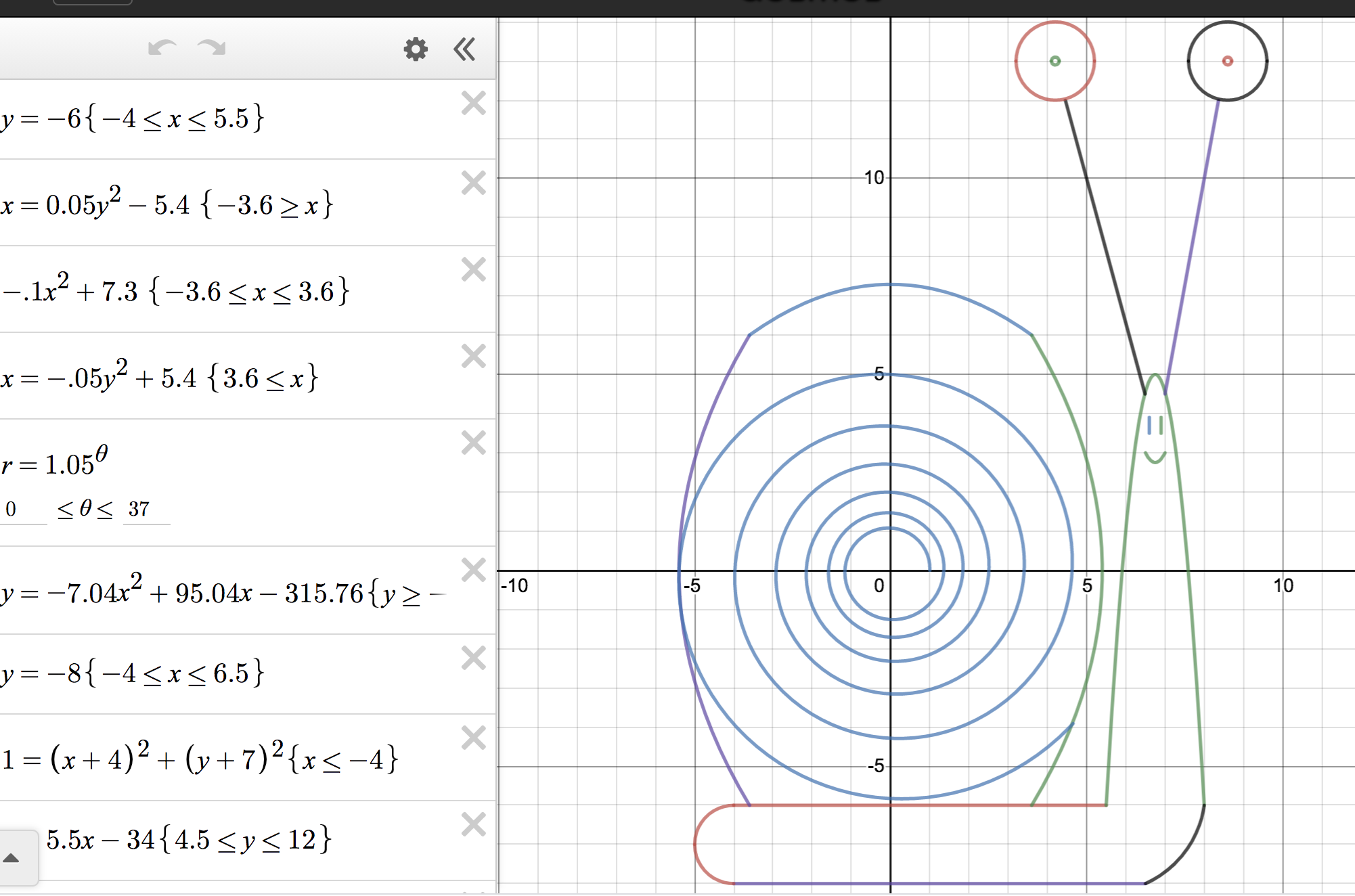
Vez’s Spring project:
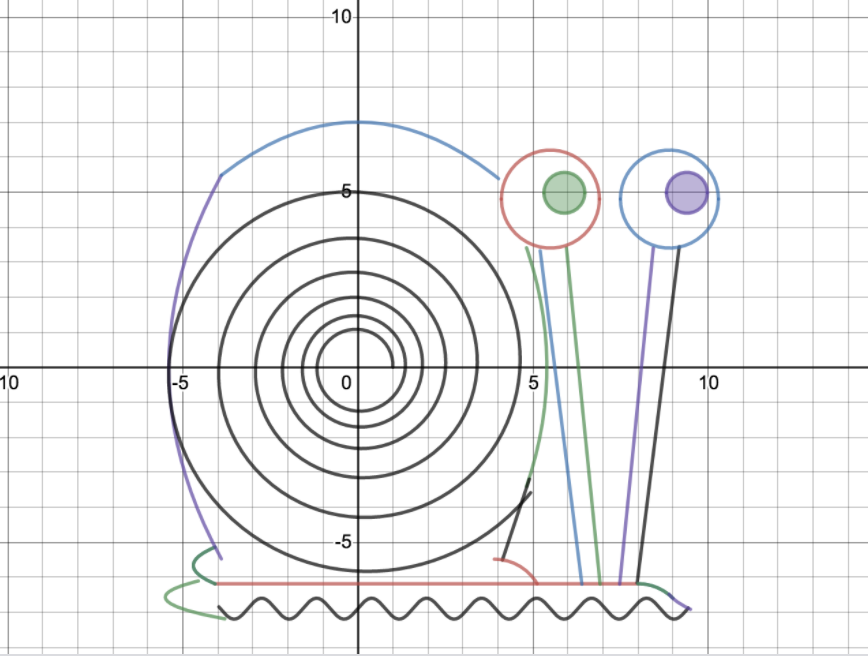
Vez’s surprising (he had already graduated) Summer revision:
Notes from Friday
It’s been a hell of a day and a hell of a week and a hell of a last six months.
Six months ago, today, I did not report to work. The risk was not worth the PD. Fast forward to last week and the week before, and our PD was teacher led, topics were chosen by polling teachers, and some was mandatory, but the sessions that were voluntary were still full. I wish the people in charge of PD at the Department of Education could come to a school that is doing bottom-up PD, and learn what the good stuff looks like.
Today Ruth Bader Ginsburg died. There will be mourning and a nomination fight and a vicious 46 days until the election.
Today I read that Jose Vilson resigned. Where is he going? I don’t know. But I wish him adventures and success and the opportunity to break some stuff. Some stuff needs to get broken.
Met my classes. Yesterday, actually. Yes I like being in class. And no, I don’t like doing it on the computer. And yes, I wish it were in person, but not until conditions are ready. This feels like a ritualistic repetition, a prayer without meaning, a politicians “of course I ….” recited at some point in each speech. It’s true, all of it, but why do we all feel the need suddenly to say we like teaching? This is our chosen career. Maybe we should be.a little less defensive about it, all of us.
But we practiced break out rooms and using virtual whiteboards, which, by the way, virtually suck. But kids like making hearts and arrows and writing “POG” and “POGGERS” frequently enough that the Old felt compelled to look it up to make sure it wasn’t evil or dirty.
After work today my feet took me to Fordham, where I found an alum at a small rally (maybe 100) for remote openings. Cool. And then a woman spoke and we looked at each other, and we thought we knew her. Sure enough, our Assembly Member, Nathalia Fernandez, making some noise and running for Borough President. We chatted for a minute, about schools, and my school (she says she will help with a diversity initiative), and a friend’s school that an Assembly Member from the neighboring district is helping move to all remote…
So I wish there was a nice moral, or a summary, or a clear conclusion. But these are starting points, way points, premonitions of a tumultuous autumn. These are signs pointing to events to come.
How WILL my online classes go, what political turmoil and violence will arrive in RBG’s wake, where IS The Jose Vilson headed, and how WILL the fight for all remote in NYC proceed – and will my union leadership join it?
What Just Happened with Staffing?
Background
Since June the UFT and the NYC Department of Education have been trying to find a way to open NYC schools – with classes in the school buildings – in September. It may have been a noble idea in May or June; it is a lunacy today.
Back when we started, the obvious first adjustment would be to limit the numbers of children in a classroom, to provide for social distancing. Every version of every plan broke classes into pieces to accomplish this. Effectively, class size was being lowered. In a weird, pandemicky context, every plan was a class size reduction plan.
Reducing class size creates more classes. 600 students with a class size of 30 – that’s twenty classes. Reduce class size to 20 – that’s thirty classes. Reduce class size to 15 – forty classes. And reduce class size to 12 – that’s fifty classes.
The Story Begins
How do we go from 20 classes to 30 classes? Here’s one way: If each teacher has five classes, we could go from 4 teachers to 6 teachers. And in a system with 1.1 million students in maybe 40,000 classes – whoa, that’s a lot more classes, and that’s a lot more teachers!
How else could we go from 20 classes to 30 classes? Here’s another way: If each teacher used to teach five classes, let them teach 7 each (we can find a way to cover the last two). Now, this is NYC. No one in their right mind thinks anyone would proposed increasing workload on a teacher by 40%… Right?
How else could we go from 20 to 30 classes? Here’s one more way: If each class only met two days out of three, then the teacher, same number of periods, would be teaching more classes. A NYC teacher with 25 periods normally has five classes – the same teacher would now have seven and a half (ok, no half class, but at scale that’s how the math works).
So, one problem, three solutions:
- Hire more teachers
- Give each teacher more work
- Make each class meet less frequently
Over the summer, most DoE schools were preparing to give teachers more work. Teach 25 in person days, and post material for on-line classes, and do something live on-line as well. In addition, we learned in the spring that any live remote teaching took more preparation time than normal teaching – and not marginally more, significantly more.
The ridiculous staffing plan signed by the DoE and UFT in late August essentially created the need for many more teachers – when both sides knew that no more teachers were being hired (well, a few, but nothing close to the 5 digit need they were defining). In addition, the agreement left fully remote teachers with the Spring exhaustion issue – live remote teaching takes significantly more work than regular teaching.
And then, this week, Carranza backed off the demand for live remote teaching for students who receive some in person instruction (most commonly, one day out of every three). That is the equivalent of making about half of our classes meet less frequently – the third solution. It instantly reduced the staffing crisis – but it continues to rely on in person teachers also prepping asynchronous remote – which is not as onerous as live teaching remote on top of a full day, but it is hard. This adjustment leaves us with a mix of the second and third solutions, and the workload issues remain overwhelming.
Where do we stand now?
We are understaffed – but not at a crisis level. Students will likely receive less instruction than Carranza promised. Fewer teachers will be given outrageous workloads – but still enough that we should be very concerned. But this is only true if schools can adjust plans in light of the last minute change in instructions.
Carranza’s “adjustment” made a mess of school’s plans, without time to adjust. I’ll try to write about that later today.
Last word – apologies for the pace of my writing slowing in recent days – the demands of the September 21 Avoidable Disaster on me were significant, and I was planning and programming – jd
A Clear Line
Sometimes a situation can be complicated and murky.
A month ago that’s how the DoE’s school reopening plans may have looked.
Today? No. We know what’s in the plans. There are six days to make side deals and little arrangements and come to understandings – but we see the picture.
Thus the line. The clear line.
Are school’s ready to open? Or close enough that we can make a few adjustments to get them there, and we should fight hard for those adjustments?
Or are schools not safe to open? And we should be fighting to keep them remote.
The majority of teachers I interact with, the vast majority, think we should go remote.
What about you? Do you think we should fight to go remote? Or should we spend the next week fighting for a safe September 21 opening?
Most Chapter Leaders I speak with – they think we should be fighting for remote. Most union officials think we should be remote.
But our union president? He is so focused on making a 9/21 in the building opening… It’s time for him to say it.
Should we be fighting for a safe 9/21 opening? Or should we be fighting for full remote? Which is our priority?
The teachers think we should go remote. That’s true. And that’s what we need to hear our union president say.
Remember to Look Beyond the Crisis of the Day
New York City public schools have been open for staff for two, three, now four days. And we have been busy dealing with problems.
Our immediate focus was drawn to personal protective equipment (PPE) and associated cleaning supplies (disinfectant spray, wipes, sanitizer). That seems to be solved? Maybe. Took some schools (Hi there!) two days to get deliveries; many are still incomplete. But most “stuff” is in most places. There are still issues. In some schools principals are refusing to distribute sanitizer, wipes, and gloves. Various parts of deliveries were short. But for the most part, “stuff” has arrived.
And then there was a storm over ventilation. Trust me, we will hear more about that topic. We are looking at a whole bunch of half-measures, many of which will no longer suffice on September 21 when kids arrive. Interior offices are a ventilation nightmare. (Stay out, if you can, unless you have been promised safety, in writing). And what spaces are safe, under what conditions, without HEPA or MERV13+ filters? And ventilation all goes to hell when the heating season starts. It is the height of irresponsibility to open schools in September, hoping that you will think of a plan for November. Who knows, and is remaining silent?
And now? Three COVID-19 cases in school so far. Nope. Six cases. Nope. Eight cases. Actually, sixteen so far. And this was just day three. There will be a flurry of concerned news stories. Except perhaps the NY Times, whose ace reporter thinks cases will happen and we should get over it, when she is not retweeting a reopening proponent, without identifying him as such.
But do not lose the big picture – all of this is dangerous, all of it is unfair, none of it will work.
Do not let each day’s crisis, and there will be another, and another, and another, do not let this series of crises distract from the need to go all-remote, or the fact that the opposition comes from our Governor, our Mayor, iur Chancellor, (and for now, our union).
We should not get so caught up in the “issue of the day” that we forget all the ways that going remote is the right decision, and not going there is wrong:
- Yes, keeping spaces sanitized will be challenging, even with the proper supplies.
- Yes, you were right to be nervous. Ventilation is a big problem. And everyone should know that the temporary solutions (might be good enough for now) won’t work when it gets cold. People know and aren’t speaking about this.
- And yes, sick people will come to school without knowing they are sick (it’s already happening) and get more people sick. This system of not mixing kids through the day, and random testing – it is designed to limit the SIZE of the outbreaks. It is not designed to stop the outbreaks from occurring.
But there is more:
- The planning (pedagogical, scheduling, and logistical) was done by almost two thousand principals, many of whom are not qualified to do this planning. We should not have to watch the results the week of September 21 – 25 to decided that the impending disaster is actually a disaster.
- The blended learning models will provide WORSE education than fully remote, in most cases. This will be true in 100% of high schools (except a substantial number that have used an exception to essentially avoid implementing the chancellor’s plan – or, as I am currently hearing, never applied for an exception, but are simply disregarding their chosen model). And, we are in the hole. Instead of our most ambitious planners devoting this summer to preparing for fully remote, we have instead been engaged building a blended sandcastle, which we will watch wash away.
- Social distancing is hard to maintain for adults. It will be much harder with children. Carranza’s plan “teach them” is just his way of shifting blame onto the classroom teacher in advance, for a problem that he created. It will be massively problematic in the majority of our schools, at every level. Kids get close. Kids touch. Kids share things.
- School overcrowding in NYC is a real thing. Because of this the DoE planned not for a good number for each classroom, but for the maximum number that could support social distancing. They shifted their guidelines. They went from 65 square feet to person to 50 square feet per person, often forgetting to count the teacher. They advised that 9 – 12 would be typical. I know, you should know, the Chancellor knows – if schools are given choices, and put in impossible situations, they will choose the maximum allowable. And the repercussions? See “social distancing” above.
- Entry and movement plans are not easy to devise, and may be hard to maintain. Especially for 1800 principals without training. Imagine what happens when too many people enter at once. Or when the line extends around the corner – or into the street. Or when a kid shows up on the wrong day. Or when twenty do, and there’s no space…
- There is another aspect to overcrowding: other space. Where will teachers sit when they are not teaching? And by sit, remember, that many teachers will have to run live lessons with kids at home. Where is this space coming from? Many schools, probably most, do not have adequate office space or empty rooms to allow teachers to work, while socially distanced. And, oh yeah, don’t forget – the worst ventilation problems? Offices.
- And then there is staffing. The UFT and DoE agreed to a staffing plan that created need for many more teachers – at a time when there was no more budget. This will not work. Some schools are putting “vacancy” as the teacher’s name for 5, 10, even 20 or 40 teachers. Other schools are not providing instruction while the child is remote (often two thirds of the time). And other schools are just waiting. Schedules are a mess. We do not have workable plans. And with all of our space eaten up, we cannot combine classes, or move them to the auditorium. Carranza brought us to the breaking point, and left us there, so that normal circumstance will do the actual breaking.
- Back to staffing, and workload. There is one more approach that many schools are choosing – perhaps most schools. They do not have adequate numbers of teachers to run the school with the plan Carranza and the UFT agreed to. So they are giving teachers full schedules, and then adding remote classes. Instead of pushing the school to the breaking point, they are pushing the human beings who work there to the breaking point. The spring was brutally difficult to be a teacher. Workload was off the scale. We felt, many of us, most of us, physically exhausted. But that was not by design. Carranza is watching principals actually plan to do even worse to us – full remote teaching load, plus extra hybrid remote classes. And the UFT agreed to higher class size limits for remote. Or full in school teaching load, plus hybrid remote. They are pushing the workload off the scale. I wish I knew that the UFT was looking at teacher schedules.
Unsafe conditions. Chaotic “planning.” Schedules that will not work. And unbearable workload. AND people getting sick. It’s time to stop this nonsense before it goes any further. We need to go remote, now.
They Did Not Keep Us Safe in March; Do Not Trust Them Today!
Andy Cuomo took way too long in March to start shutting things down. Remember him overruling de Blasio’s “shelter in place”?
But the Mayor wasn’t better. In March Bill de Blasio kept the schools open when they needed to be closed.
Chancellor Carranza heard reports of COVID-19 in buildings, and he and his cronies hushed them up, and didn’t close the buildings.
Someone, maybe everyone on the 14th floor of 52 Broadway knew we had confirmed cases in schools, and went to court to force the closures…ok… But in the meantime allowed UFT members to walk back into those buildings.
– – — — —– ——– ———— ——————— ————- ——– —– — — – –
In May I examined their record from March, and suggested putting protection in place for September. It did not happen.
– – — — —– ——– ———— ——————— ————- ——– —– — — – –
Who is keeping you safe tomorrow?
The DoE just released ventilation reports. For each room they ask
Are there windows? Can they be opened? Supply fan? Exhaust fan? Unit ventilator?
Nothing about dampers, about air exchange, about filters. Nothing about how many windows open (well, at least one), nor how wide it opens. They don’t even differentiate between offices and classrooms.
They just want you back in school.
The UFT has provided us with a protocol for dealing with missing PPE and cleaning supplies. Good. But where is their guidance on ventilation? COVID-19 is primarily an airborne disease.
Where is their guidance on how to read the reports? The UFT’s own reports intentionally did not evaluate ventilation. Where is the written guidance on MERV13 filters? The UFT seems to imply we are safe without them. I don’t think that is true. Let’s see it in writing… With Mulgrew’s signature at the bottom. (I know, not happening).
They just want you back in school. (with random testing).
de Blasio is on a mission to open schools. He just wants you back in school.
And Cuomo? Remember Andy Cuomo? What a moment to disappear. Apparently his squabble with de Blasio doesn’t extend to the health of teachers. He is fine with you back in school.
– – — — —– ——– ———— ——————— ————- ——– —– — — – –
So who is looking out for teachers and other school staff?
No one is doing it for us – we have to look out for ourselves, and for each other.
Something is missing? Discuss it with each other. Have the Chapter Leader discuss it with the Principal. Have the Chapter Leader call the UFT hotline. No one is going to do it for you.
Something seems wrong? Discuss it with each other. Have the Chapter Leader discuss it with the Principal. Have the Chapter Leader call the UFT hotline. No one is going to do it for you.
You are being asked to go into a space that you suspect is not properly ventilated? Discuss it with each other. Have the Chapter Leader discuss it with the Principal. Have the Chapter Leader call the UFT hotline. No one is going to do it for you.
We wear masks to protect other.
We point out unsafe conditions to protect each other.
We shut down unsafe spaces to protect each other.
Who is looking out for teachers and staff?
Ourselves alone!
Ventilation? Ventilation!
I need to vent. So do our schools.
But how do we know if the ventilation in our schools is adequate?
Bad ventilation is always an issue. During “good” times people claim bad air in buildings affects their health. But this is about COVID-19. What defects in ventilation put our students, and ourselves, at risk of the virus being spread?
If we were just talking about students, we have until September 21 to answer those questions. But we are not talking about just students.
Tomorrow, September 8, staff are due to report to buildings. In some schools that will be two dozen adults. In some schools that will be several hundred. The numbers are small enough that we can successfully maintain social distancing. We will have PPE, or if we don’t, the UFT has established a useful PPE protocol:
No PPE?
Talk with the principal.
Members wait outside.
Call UFT Hotline 212-701-9677.
But where is the Ventilation Protocol?
[ this space left blank – but why? ]
My main point today is this: The UFT has provided us a PPE protocol, but not a Ventilation Protocol. We should do our best to apply the PPE protocol to ventilation as well. I’ll come back to this. But if there are ventilations questions, talk with the principal. Limit access to iffy spaces. Call the UFT Hotline. I’m not sure about the waiting outside part.
Note: Today I am addressing primarily chapter leaders and their designees. But members should be aware and informed, especially where the chapter leader has been reluctant to step forward.
Where are the reports?
The DoE reports are not yet available. They’ve known this is an issue since May or June. They’ve had all summer. This is willful disrespect to staff. This is willful disregard of our safety.
What about the UFT Walkthroughs? aka “School Safety Report”? Chapter Leaders were banned from watching the inspections. But then the report arrived and didn’t tell me useful information about ventilation.
Ventilation (Page 4 of 16) (Consult with the custodial engineer. The intent is not for us to certify the building’s ventilation system but to verify the following questions with the custodial engineers.)
They specifically were instructed not to say whether the ventilation was safe, which is sort of what we need most.
We do have reports from over a year ago – BCA – I think that’s Building Construction Authority? but they are out of date. And I do not know how to read them correctly. But here they are. You can look up your school. Click “Mechanical” for the ventilation system.
What do I know?
- I know that airflow is important.
- I know that the frequency the air in a space is replaced with fresh air is important (air exchange).
- I know that this is more important in spaces where people are generating more droplets and aerosols with more exit velocity (eating, singing, shouting).
- I know that fewer people = less risk
- I know that “dampers” matter.
- I know that HEPA filters are really useful, but that they are not practical for HVAC systems.
- I know that filters are rated by their Minimum Efficiency Reporting Value (MERV) and that to get sneeze droplets we are looking for a minimum value of 13.
But none of this tells me how to evaluate a report, or a room, or an office. I am smart enough to take a guess – but what good is a guess? Do I know if a system brings in fresh air, or recirculates air within the building? Do I know if a small open window allows enough air in? Do I know if the MERV-8 filters are a problem with low occupancy? I can answer questions about cosines and permutations and matrices with certainty. I can only guess about air flow.
If I am 70% confident that a room is safe – am I willing to tell someone to go into it? With a 30% chance of being wrong? This is not about a colleague getting their clothes dirty – it’s about a potentially fatal disease.
Maybe we could get advice?
But I don’t trust the UFT leadership on this – because it so eager to open schools. (Why is Instructional Lunch safe? Because we need it to open schools. They are proceeding from their conclusion – that schools will be safe, and deriving facts based on that. We should be skeptical). Plus they have offered on ventilation – nothing. No UFT guidance on ventilation.
And I do not trust the Department of Education – because I am not stupid. And they have intentionally withheld their reports.
I have contacted an outside expert – but I know that path is not available to most schools and Chapter Leaders.
What do we do?
Minimum Level. Insist on masks at all times in the building, and social distancing. Open windows as possible, and all doors. Follow the PPE protocols, including keeping your members out if PPE is missing. (every item? Well, masks, sanitizer, sprayers… every item, or almost every item)
Iffy spaces. See if you can get agreement with the principal to shut down spaces with large question-marks. If not, advise people to avoid them, to minimize time in them, to be fully masked (preferably with N95) if they enter them briefly.
Next Level. Even if you think you know, but you are not sure, that’s a red flag. You should not be guessing when it comes to colleagues’ physical well-being. If the question is not a few spaces, but the building as a whole, or most of the building, this has been unfairly dropped on you, but it is on you. The UFT hotline on Tuesday is for PPE, not ventilation. I don’t care. Talk with your principal. Call the hotline.
Should members wait outside? I don’t know what to say. I don’t know who would be comfortable in the building, and I don’t know who would be comfortable leaving it.
Who can tell you the building is safe?
- Not the principal
- Not you
- Not a science teacher
- Not a UFT District Rep or Special Rep
- Not a UFT safety investigator
- Not a superintendent
If you have a potential issue the building should be cleared by an industrial hygienist, or someone with an equivalent level of training and certification.
Remember, if you do not know, you do not know. Guessing games can be fun, but not when COVID-19 is involved.
Me
I am advising people to steer clear of a handful of iffy spaces. I am emphasizing masks at all times, and social distancing. Open windows, open doors. And I have an expert coming in, who I think my members and principal will trust. We should be able to relax a lot more (or not!!!) once we have heard from him.
No PPE in School? Here’s What We Do
The UFT has a good protocol in place for missing PPE – it came in an email over Mulgrew’s signature Friday evening:
Your school must have personal protective equipment in place when staff return on Tuesday, Sept. 8. If PPE is not available, immediately discuss the situation with your principal, the custodian or the leader of your school’s COVID-19 building response team. If the issue cannot be resolved immediately, call the union’s hotline at 212-701-9677. The hotline operator will triage your call to a UFT staff member, who will promptly come to your building to confirm your report and take further action. UFT members should leave the building and wait outside.
Those directions are for your school’s UFT Chapter Leader. (unless they CL is recalcitrant, they are the one who should probably make the call)
Chapter Leaders – I hope you have been in contact with your principal, and know the status of the PPE. Even better if you inspect it yourself. If some or all PPE is missing, be ready to consult quickly with your principal Tuesday early early in the morning, with your committee if you have one, and then call the hotline if necessary. If you have not been in contact with the principal, please email today. Seriously today. Don’t wait. They get bothered by the DoE at all hours for nonsense – and this is actually important.
Chapter Leaders – if you did not update your members late last week, please do so before Tuesday. Let them know what to expect, especially if there are immediate problems.
Members – I hope your Chapter Leader has been updating you. If not, you should check with them what the status of the PPE is.
Members – Tuesday morning, if you have questions about PPE, find your Chapter Leader before you enter the building.
Personal Protective Equipment (PPE) – the UFT has a list:
Schools need the following equipment and supplies on Sept. 8, 2020.
-
- Surgical masks for adults
- Surgical masks for children
- N95 respirators
- Face shields for adults
- Electrostatic sprayer
- Cleaning supplies for daily and nightly cleaning
- Supplies of gloves, disinfecting spray (or wipes), towels, hand sanitizer in each room
- No-contact thermometers for temperature screening
UFT Walkthrough Reports. I’m generally a fan of distributing information quickly, but our report was kind of hard to read, and might be confusing. The “investigator” visited the school quite briefly, and mostly asked the principal questions and wrote down his answers. I did send out a narrative description with highlights and issues of immediate and imminent concern yesterday. I think that will provide more context for the report, which I will send out today.
Me. We do not have PPE in our school. The principal has been actively pursuing the DoE, who now say it will be delivered over the weekend. Crossing my fingers for Tuesday!
What happened?
August 19 and August 20 the United Federation of Teachers leadership began work towards a school reopening job action. NYC and the NYC Department of Education had been mostly uncooperative all summer. Disagreements about safety were not close to be resolved. The Department wanted minimal testing requirements, the union wanted stringent testing requirements.
There had been cooperation over the summer – but the results were generally bad for teachers and schools: Blended learning with impossible constraints, 1800 plans written by 1800 principals (with training in pedagogy, not in safety planning), Instructional lunch, and just now more roles than teachers.
So August 19 and 20 the UFT holds a press conference, announces safety non-negotiables, and begins organizing meetings. First chapter leaders were invited to borough-wide meetings. Then members were invited to meetings in smaller groups.
My union is run top-down. Central gives instructions to the boroughs, and often directly to District Reps. District Reps give directions to Chapter Leaders – some of whom follow them – and that’s all that’s really expected. In a few chapters there is actual discussion, but in many the CL doesn’t even communicate information from the Central, and in most the CL just communicates from Central. There is not much two-way flow of information. The idea of Officers and Reps “serving” members is paternalistic, at best. (with very notable exceptions – if you almost jumped out of your chair when you read those words – you are probably in that minority. And we are incredibly thankful to the handful of you)
So Chapter Leaders, then members got invited to meetings. And the stakes, possible job action, questions about personal safety and safety of our students, were high. Very high. Higher than at any other union meeting most of us have been to. Ever. And the reaction was not what they leaders expected. In the UFT, instructions are given, chapter leaders follow them, or ignore them. But here there were questions. Lots of questions.
- Do we have to strike? (Quite a bit of nervousness)
- Why aren’t we demanding full remote (Quite a few challenges to Central’s “We want to go in, but safely” strategy)
- What’s the timeline? (Central had not prepared a timeline. These were designed a bit like pep rallies)
- When’s the vote? There was no answer.
- What steps should chapter leaders take? The answers were absent or nebulous, came from a variety of sources, but not central. I was asked to organize a chapter meeting, but not yet. And there was no follow-up to say “now” (passive voice there, intentionally so) (Central had not prepared next steps. These were designed a bit like pep rallies)
The process gets repeated in the member meetings, but attendance is gooooood… but not excellent. And members might ask fewer difficult questions, but there is a clear “enthusiasm gap” (larger when considering the significant numbers who did not come).
What happened?
That’s easy. You should not run a union top-down. You cannot organize a strike top-down.
By August 27 and 28 it was clear to many that this was not going right. Instead of vagueness about a schedule for voting, discussion was filtering to the members that it would be Exec Board 8/31 and Delegate Assembly 9/1, and there was not time for a membership vote. After the DA , the move would be to court for an injunction against an unsafe opening.
I was worried about what was going on. I wrote to Mulgrew and the officers, urging them NOT to skip a membership vote:
I understand that there is consideration of strike authorization votes at the Executive Board and the Delegate Assembly.I also understand that there may not be a membership vote. I hope I am mistaken. That would be a serious error.
There is the issue of democracy. but I think that is relatively minor.
But the issues of member engagement loom large. Organizing a vote increases member engagement, and member buy-in. It also provides real-time feedback from the field. Are chapter leaders organizing? Is there resistance? What are the issues?
The activity around organizing a vote makes a strike more effective.
For members who are already on board, it makes a smaller difference; the vote increases enthusiasm. But for members on the fence, skipping the vote sends the message that the leaders don’t trust the members, or don’t care what they think. It will harden the pockets of resistance.
I don’t know if support in the field is at 95%, 85%, 75%, 65% or 55%… but even at 85% we need to win more people over.
A membership vote makes us – and any potential job action – stronger.
I hope that I was indeed mistaken – that a membership vote is planned. But if that is not the case, I would thank you to consider the matter carefully,
And then on Monday August 31 the vote at the Executive Board was for both strike authorization, but also for 24 hours more to negotiate. And Tuesday morning de Blasio and Mulgrew and Carranza announced a deal.
Why the deal?
From the mayor’s side, there really are serious problems with the plans. September 10 (which had been scheduled to be the first day with kids) was looking like a disaster. He bought time, and he bought labor “peace” without much cost.
From the UFT leadership’s standpoint, the strike threat was not nearly as effective as they had presumed it would be, and they did not have confidence they could pull off a job action. Under those circumstances a deal might not have been such a bad move.
An alternate explanation comes from Mike Schirtzer, one of three non-Unity Caucus members on the Executive Board, and the only one to vote against the deal:
It was the very threat of a job action and litigation by our union that forced this mayor to come to the negotiating table to address the issue of keeping our children and educators safe. Before that point he wouldn’t budge.
I agree with most of Mike’s reasoning, and appreciate his willingness to speak openly about it. But I don’t agree with his assessment that the threat was effective (and I dismiss the UFT leadership’s similar assessment as self-serving)
What would have happened if the UFT had moved forward towards a job action?
Given the very tight tolerances for scheduling (unworkable, actually) a school might not be able to function, even if everyone shows up. But 30% staying out (beyond those with accommodations) might have shut a school. And the real number would have been higher. But how much higher? Some schools, maybe not all, but probably most, would have been unable to function. A strike, even with the preparations looking half-assed, would probably have shut the system.
A strike might have shut the system, would probably have shut the system, but without any guarantee. And a few entire schools might have kept working – a few at first. With time a weak strike (and there would have been time) could have easily become weaker.
But even if a strike had been effective in shutting the system, a weak strike would have done incalculable damage to the union in the long run. It would have divided us. It would have made member bitter at member, and further diminished trust in the leadership. A short term win was possible. But a long term, expensive loss was in the cards.
Couldn’t there have been a better threat?
Yes. But that would have required a different approach.
- Open discussion. Organizing for a job action requires that members talk to each other. Members need to convince themselves, and convince each other. Most of our chapters do not engage in open discussion of union issues. That should change. But that’s hard. The UFT has developed a culture where asking hard questions or disagreeing is treated as disloyal. It will take a conscious effort to end that. I mean, in fact, it is disloyal to the membership when one of us knows there is a potential problem, but says nothing. But how do we get to the place where showing loyalty to the union and the membership comes before showing loyalty to an officer?
- Time. Any kind of organizing takes time, but especially when we need to get 100% or close to 100% on board. Starting August 19? Come on. And it is not just now. Union decisions have to allow members time to figure things out. To talk. To schedule. But three weeks to go from zero to strike was not adequate.
- Sharing information. Real discussions require real information. And holding information back from the membership should be considered incompatible with leadership. It’s not just now. This organization speaks to the Mayor, to the Chancellor, to the Press before it speaks to members. That’s bad. At the Chapter Leader meetings two weeks ago CLs asked “what’s next?” and DRs said they didn’t know – because UFT Central was not sharing information. At the DA Peter Lamphere asked where we could read the agreement. You know what? The UFT leadership has asked members and delegates to vote on agreements in the past, when we did not have them to read. (Here’s an example) That’s wrong.
- Knowledge of strike organization. No one in the leadership of the UFT has led a teachers strike. Almost none of the school-based membership have been involved in a strike. We went into this without experience. But other AFT locals have had those experiences. All layers of our leadership, in better days in the future, should learn from locals with strike experience. For officers and reps arranging trips and seminars should not be too hard. Workshops in NYC for chapter leaders and chapter activists would be useful. And they, in turn, could bring the knowledge back to chapters.
- Goals. This gets really specific. But the UFT leadership’s goals were wrong. Early on, maybe late May or mid June, they decided that NYC schools could open in September. I have written about the fixation on blended learning, and on compromising all sorts of stuff to make it happen. The UFT leadership, before this talk of job action, had already given up on the one clear issue that had a chance of uniting the membership: keeping our schools remote. Look, members agreed with Mulgrew that the “schools should be safe” and that we needed “better testing” – but those were not enough.
So they cut a deal. We cut a deal.
What’s in the Deal?
Random testing, of a pretty big chunk of staff and students (UFT had wanted 100%, before school began)
Delayed opening, teachers 9/8, remote for sign-in purposed 9/16, full instruction 9/21
(Vagueness warning) – some ability for a chapter to have safety issues addressed before going into a school
Is this a sellout?
This deal? No. Each one of those points is something we should want. Better testing. More time to prepare for the year. And some ability for chapters to walk out.
We can be disappointed that it is not nearly enough. It is not.
But we also know that we averted a risky strike that could have weakened us in the long run.
Of course, there is more. We still have plans that won’t work. We have unnecessarily risky maskless instructional lunch. We have 1800 plans devised by 1800 principals, some of whom I wouldn’t trust to tie their own shoes.
We also have to address the individual school safety issues. This has been dumped onto individual chapters – potentially dividing the strength of the union. We need to see how aggressively UFT Central and the Borough Offices pursue violations, and how actively they encourage and support chapters standing up.
Are we done?
This is not the last deal for this year. If schools open September 21 there will be huge problems and issues all over the City. But we have a few more days. We want to teach. We want the teaching to work, as best as it can under these circumstances. And we want to keep all of us, ourselves, our families, our schools, our colleagues and our students, safe. We will ultimately need to be remote.
NYCDoE Denies Medical Accommodations for Serious Risk Factors
Unconfirmed – but likely true.
Update – they denied MOST, not all
It appears that the New York City Department of Education has denied every request most requests for accommodation by a school nurse – even those with serious risk factors (eg. immunocompromised) and multiple risk factors.
The DoE needs nurses in every building to open.
The drive to open is folly. Political folly. de Blasio’s political folly. The only big school system in the country to open. Whether or not it is safe. Whether or not it is possible. And as the DoE finds obstacles, which they have and they will, since it is not time to open, they dump the problems on principals, or they ignore them, or they come to some horrible compromise with the UFT (insert reference to “instructional lunch” here.)
One big obstacle de Blasio faced was not enough nurses. We were 400 nurses short earlier in the summer. They promised to hire them. Mulgrew said schools would not open without them. But I do not think any have been hired. This will be an issue Tuesday. It will be a far larger issue September 21. The DoE is sending teachers into unsafe schools on Tuesday, hoping there is not a big backlash. But the day the kids come back?
In any case, they are short nurses. And they had 80 – 100 current nurses asking for accommodations. And they considered what the right thing to do was. And they considered what they would need to do to support de Blasio’s political folly. And given the choice, to act morally or act politically, they chose politics.
That does not explain why they waited until the Friday before school to deny the eighty nurses. You might think cruelty, but I’m inclined to believe they are more practical than cruel, and that waiting so late meant that nurses had no time to appeal. Or to sue.
And then there’s the union. There’s been an unhealthy obsession with opening, even at too much cost. We have 1800+ principals without engineering degrees trying to design safety systems. We should have been screaming about that. Our union accepted “Instructional Lunch.” For the members. Come on.
And today is a big test. We should expect the UFT to fight for accommodations for its nurses. Safety of ALL members is important.
Questions for today’s DA
How does today’s agreement solve the staffing crisis caused by the Chancellor’s Blended Learning Guidance from last week?
Do members still have to supervise maskless “instructional lunch“?
What do we do if there is not space for teachers who are not teaching?
What do we do if there is not a nurse?
What do we do if our school does not have PPE?
What do we do if our school does not have a plan for kids who come in on the wrong day?
What is up with childcare for UFT parents? (for their kids in public schools on hybrid schedules)
How is ventilation being measured?
What happens if we disagree with the DoE about whether a room can be used?
What happens if our room is full (socially distanced) and the principal sends one more kid?
What is the checklist on the UFT Safety walkthrough?
How can chapters see the reports from the UFT Safety walkthrough?
Why are Chapter Leaders banned from the UFT Safety walkthrough?

Today’s agreement buys us seven days. It is not enough. We need to stay remote until we are ready.
UFT and DOE reach a deal
Students will start September 21.
Testing will be ramped up.
That’s all I have at this moment.
First Group of HS Principals Ask to Go Remote
Brooklyn was first. 216 High School Principals and APs
August 27, 2020
TO: Mayor Bill De Blasio; Chancellor Richard Carranza,
As our colleagues in other Districts have expressed in letters sent to you, and in solidarity with our union (CSA), the Principals and Assistant Principals of Brooklyn High Schools are deeply concerned. We are concerned by the lack of readiness for the planned reopening of our schools in just two short weeks. Considering the high risks of COVID-19, we call for you to arrange for 100% remote instruction of our students, as other leaders in cities in our country have championed. We are deeply concerned that until all school leaders are adequately trained and supported with the implementation of the 70 + pages of safety protocols outlined in the First Deputy Chancellor’s Principal Playbook, the first month of school should start remotely.
The Brooklyn North High School Superintendency, led by Superintendent Janice Ross, and the Brooklyn North Borough Office, led by Executive Superintendent Karen Watts, and the Brooklyn South High School Superintendency, led by Superintendent Michael Prayor, and the Brooklyn South Borough Office, led by Executive Superintendent Barbara Freeman have been supportive around our collective concerns to their best abilities to address the collective concerns of our members. However, Central DOE Leadership has not provided our district and school-level support teams with detailed information for implementable and effective options.
Our concerns about our ability to safely open in two weeks (on 9/10) are:
- None of the models of instruction that schools were required to choose from allow parents to get back to work, which was initially one of the primary purposes of reopening the schools.
- Many of the 141 health and safety concerns submitted to Central DOE Leadership by
CSA have not been addressed.
- We are concerned that Central will not be able to provide the necessary quantity and
type of PPE to staff and students on time.
- The models of instruction all call for one teacher for approximately every 11 students in a given instructional period. To make this work, we would need nearly twice as many teachers than we currently have. While there are many pedagogues assigned to District and Central offices, it is not clear if those people will be available to work in schools. Adding to this, hiring freezes that have been put in place will also make staffing difficult.
- The custodial staff is being asked to keep hospital-like conditions and are expected to do
the deep and constant cleaning and sanitizing without more staff and an increased budget.
- Our buildings’ ventilation systems are not all operating as designed. Principals who have no expertise in this area should not be asked by the Department of Education to confirm their effectiveness without documentation. Once again, the added responsibility is being placed on the backs of school leaders who have enough on their plates to ensure synchronous and asynchronous learning.
- High School students who are in the same grade in the same school have a wide variety
of program requirements due to varied needs and academic performance. For this reason, it will be impossible for most High Schools to program their students into “pods.” This means that most high schools will have to plan for “student passing” in- between instructional periods. High Schools have received only vague guidance on how to handle the inevitable movement of students throughout the building and maintain the required six-feet social distancing.
- High School staff has yet to be given workable guidance as to how to handle students
who refuse to wear masks and/or refuse to socially distance.
- High School staff has yet to be provided workable guidance as to how to handle
students who show up to school on the wrong day (meaning that the given student shows up on a day that he/she is scheduled for at-home remote learning). Schools are not permitted to deny students entry to the building. However, allowing too many students who show up on a wrong day to enter the building will create a situation where classroom sizes will far exceed CDC guidelines. Staff is already stretched thin, and it will not be possible for most schools to have a holding room that abide by the CDC limits of 8-12 students per room to send these students to.
Due to the above concerns, we seek the following changes to the current plan to reopen schools:
- Start the Year 100% Remote: Designate the first three weeks of September as fully
asynchronous instruction days so school staff can learn all new safety protocols, set up and inspect classrooms, train staff on trauma-informed instruction, ensure promised building improvements have been addressed, and allow Building Response Teams time to practice safety procedures.
- Phase-In Blended Students: Allow schools the option of phasing in blended learning
students from September 21 to October 18.
- Communicate Supply Shipments: Provide principals with guaranteed delivery dates,
shipments details including items and quantity to be received (PPE, cleaning supplies, etc.), as well as procedures for distribution within the school building and processes for replenishment.
- Ensure Building Councils Meet with Custodial Engineers: Ensure custodial engineers
have collaborated with school Principals to verify physical distancing signage has been posted, classrooms have been adequately set up, excess furniture has been safely stored, and that cleaning schedules are prepared and shared with school leaders.
- Provide Schools with Ventilation Reports: Reports detailing which systems have been
inspected, what repairs, upgrades, or modifications have been made, and how it has been determined ventilation is appropriate in each classroom must be provided to each school principal.
- Develop Protocol for Assigning Remote Teachers: Central must develop a procedure for selecting which teachers will teach remote only students if school leaders need more staff for remote learners.
In Unity, 1 Gill Cornell – Principal, 14K558
2 Steve Dorcely – Assistant Principal, 21K690 3 Antoinette Martin, EdD – Assistant Principal, 19K660 4 Brandy Huxtable – Assistant Principal, 19K422 5 Rashid Ferrod Davis-Principal, 17K122 6 Joan Mosely, Principal, 17K382 7 Kiri Soares, Principal 13K527 8 Andrea F. Ciliotta, Principal 21K690 9 Bryant Ng, Assistant Principal 21K690 10 Laura Morrissey, Assistant Principal, 21K690 11 Vincenza Mannino, Assistant Principal, 21K690 12 Matthew Katz, Assistant Principal, 21K690 13 Halley Tache, Assistant Principal 18k629 14 Esther Shali – Ogli, Principal 14K071 15 Jason Rosenbaum, Assistant Principal, 14K071 16 Nicole Abrams—Assistant Principal, 17K548 17 Uchechukwu Lawrence Njoku – Principal, 15K462 18 Sharon Evans – Principal 15K463 19 Natasha Jack – Principal 17k531 20 Michael McDonnell – Principal 22K405 21 Eric Newville – Assistant Principal, 32K403 22 ChántAndréa Blissett – Principal, 32K403 23 Nicole Lanzillotto – Principal, 15K497 24 Svetlana Litvin, Assistant Principal, 20K445 25 Catherine Mitchell, Principal, 14K614
26 Angela Eversley-Milton – Assistant Principal, 19K502 27 Nicole Lanzillotto – Principal, 15K497 28 AAden Stern – Principal, 19k404 29 Sarah Reedy, Assistant Principal, 19K404 30 Alona Cohen- Principal, 15K423 31 Jill Sandusky – Principal, 15K464 32 Adam Goldner, Assistant Principal, 20K505 33 Jeffrey Hammer, Assistant Principal, 19K422 34 Christina Koza, Principal, 19K422 35 Fredrick Manning Assistant Principal 20K505 36 Jane Wharton, Assistant Principal 14K478 37 Susana Giberga, Assistant Principal, 21K525A 38 Michael Bolt, Assistant Principal, 32K549 39 Ann-Marie Henry-Stephens, Principal, 17K745 40 Cicily Humes-James, Assistant Principal 17K745 41 Neil Pergament, Assistant Principal 15K423 42 Pauline O’Brien, Principal 18K633 43 Michael Shadrick, Principal 14K561 44 Tarah Montalbano, Principal 21K620 45 Sean Brandt, Assistant Principal, 15K429 46 Edgar Lin, Principal, 13K265 47 Janan Eways, Assistant Principal, 13K616 48 Veronica Coleman, Principal, 18K569 49 Jacob Baty, Assistant Principal 20K490 50 Natascha Minze, Assistant Principal 21K728 51 Dannielle Darbee, Principal 16K688 52 Sarah McCoy, Assistant Principal 16K688 53 Kimberley Bruno, Assistant Principal 14K558 54 Jennifer Zisler, Assistant Principal 17K600 55 Cluny Lavache, Assistant Principal 13K595 56 Jorge Arias, Assistant Principal, 14K474 57 Mitch Schrager, Assistant Principal, 14K478 58 Kayon Pryce, Principal, 33K891 59 Christine Ingordo, Assistant Principal 21K525 60 Arnold Gottlieb, Assistant Principal, 20K505 61 Llermi Gonzalez, Principal, 32K564 62 Connie Hamilton, Principal, 21K540 63 Thomas Oberle, Assistant Principal, 20K490 64 Maria Sandoval, Assistant Principal, 15K423 65 Victor John, Assistant Principal, 17K122 66 Sage Norman, Assistant Principal, 20K609
67 Melanie Katz, Principal 20K505 68 Nathalie Jufer, Principal, 20K609 69 Candace Hugee, Principal 19K764 70 Anna Tabet, Assistant Principal 19K764 71 Lauren Urrico, Assistant Principal, 20K505 72 Holger Carrillo, Principal, 14K478 73 Valerie Girard Ward, Assistant Principal, 13K605 74 Christine Imbemba Assistant Principal 20k505 75 Marissa Olivieri, Assistant Principal 18K629 76 Costas Constantinidis, Assistant Principal 15K519 77 Cristina Santiago-Campbell, Assistant Principal 13K430 78 Kelly Nottingham, Assistant Principal 13K430 79 Johnny Ventura, Assistant Principal 13K430 80 Jess Rhoades Bonilla, Assistant Principal 13K430 81 Kelly Lovelett, Assistant Principal 13K430 82 Rosabeth Eddy, Assistant Principal 13K430 83 Lourdes M. Cuesta, Assistant Principal 13K430 84 Richard Fisher, Assistant Principal 13K430 85 Maureen Goldfarb, Principal 20K445 86 LaToya Kittrell, Principal 15K698 87 Tanisha Brown, Assistant Principal 19K404 88 Virginia Izzo, Assistant Principal 20K490 89 Kelly Ann Witkowski, Assistant Principal 14k561 90 Todd Gerber, Assistant Principal 21K620 91 Louis Garcia, Principal 18k566 92 Franklin Encarnacion 19K507 93 James O’Brien 13K412 94 Michael A. Repole, Assistant Principal 20k445 95 Jorge E. Sandoval, Principal 32K552 96 Joseph Termini, Assistant Principal 14K561 97 Deanna Torres, Assistant Principal 32K168 98 Rachel J. Hill, Assistant Principal 17K122 99 Stephen McNally, Principal 21K344 100 Marie Prendergast, Principal 17K537 101 Gail Murray, Assistant Principal 23K514 102 Annamaria Mule, Principal 15K519 103 Allen Barge, Principal 21K525 104 Joe Arzuaga, Principal 13K605 105 M.T. Fernandez, A.P. 22K405 106 Jodie Cohen – Principal 22K425 107 Kristin Ferrales, Principal lA 13K483
108 John Christakos, Assistant Principal 20K490 109 Sean Rice, Principal 17k546 110 Giovanni D’Amato, Assistant Principal, 14K558 111 Valerie Vu, Assistant Principal 32K552 112 Lisa Grevenberg, Principal 17K751 113 Risa Bockler, Assistant principal 17K751 114 Leotha Harry, Assistant principal 17K751 115 Dawn Meconi, Principal 15K429 116 Evan Schwartz, Principal 07×600 117 Tamika S. Matheson, Principal 23K514 118 Michele Tran, Assistant Principal, 22K425 119 Marisa Boan, Assistant Principal 17K546 120 Anthony Veneziano, Assistant Principal 18k563 121 Heather McNamara Assistant Principal 18K633 122 Frank Whelan Smith, Assistant Principal 14K474 123 Philip Gill, Assistant Principal 19K615 124 Jackie McAllister, Assistant Principal 14K478 125 Alexandra Stahl, Assistant Principal 19K618 126 Xhenete Shepard, Principal 20K485 127 Rosemarie Tartaglione, Assistant Principal, 21K620 128 Nicole Woodham, Assistant Principal, 19K618 129 Rosemary Vega, Principal, 14K477 130 Mary Minucci, Assistant Principal 20K490 131 Fern Bren-Cardali, Assistant Principal, 22K405 132 Pascal P. Licciardi, Assistant Principal, 21K525 133 Jamie Weyerbacher – Assistant Principal, 18K617 134 Matthew Meyerson, Assistant Principal 17K600 135 Adaleza Michelena, Principal 18K617 136 RoseAnn Torre, Assistant Principal, 22K425 137 Carmen Simon, Principal, 23K697 138 Dara Kammerman, Assistant Principal, 22K611 139 Meghan Lynch, Principal, 19K618 140 David J. DeCamp, Principal, 22K630 141 Evan Goldwyn, AP Administration (17K543) 142 Alexandra Hernandez, Principal, 19K583 143 Nicholette Apap, Assistant Principal, 21K540 144 Marc Engel, Assistant Principal, 32K545 145 James Anderson, Principal, 19K502 146 Amy Yager, Principal, 19K659 147 Yee Wencelao, Assistant Principal, 14K449 148 KInsley Kwateng, Principal, 16K670
149 Dawn Hadley, Assistant Principal 21K525 150 Kaye Houlihan, Principal, 20K490 151 James Maguire, Assistant Principal, 19K420 152 Timothy Gilroy, Assistant Principal, 15K462 153 Jason Raymond, Assistant Principal, 14K561 154 Grecian Harrison, Principal, 16K455 155 Patricia Lazo, Assistant Principal, 22k405 156 Angelo Marra, Principal, 18K576 157 Georgia Serves – Principal, 13K616 158 Robert Hornik, Assistant Principal 19K409 159 Danielle Cardarelli-Badio, Assistant Principal 13K483 160 Christine Ciccarone, Assistant Principal, 20K490 161 Patrice Arrington, Assistant Principal, 18K567 162 Linda Vales-Paulin, Assistant Principal, 19K660 163 Steven Sclavos, Assistant Principal, 22K535 164 Tara Bringley, Assistant Principal, 23K644 165 Jasmine Pena, Principal 14K474 166 Theresa Buchhalter, Assistant Principal, 21K344 167 Annie Annunziato, Assistant Principal, 13K527 168 Jamila Henry, Assistant Principal, 21K540 169 Michael A. Repole, Assistant Principal, 20K445 170 Catherine Reilly, Principal, 32K556 171 Kyleema A. Norman, Principal 03M415 172 Terence Victor, Assistant Principal, 19K660 173 Frank Smith, Assistant Principal, 14K474 174 Nicole Tancredi, Principal, 19K683 175 Jelley Danielle, Assistant Principal, 17K548 176 Michael Repole, Assistant Principal, 20K445 177 Nicholas Como, Assistant Principal, 20K445 178 Torianna Murray, Assistant Principal, 19K615 179 Jocelyn Badette, Principal, 19K660 180 Marisa Martinelli, Assistant Principal, 20k445 181 Edgar Rodriguez, Principal, 30Q301 182 Ingrid Roberts-Haynes, Assistant Principal, 18K578 183 Bill Boyce, Assistant Principal, 13K616 184 Yelena Shtyrkalo, Assistant Principal, 15K462 185 Jason Cantor, Assistant Principal, 21K344 186 Victoria Antonini, Principal, 15K667 187 Daphne Rivera, Principal, 32K554 188 Scott Hughes, Principal, 22K535 189 Tom Mullen, Principal, 21K572
190 Michael Beaudry, Assistant Principal, 22K611 191 Pamela Randazzo, Principal, 17k548 192 Kathleen Rucker, Principal, 13K439 193 Richard Forman, Principal 17K600 194 Camille Rhoden- Stephens, Assistant Principal 14K071 195 Peter Ng-A-Fook, Assistant Principal, 19K583 196 Gayle Zeitlin, Assistant Principal, 21K525 197 Christina Mednick, Assistant Principal, 20K485 198 Eleanor Vierling, Assistant Principal, 20K485 199 Elizabeth Rodriguez, Assistant Principal, 15K519 200 Andrew Sosnick, Assistant Principal, 22K425 201 Walleska Lantigua, Assistant Principal, 20K485 202 Catrina Williams, Assistant Principal, 20K505 203 Carolyn Gabriel Green, Assistant Principal, 32K556 204 Vernon Johnson, Principal, 16K498 205 Priscilla Chan, Principal, 15K448 206 Imani Matthews, Assistant Principal, 15K448 207 Keith Marine, Assistant Principal, 20K445 208 Spyridoula Kontarinis, Assistant Principal, 21K5125 209 Gayle Zeitlin, Assistant Principal, 21K525 210 Jean Paul Max, Principal, 18K578 211 Vera Leykina, Assistant Principal, 17K600 212 Suzannah Taylor, Assistant Principal 17K524 213 Jodie Cohen, Principal, 22K425 214 215 216
Olivia Duran, Assistant Principal, 22K425 Anne Gambino, Assistant Principal, 22K425 Vasilis Psoras, Assistant Principal, 13K605
Second Group of HS Principals Calls for Remote Opening
August 28, 2020
To: Richard Carranza, Chancellor, The New York City Department of Education
C: Andrew Cuomo, Governor, The State of New York
Bill DeBlasio, Mayor, The City of New York
Marisol Rosales, Executive Superintendent, Manhattan
Vivian Orlen, Superintendent, Manhattan High Schools
Mark Cannizzaro, President, Council of School Supervisors & Administrators
Dear Chancellor Carranza,
With the safety of our students as our top priority, we, the undersigned principals of the Manhattan High School District (MHS), inspired by our colleagues across the city and in solidarity with our union, CSA, are compelled to ask you to reconsider the planned opening of New York City Public schools for the launch of in-person learning until we can reasonably affirm that safely returning to school buildings is possible. Our responsibility to our students demands that we make this request.
MHS is led by Superintendent Vivian Orlen and overseen by Executive Superintendent Marisol Rosales, who have been aware of our concerns and have engaged us in continuous conversation. As high school principals, our concerns are focused on the following:
-
- Health and safety concerns: It is our understanding that the evaluation of HVAC systems across Manhattan has been inconsistent, raising the concerns of school leaders regarding the safe occupancy of their buildings. Of the surveys that have been conducted to date, no information or data has been shared with school leaders. As a result, we are unable to respond to questions raised by our families and staffs about the safety of our buildings. Unlike elementary schools, high school students see five or more different educators in one day which would essentially shut down an entire school when a single student tests positive for the COVID-19 virus.
- Travel Considerations: Unique to high schools, our students travel across all five boroughs to attend our schools, which increases their risk of exposure to and transmission of the virus. With varying COVID-19 positivity rates across the boroughs, we are concerned with risk of spread through our school communities and the larger NYC community. Most importantly, we are concerned with our most at-risk students who are traveling to and from areas that have disproportionately been impacted by the COVID-19 pandemic.
- Instructional: Many of the changes and recommendations are not educationally sound or age-appropriate responses for older students. To achieve college readiness, older students need a variety of specialized classes and flexible programming to meet their diverse needs, which is challenging given the current constraints. The recently shared instructional guidance for remote and blended teaching has resulted in staffing concerns that negatively impact high school programming.
We are not equipped to welcome students for in person instruction on September 10th. As we are sure that you agree with us that in person learning is the best means for supporting student learning and growth. We can not communicate to families or staff that our buildings are safe for teaching and learning to begin in person. We are convinced that a full remote model for all high school students is in the best interests of all unless and until necessary evaluations of buildings have been completed and the information gathered from these evaluations is made transparent and shared with all stake communities in our communities. We will also need this time to meet our staffing needs.
Principals and educators have worked tirelessly since March to ensure that our communities are set-up for success through these extraordinary times. We strongly desire to return to our buildings to work in person; but this should only be considered when we can assure the entire school community that the buildings are safe and our students have access to an appropriate learning environment. However, we believe that in the absence of facts that would justify a return to in person learning under the current timetable is unwarranted inequitable and dangerous.
Respectfully,
Alicia Perez-Katz, 02m411 – Baruch College Campus High School
Amber Najmi, 02m400 – High SChool for Environmental Studies
Brooke Jackson, 02m412- NYC Lab School for Collaborative Studies
Crystal Bonds, 05M692 – High School for Math, Science and Engineering
Daryl Blank, 02m600 – The High School of Fashion Industries
Derek Premo, 02m308 – LoMA
Dimitri Saliani, 02m416 – Eleanor Roosevelt HS
Doreen Y. Conwell, 03m492 – High School for Law, Advocacy, and Community Justice
Eric Glatz, 02m298 – Pace High School
Fausto de la Rosa, 02m500 – Unity Center for Urban Technologies
Gracie Villalona, 05m304 – Mott Hall High School
Isora Bailey, 02m376 – NYC iSchool
Karen Polsonetti, 02m392 – Manhattan Business Academy
Keith Ryan, 02m408 – Professional Performing Arts School
Kevin McCarthy, 04m495 – Park East High School
Kimberly Swanson, 02m655 – Life Sciences Secondary School
Li Yan, 02m545 – High School for Dual Language and Asian Studies
Manuel Urena, 02m529 – Jacqueline Kennedy Onassis High School
Maximillian Re-Sugiura, 02m630 – Art and Design High School
Michael Fram, 02m531 – Repertory Company High School for Theatre Arts
Michael Lerner, 01m696 – Bard High School Early College
Michael Stanzione, 02m489 – HS of Economics and Finance (O2M489)
Michael Wilson, 02M437 – Hudson High School of Learning Technologies
Patricia Minaya, 02m316 – Urban Assembly School of Business for Young Women
Philip Santos, 02m425 – Leadership and Public Service High School
Robert A. Gentile, 02m420 – The High School for Health Professions & Human Services
Seung Yu, 02M475 – Stuyvesant High School
Siv Boletsis, 02m427 – Manhattan Academy for Arts and Language
Stephen M. Noonan, 03m299 – The Maxine Greene High School for Imaginative Inquiry
Watfa Shama, 02m047 – “47” The American Sign Language and English Secondary School
Chancellor Creates Staffing Crisis
Can Carranza and de Blasio do anything else wrong? Question sounds rhetorical – but it has an answer. Yes, yes they can. On Wednesday night they sent out Blended Learning and Fully Remote Teaching and Learning and instantly blew to smithereens opening plans in hundreds of schools.
Here’s what the document lays out:
There will be three kinds of teachers:
- Teachers teaching fully remote students, called the Fully Remote Teacher (this does not mean the teachers are remote, just the students)
- Teachers teaching the in-person part for students in a blended learning model, called the Blended Learning On-site Teacher
- Teachers teaching the remote part for students in a blended learning model, called the Blended Learning Remote Teacher
- Virtual Content Specialists would be teachers without a teaching load – I don’t think there will be any.
And that’s where the problem begins. A student in the blended learning model will have an in-person teacher, who is teaching the same hours, with the same student load, as a fall 2019 teacher would have. And that student will also have a remote teacher. Where is that remote teacher coming from? Let’s think about high school
High School
Think about Cathy. Cathy taught five sections of US History last fall. This fall she is the Blended On-Site Teacher. And she is once again assigned five US History sections. On Monday she will see one-third of her students in person, in all five sections. On Tuesday she will see the next third of her students in person, in all five sections. On Wednesday she will see the last third of her students in person, in all five sections. And on Thursday she is back to the first group. Cathy has a full teaching load (could be 170 students), and a full schedule (25 periods per week).
In fact, everyone in the school could be teaching the same the number of students as back in 2019, and the same number of periods. There is NO ONE to teach blended remote.
Reality? Some people with comp-time jobs could be returned to the classroom. The school could reduce the total number of sections, since some kids are going remote. Of course that will require the creation of some fully remote teachers as well. It is not though nearly enough to make up the deficit.
Elementary School
And in Elementary School? Imagine a grade with 150 students in 5 classes. 60 have opted remote. That’s two fully remote teachers. The math works. But for the other 90 kids, their three teachers see a third on Monday, the next third Tuesday, and the last third on Wednesday, then back to the first group. Who is doing the Blended Remote Teaching? Instant staff shortage. Crisis.
Blended Remote Workload
One thing the DoE did, in the Blended Model FAQ they released at the same time, is make it okay for the Blended Remote Teacher to teach DOUBLE the class-size limit. Desperation sucks. The move is mean, both to the faculty and to the kids. And it is stupid. It doesn’t solve the initial problem – there are not enough teachers to double the teaching staff, even if they can squeeze more kids into a remote blended class.
How would it work if there were enough staff?
Cathy teaches US History. Jay teaches US History. On any given day Cathy teaches 1/3 of her students. Let’s pretend her classes are small, 33 kids each. So 11 are with Cathy, 22 are with Cathy’s Blended Remote Teacher. Jay also has 33, 11 with him, 22 with his Blended Remote Teacher. Sounds like four teachers? Nope. The Department of Education has found a way to save personnel. The Blended Remote Teacher for Cathy is Helen and the Blended Remote Teacher for Jay is Helen. Helen is the Blended Remote Teacher for 10 classes (combined into 5). Helen seems to have 44 students at a time, which the DoE says is ok, and somehow the UFT agreed to.
This does not save very many teachers. It also does not make much sense. It is a bad idea for all 69 people involved, especially the 66 kids.
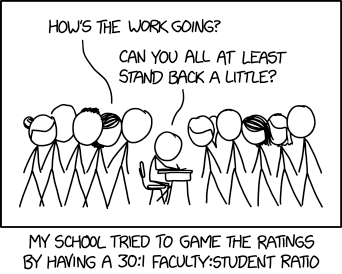
Humorists and Carranza come up with the worst ideas for school
Coordination
There seems to be a complicated protocol for sharing content and information between Blended Learning On-site Teacher and Blended remote Teachers. As in the ICT model, which the DoE abuses, collaborative planning is hard and takes real work. The DoE is allowing half an hour each morning.
What Were Schools Planning?
That’s an interesting question. The models laid out in the Blended document, they were explained, more or less, by Michael Mulgrew to UFT members, as early as the June UFT Town Hall and Delegate Assembly. But the DoE never put anything in writing, and schools were ignoring Mulgrew’s instructions. Many schools were offering live teaching in person, and only asynchronous remotely, without an extra teacher. Your class was going to be your class.
Were There Problems with Schools Plans Before?
Yes. By having teachers plan simultaneously for remote and in-person instruction, the amount of preparation was going through the roof. We already learned from the spring that remote preparation, remote grading, etc, takes much more time than normal teaching. To look at Cathy’s example, from above, she would be preparing five in-person lessons, and five similar lessons, but modified to be delivered remotely. And Cathy was teaching five sections of one class. Most high school teachers teach sections of more than one class. Or maybe Cathy’s school was clever, and told her not to worry about the remote kids, just to assign them textbook reading. Not good.
Did the Unions Agree to This?
Apparently the UFT agreed with the DoE on this. Here is what Carranza wrote to principals:
Dear Principal,
Thank you again for your heroic work during this extraordinary time as we prepare to reopen our school buildings.
I am excited to report that the DOE has reached an agreement with the UFT over work rules for teachers regarding blended and fully remote learning. As we all recognize, a new paradigm for instructional programming is needed to provide students with appropriate learning opportunities under the social distancing parameters and the constraints we face. This new agreement with the UFT addresses key questions about how we can make that paradigm work in practice.
You will find instructional guidance and a preliminary FAQ…
The UFT shared the documents with me, suggesting I share them with my members. I hear the UFT is calling meetings to explain this to Chapter Leaders. Somehow I have not been invited to any such meeting.
The CSA responded to the Mayor and Chancellor differently:
We applaud your administration for its focus on science throughout this pandemic. We ask that you also focus on the math.
Anything Else?
Well, yes, there’s a lot more. That’s for later.
Open Letter: Prioritize Instruction AND Safety
This petition gets it right. Read it here (or read it below, but the numbering is a little weird.) And then sign here.
August 25, 2020
TO: Mayor Bill De Blasio and Chancellor Richard Carranza,
We are two weeks away from the beginning of the school year and the DOE has yet to provide clear actionable support for instructional planning and programming for the hybrid and remote classroom models. Instruction, the engine of the classroom, has been overlooked, and overshadowed by the daunting task of creating protocols for physically returning to school buildings. What has been promised to families and paraded before the media is not possible to enact. I am a high school teacher with 20 years of classroom experience. I want to go back to my building and teach. But we are not prepared. Opening the school year now, using the Chancellor’s plan, means going back with inadequate staffing for both models, which will result in fragmented lessons, teacher burnout and diminished learning for all students. We urge the Mayor and the Chancellor to open schools remotely for the first semester. Allow teachers the time to focus on developing quality online instruction first. Then when it is safe, and we have developed a tenable plan, we can go back to our buildings for in-person instruction.
-
- Schools have not received the guidance or programming support needed to create a coherent plan for day-to-day instruction.
- Principals had to choose one of the city’s proposed instructional models before they knew the number of students that would be in full remote. This means that they had to guess how many cohorts they would be programming and choose a model based on this estimate.
- Principals were given no instruction or guidance on how to program staff for these cohorts. For months there has been no guidance from the Chancellor or Central on who would teach the fully remote students. The Chancellor promised parents that, where possible, the remote cohort would be taught by teachers from their child’s school, but he provided no plan to principals for how to do this. There is still no explicit guidance on ICT instruction.
- Principals are told to be creative, yet are given arbitrary parameters that restrict creativity. The message from Central is that the Chancellor wants uniformity. Hence they were discouraged from creating their own model. They cannot get creative with the courses they offer because there has been no word as to whether the State exams will still proceed, and so students must be in those courses and the content cannot be changed. When principals and community members tried to think of other spaces they could use, the city didn’t respond. Only on August 24th, after months of organizing, did the Mayor announce principals could submit a plan for outdoor space, giving them four days to submit, in order to have it approved by September 4th. Remember that the first day of school is September 10th.
- The DOE did not provide explicit guidance for programming until August 24th, less than 48 hours before schools are expected to notify families with their cohort report days.
- Schools have not received the guidance or programming support needed to create a coherent plan for day-to-day instruction.
- Teachers are being set up to do too many jobs with extreme time constraints. As a result the quality of instruction will be compromised and teachers will burn out. Here are some of the expectations for teachers.
- The hybrid model requires that teachers spend their workday teaching in-person, but students spend the majority of their learning online. Students are in the building two days a week, but learning online the rest of the week. The teacher will be unable to provide live instruction or support, because they will be teaching the other rotating cohorts that are in the building. It is physically impossible to be in two different places at the same time. The lack of coherence in programming will result in lack of coherence in instruction.
- The hybrid cohorts rotate, so teachers must plan for and help students keep track of rotating schedules, rotating assignments, and rotating deadlines. The rotating cohort means that the instruction and support teachers provide must rotate also. So a teacher must plan to teach Cohort A an introductory lesson, but the following day when they are teaching that same lesson to Cohort B, they must also be providing instruction and support to Cohort A to move on. Then when they are teaching Cohort C in-person, they must also continue monitoring the progress, and providing feedback and support to Cohort A, and, at a different checkpoint, to Cohort B. For teachers and students, a lot of their work time will be spent simply deciphering a complex schedule. This time will come at the cost of instruction.
- In addition to teaching the hybrid cohorts that are online and live, teachers are ALSO teaching the fully remote cohort. This cohort will need a separate curriculum that allows for different pacing of instruction to devote more time for teachers to build trust and get to know students individually in the remote setting. This cohort may account for 40% of a teacher’s roster. Last semester taught us how much work it takes to keep students engaged, supported, and accountable to a community in the remote model. Yet, this is being tacked on to the teacher’s already very full workload.
- Teachers have professional responsibilities outside of developing and delivering instruction. Some of these include department meetings, grade team meetings, staff meetings, professional development, and parent outreach. Yet there is no time provided in the schedule. Instead, teachers are supposed to find time. This will come at the cost of instruction.
- The sample teacher schedule that the DOE has released does not reflect the professional requirements of educators. Parceling out times such as 30 mins in the morning for collaboration, and 20 minutes in the afternoon for parent outreach is a willful misunderstanding of the work that goes into educating students.
- The current plan does not meet the academic or emotional needs of students.
- Teachers will have less time to develop high-quality instruction, which will exacerbate existing inequities. Parents of affluent means are already pulling together to supplement their children’s learning by hiring tutors and enrolling their children in external programs. Students from lower-income families, primarily our BIPOC students, cannot afford to do so, widening achievement gaps.
- Teachers will have less time to provide one on one feedback, less time to read IEPs, less time to differentiate instruction, less time to get to know students individually, causing all students to suffer, especially our students with special needs and MLLs.
- Programs do not support trauma informed practice. Overly complex and inconsistent schedules will be confusing for families and students, and especially challenging for our students with special needs and ELLs. In the fully remote model last semester, teachers were able to build structure and consistency for most students, and help them manage and organize their time to work independently. By fragmenting our time with the proposed models, these supports will be reduced dramatically and could be triggering for students experiencing trauma from the pandemic.
- With the in-person restrictions, we can provide just as much support remotely. It is misguided to imagine that in-person socially distanced instruction will be more culturally responsive, engaging, or robust. With in-person instruction there won’t be group work, intimate reading groups, or face to face conferences. In the hybrid model, students in the building will still be required to work online, because teachers cannot approach them physically to give them feedback on their work. Teacher feedback will still most likely happen through a screen.
We all want students to safely return to the building and for classes to meet the needs of all learners. But we cannot wish it into reality. We are not prepared, because neither the Mayor nor the Chancellor has given us the support or resources to prepare. We are asking you to respect our professional expertise and listen to us.
The current plan for opening is one of confusion and chaos. Instead of stretching teachers impossibly thin and diluting instruction for all, we should invest in remote learning, for the safety of the community, and to enable teachers to meet the academic needs of all our students. The movement forward must be centered around safety AND instruction. Our students must come first. Please help us put them first!
Signed,
Sarah Finucane, English Teacher, Department Chair – The Urban Assembly School for Law and Justice
How should we talk to people who are afraid?
UFT members have begun to talk about job actions, especially after Michael Mulgrew mentioned them on tv.
There are people who are excited – I don’t get that. Job actions are last resorts. They mean that all other means have broken down, and that something is very wrong. And yes, today something is very wrong.
There are people who are expressing reluctant support for what is necessary. Put me in that camp. In fact, subdivide that camp into those who will do whatever Mulgrew recommends (not me), and those who are pro-union, but have a healthy distrust of the leadership. Here’s something I put on social media:
Many of you know I take issue with the UFT leadership, strategies, priorities, how the union is run. I talk about those things to push the union to be better. But if we take action, we all take action. This is not anonymous. The pledge has to be open. If we go out, we all go out together.
But then there are people who are scared. People who are expressing doubts. Even people openly contemplating not following the union’s lead if there is a job action.
I have seen people called names for this, called scabs. Accused of putting the rest of us at risk. And that is completely wrong. It is two weeks away. People are expressing doubt, not crossing picket lines.
Two questions: Who is expressing doubt? What should our response be?
Who
- There are untenured teachers afraid of being fired.
- There are teachers who live paycheck to paycheck, terrified of not being able to pay bills.
- There are teachers who have no idea what a union is, a byproduct of the decline of unions in the US, and the non-existence of the UFT in some schools. This has been a crisis since the day I started blogging, a crisis of weak chapters.
- There are teachers who hate unions, but not so many teachers are like that.
- There are teachers who believe that there is no risk to opening schools. I guess they survived the choloroquine and ingesting bleach, because they must still exist.
Especially the first three groups, which are by far the largest, we need to speak with. We need to explain. We need to change their minds.
How
- Open discussion. It is okay to be afraid. Every sane person feels at least some nervousness about what comes next.
- Acknowledge that the fear is legitimate. Losing a paycheck can be hard.
- Not knowing what comes next is scary.
- Emphasize the danger that reopening poses to all of us, all of our students, and to the entire City.
- Talk about solidarity. Talk about standing for each other.
- Let the nervous person speak.
- Review history. How have unions protected vulnerable members in past strikes. How has this union protected vulnerable members.
- Admit uncertainty where it exists. Being a know-it-all is bad. Being a know-it-all when the people around you can tell that you do not know it all can be damaging to the point of view you are trying to represent.
- Answer questions.
- Don’t answer questions when you don’t know the answer.
- Be patient.
And
Remember, the person can be wrong today. Our goal is to change their mind, not belittle them. And we change minds by engaging in thoughtful conversation, not by bullying.
Open discussion MUST continue in all chapters and at all levels of the UFT, even after this crisis passes.
A culture that believes that information and instructions flow in one direction, from the top down, is destructive to our union. We would be in a much stronger position today if that culture did not infest our organization.
NYC is not ready to open schools – It’s not just about testing
Mayor de Blasio insists schools will open for students September 10.
The UFT says not so fast.
The CSA (principals union) has called for a remote opening.
The UFT wants to open, but only if a safety checklist gets met.
Mulgrew:
We have a responsibility to try to reopen school buildings because the infection rate in New York City is so low.
OK, but…
I mean I would rather teach in a classroom than in a Zoom. It’s not even a close call. Face to face teaching is actual teaching. Zoom is a pale imitation.
But a “responsibility to reopen”? I don’t know. I think we met the “responsibility to try” and it didn’t work.
We had a “responsibility to try”, we did try, and it did not work.
There are limits. When the UFT proposed “blended learning” it sounded tricky. After working with schedules for weeks, it was pretty clearly a mess. I am talking about programmers, schedulers. Not politicians. Not union officials.
We tried. Blended will not work.
Today? Blended learning creates more questions than answers. Who is teaching the students when they are at home? How do we maintain continuity if different parts (cohorts) in the same class get different in-person lessons? How do we maintain similar content for some classes that are occasionally in person (blended) and some that are fully remote? How do we prepare lessons that are remote for some students and in person for others?
These questions are exhausting. All-remote in the Spring was exhausting for teachers. Some nearly collapsed. But this intricate dance will be far more taxing. I’m seeing bad signs that the actual amount of preparation necessary (hours, not number of classes) will go through the roof, as many teachers will have to nearly double their preparation.
How much content are we teaching? We need an answer for either blended, or for remote. Although blended is a bigger concern, because we will probably get less done.
What happened to State 3 – 8 testing for 2020-21? To the regents? To the AP exams? How are we planning without knowing those answers?
Lunch was a problem. Someone proposed “Instructional Lunch”. Having kids remove masks, in the same classroom that everyone will be in the rest of the day, and eat. And, we hope, they will not talk. How is that safe?
We tried. Lunch will not work.
“Each school community knows its own school best.”
Planning was devolved to 1800+ individual schools, individual principals. Every aspect of planning was devolved. DoE Central retained the right to say no, but did not retain any planning obligations. They did retain obligations to deal with ventilation and supply PPE – two promises that as of today are unkept.
Detailed entry plans are lacking. Schedules do not specify who is dealing with blended kids on remote days. Teachers do not have space to do their remote teaching while in school. There are not even plans to pick up lunch trash. There are not plans to deal with kids who come on the wrong day. There are not plans to ensure hands are frequently cleaned. There are not plans for social distancing in stairwells, hallways, bathrooms… There are not plans for dismissal.
We tried. Leaving 1800 principals to make 1800 plans will not work.
So Mulgrew has his Harvard Checklist. It’s all good stuff. I don’t think the mayor can meet it, even if he tried, in just two weeks.
And if the City does not do the stuff on Mulgrew’s Harvard Checklist to make the school’s safe, I will support the measures the UFT proposes, and urge others to do so. If we take action, we take action together. Including, if we go out, we go out together.
But we have been trying on safety. It does not look like the Mayor will make the schools safe.
We have been trying. As of today the Mayor’s safety plan is not adequate.
But even if the Mayor’s safety plan were adequate:
- Blended will not work.
- Lunch will not work.
- Leaving 1800 principals to make 1800 plans will not work.
“Instructional Lunch” Should be a Deal-Breaker
“Instructional Lunch” is a rally bad idea. It is a huge flaw in the NYC Department of Education’s blended learning plans for September. Students in most schools will not go to a cafeteria (where the whole school would mix, theoretically letting a spread event involved the entire student body). Instead, students will eat lunch in their classrooms while a teacher teaches.
The blended learning plans call for masks – except for lunch. A dozen or so children in a room with an adult will remove masks, and eat lunch. The DoE documents don’t mention that they will eat in silence, but I assume that’s because they want to make the principals the bad guys.
Here’s Mulgrew’s description (from an August 8 email to members):
Instructional lunch for students: Using the Breakfast in the Classroom model from elementary schools, many students will have instructional lunches to maximize their class time and minimize their contact with children outside their own class groups. Since not all types of instruction can happen during student lunch, school communities should discuss the types of instruction that can effectively happen during this time. You will still have a duty-free lunch, so in many cases a different teacher will teach your students during the instructional lunch period.
Imagine being the cluster teacher assigned to cover “Instructional Lunch” all day.
Later clarification has the teacher in the back of the room, looking at the students’ backs as they eat.
What is the motivation for “Instructional Lunch”?
The Mayor and Chancellor desperately want to open schools. Hell, most teachers would rather teach in person. Damn straight I would.
So they say, schools will open, but kids have to eat. And they can’t eat in the cafeteria, so they have to eat in the classroom.
Which is where smart people should be saying “slow down there Bill. If kids have to eat in the classroom, then we need to rethink this.” But nope, the smart people weren’t there. If kids have to eat, it has to be in the classroom.
And then they threw us a bone – “But we can make lunch a class, and shorten the school day – teachers can get out half an hour early.” Someone thought teachers would gladly risk our safety, the safety of our students, of our colleagues, if only we were allowed to leave school thirty minutes early. Why would they think that? It’s insulting that anyone thought we were that dumb.
How did the plan for “instructional lunch” develop?
In the DoE’s June 9 Powerpoint “SCHOOL BUILDING RE-OPENING PRELIMINARY PLANNING OVERVIEW“, they envisioned closing common areas.
In the July 2 “SCHOOL BUILDING RE-OPENING BRIEFING” (which I wrote about here) Carranza first floats “Consider holding lunch in classrooms to minimize interaction between groups of students. We will be soliciting feedback on how to best structure lunch planning..”
On July 31 the DoE published Instructional Principles & Programming Guidance which were really, really bad, and included the “Instructional Lunch” for the first time. The UFT may have been part of the discussion – if so this was a pretty bad mistake – we have to talk about that, but at another time.
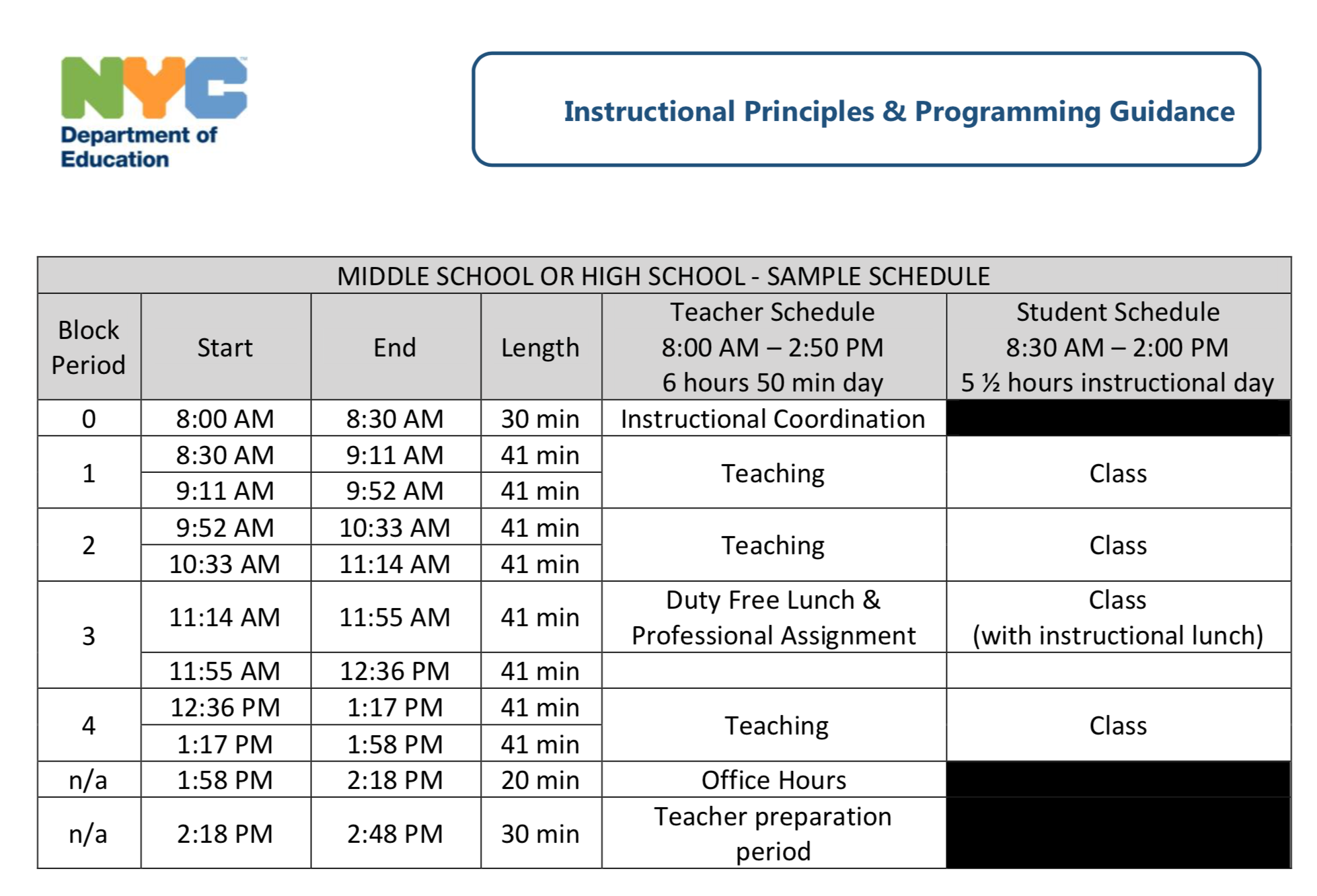
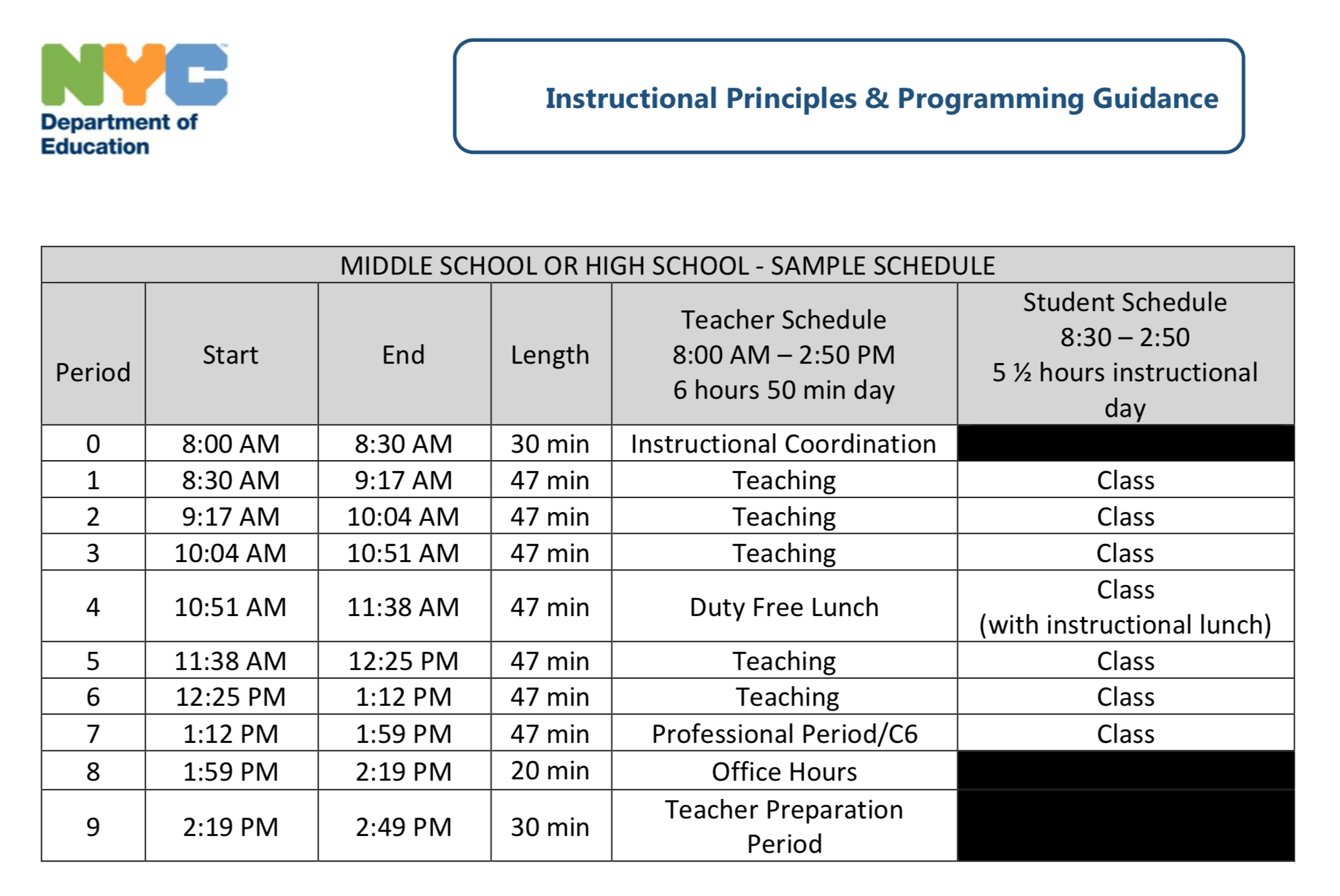
How does “Instructional Lunch” compromise safety?
As people eat, mask off, they generate droplets and aerosols. Droplets may spread to neighbors. Aerosols may remain in the air for a prolonged period, and reach people seated further away. Given enough time, and airflow, there’s no reason to believe that aerosols in on corner of a classroom can’t reach any other corner.
And time works against us. After lunch we remain in the room, and continue instruction. Pathogens in the air linger. The longer the exposure, the greater chance of infection. Unlike a restaurant, where patrons are one-hour-and-out, students and teachers stay in the room the entire day. And even if the class’ teacher is not present during lunch – another teacher is, and at immediate risk. And the class’ teacher returns, and gets to share the air for the rest of the day.
I’m assuming, for the moment, that no one except the instructor (who presumably is masked) speaks during lunch. Speaking adds velocity to droplets and aerosols, helping them travel further, faster, and increasing the level of risk. And I do not believe that it is reasonable to assume that the majority of school children will be able to remain silent during lunch – traditionally the most social time of the entire school day.
Is “Instructional Lunch” even practical?
How would teaching look? What would we teach? What subjects lend themselves to being taught to children who are chewing in silence, looking away from the speaker? I’m not waiting for an answer.
Are there alternatives to “Instructional Lunch”?
Yes. We could stay all-remote. Or, if we are teaching in person, in the school building, we could shorten the day so that grab and go lunches were distributed to students as they leave the school building. And there might be more ideas.
We need to say “no” to “Instructional Lunch”
Just to be clear, the UFT safety demands are perfectly reasonable. Every one of them must be met. Testing and contact tracing and a nurse in every school are vital. But they are not enough.
“No Instructional Lunch, No Classroom Lunch” should be added to Mulgrew’s list. We should not go in while “Instructional Lunch” is still on the table.
Why We Need to Call for “All-Remote” Now
Mulgrew sounded militant Wednesday. Talked about a strike. Made demands about safety. But the message was wrong. By continuing to fight to open schools safely (which might seem reasonable) the UFT leadership is diverting us. We should be leaning, as hard as we can, on de Blasio to open remotely. Everyone, including de Blasio, notices that the UFT has not called for “All-Remote.”
1a. Parents need to know what their schedules will be, where their children will be, and when. A million parents being forced to make personal decisions (remote vs hybrid) is unfair. The City should be creating solutions for New York City’s parents.
1b. Parents need this now, not three weeks from now. The City needs time to create arrangements and options, and time to meet the needs of families.
2a. Teachers need to create plans for their classes. While some schools have managed to create a hybrid plan that makes sense, they are in a tiny minority. Most teachers in the city either do not have a set-up for their class schedule, or have one that does not make sense.
2b. Teachers need to know this now, to allow us three weeks to at least mentally prepare for fully remote planning.
3. In particular, “blended learning” in high schools is a mess; it is an idea conceived (poorly) for elementary schools. It was never going to work in high schools. We don’t need three more weeks to figure that out. We knew it in June. If I teach part of my class Monday, another part Tuesday, another on Wednesday, and the last group on Thursday, what are the kids who are not in class doing while I am teaching? What, am I saying “read section 3.4 and do all the odd numbered questions, we will talk about them in a week? It’s not teaching.
4a. The logistics planning is missing (Morning entry, etc). We are being asked to trust that principals are taking care of it.
4b. Logistics are not included in schools’ plans. If you click on the DoE’s school finder and find a school, you will see their reopening plan. But know what’s missing from those plans? Specifics. And logistics.
5a. Safety. The UFT checklist is good. The call for testing, tracing, seem reasonable. But the UFT is fixated on trying to make schools safe.
5b. By spending the next three weeks fighting to make schools safe, they will either i) cut corners or ii) delay the move to remote, disadvantaging families and teachers.
5bi) The UFT demands do not include doing away with “instructional lunch” – given what we suspect about aerosols, this is a real issue. It is not clear if UFT Safety teams going into buildings are primarily identifying unsafe conditions, or primarily finding ways to say that ventilation can be made ok. This is an issue.
5bii) While the UFT is stuck on trying to make schools safe, teachers wait. Unworkable hybrid plans get rolled out. Families scramble for every other or every third day childcare.
One district after another delays opening, or moves to all-remote. Yesterday Yonkers added itself to that list. NYC has become the outlier. This needs to change, as quickly as possible.
“We want to open, blended, but safe”
and
“We wnt to open remotely”
– are not the same message. We need to dump the first and switch to the right one, today.
No Need to Delay Reopening; Go “All-Remote” instead
Carranza yesterday threatened to delay reopening… but that would put the 180 days at risk.
So why not do what every sensible district is doing? Make the fall term remote.
The 180 days would be safe.
More and more the call is for full remote. At this point the biggest player left to get on board is the UFT, and then we can put serious pressure on the Mayor and Chancellor, like we did in March.
de Blasio is stubborn, but he bends to pressure.
Come on, Mulgrew, get on board.
UFT: Need for a New Course
Since June the UFT leadership’s position has been
- We really want schools open in the Fall
- We think blended learning is the best option for the Fall
- We will not open schools unless we are certain that they are safe.
Let’s grant for the moment, that this may have been reasonable in June. (This is more than generous; there was ample evidence that blended learning would not work, as early as June, certainly not how the DoE was envisioning it.)
In the second half of August, this is no longer reasonable. The new message must be:
- We really wanted schools to open in the Fall
- We looked closely at blended learning
- But the daily logistics will not work
- But the weekly schedules will not work
- But the safety, while there has been progress, is not close to being where it needs to be. Equipment and supplies are missing. Many procedures are not yet in place – and in some cases we don’t have a procedure, or know that we can have one. As issues arise the DoE is making up responses on the fly.
- Today is August 19. It is too late to address these items for a September, and some of them (logistics, schedules) cannot be adequately addressed
- Even the items that could be addressed, our partners at the Department of Education have not been up to the task
Schools, children, parents, teachers – all of us should be planning for a remote term. We can know now what the outline of the fall will look like, and begin filling in details. We can do work to make the fall more successful than the spring was.
The alternative – hanging on for three weeks, then pivoting suddenly to remote – will lead to chaos. It will lead to a repeat of March. It is the last-minute decision making that we can not afford to let happen.
Will the mayor listen to the UFT? In March it took a lot of voices to force de Blasio to change his mind. It took every voice. He must be aware that the UFT has not called for remote for the fall.
The UFT speaking out for remote will not necessarily change de Blasio’s mind. But the absence of the UFT’s voice GUARANTEES that the mayor will stubbornly delay. The UFT needs a new course, today.
Exposure Notification
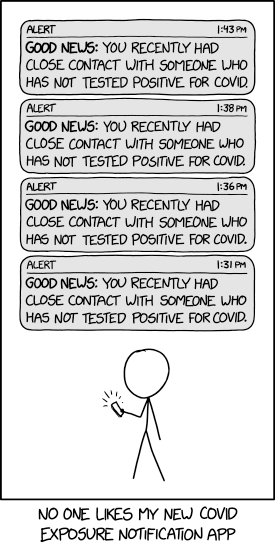
Rating the August 13 UFT Town Hall
Technical – calls seemed to have gone out on time. Some people needed to dial in. The audio quality was fine on my end, though several callers complained about theirs. They had trouble connecting some questioners, and lost at least one partway through the question. I did try pushing the question button, and got silence, not even a “the queue is full” message. Overall the technical side was ok. It was certainly far better than the May DA. Grade: B
Pace – it seemed to me that the amount of light banter (which for people who want to ask questions is frustrating) was reduced from July. Honestly folks, it only makes one or two questions difference, but I get that you want to move ahead. Mulgrew had a longer opening report, but only slightly. My count had the number of questions drop from about 30 to about 25, which makes sense with the slightly longer report. The number of long, rambling answers was about the same, but that may have been intentional. Grade: B+
Clarity – some answers were quite clear, but many were not. There were veiled threats of doom and gloom when there should have been explicit discussion of what the city and state have already proposed. There was a direct question about teaching assignments, asking if we have an agreement in writing. Direct questions from members should have direct answers (even if the answer is “it’s complicated”). There was none. I did not get much clarification on what is actually happening now. The lines between what the UFT thinks should happen, what they’ve raised with the DoE, what they’ve agreed with the DoE – these were all left very fuzzy. There was also some weirdness around lunch – is it instructional, or not? is Mulgrew’s message “things must be safe” or “given that we are going in, this is the best we can do as far as safety”. Not clear, but I think there was a reason. The only thing that was VERY CLEAR: the UFT’s leadership wants schools to open in September if they can be opened safely, but that is not where things are now. Grade: a very generous C
Big Message – This was clear:
the UFT’s leadership wants schools to open in September if they can be opened safely, but that is not where things are now. There was lots of info about how the UFT officers and staff are rushing to address the outstanding safety issues, and making progress, but we are not there.
This was completely the wrong message. Less than one month out, with a host of really serious safety issues unresolved, with scheduling issues unresolved (and probably unsolvable), and with bumbling counterparts in the DoE, the message should have been “It is now clear that we must go fully remote in September. We have changed our approach to get us there, to allow parents to plan for it, and to allow you in the schools to start preparing”. Only the emphasis on safety saves this grade from being lower. Grade: D
Overall: Having the wrong message and not speaking clearly to members are big, big problems. I’m glad the phone lines work. If this were the July Town Hall, it would have gotten a B or B-, but it is August. There are less than four weeks left. This was not ok. Overall Grade: D+/C-
For those of you curious, here are three sets of minutes (I know there are many more floating out there).
UFT Town Hall Minutes
I’ll say something substantive, about a meeting that really was not very. But that’s tomorrow. For now, a friend took notes – and offered them for sharing:
UFT Town Hall Meeting Minutes August 13, 2020
Michael Mulgrew
MULGREW:
- Welcome and thanks. We’re getting into crunch time! GOAL: Little bit longer report, but still majority questions.
- All eyes on schools at all times. Horrors of colleagues in school districts that have no business opening.
- Our mayor seems to be ready to open schools— WE are not ready.
- Spoke to him for the first time since March. Mugrew said we don’t feel safe. We don’t think your plan is workable. We don’t have what you’ve ALREADY agreed to. We will follow CDC guidelines. Mayor put a timeline on principals to pick a schedule.
- Have your CL send your district rep any programs/ schedules that imply a mix of hybrid/ remote scheduling.
- These schedules the DOE put out were more suggestions– not really “agreed upon”.
- Hard to open school on time with this lack of clarity.
- No one is teaching 6 period/ no one is teaching 5 in a row. This all still needs to be worked out.
- We dealt with all the steps since March: to close schools, to get remote learning up and running, we got grade fairness, we dealt with evaluations. Now we are getting medical accommodations!
- In APRIL, we said: if you want to open safely in September, we have to start planning together NOW. He ignored it in May and June. Only in July did he begin to engage.
- CSA President: This isn’t going to work. We must make sure the mayor doesn’t try to blame us or pit parents against teachers. CSA and UFT agree: we cannot open NYC schools safely on September 10.
- Mayoral “dog and pony show” with the press, highlighting one school with appropriate PPE.
- Still decisions to be made but WE WILL NOT BE PUT IN HARM’S WAY AGAIN.
- NYC in a much different place. Our daily infection rates are less than 1%. Many graphs we see with high numbers are about percentage positive rates– we ARE close to the 1% daily infection rates.
- Parents are our allies/ families have to deal with the dilemma– do I send my child to school, can I afford my house? Do I know my child is safe?
- We as teachers are in a difficult dilemma. What if the mayor insists we go in when it isn’t safe?
- SOLUTION: Push the city to do what no other school district has done, hold their feet to the fire. Mr. Mayor, you want your schools open? You need to do YOUR job!
- Final decision will not be made until right before the beginning of the school year.
- 100 trained people to do “Covid” visits. Will check ventilation/ PPE/ Signage/ Custodians/ equipment and personnel (not in place in most schools) Will return to the schools in the couple of weeks before schools open and take appropriate measures to make sure the city cannot open them up.
- Must be smarter then them and do our work better than them.
- Can we open? No, I do not believe that. It’s all about the evidence. We have to show WHY it isn’t so. And the mayor must be able to show why it IS SAFE enough to open.
- Tough problems: HEROES ACT/ stimulus package has completely imploded. Without this $$, we don’t believe we can afford to open safely. City is preparing departments for layoffs.
- Other avenues to pursue. We don’t want any of our members to face being laid off. Taking care of our profession and our livelihood. Being put in jeopardy.
- It is NOT hopeless though. We have a plan. Working together, working with Albany, working on budgets, will execute quickly since we have a little time (October re: budget stuff) Multiple crises at a time!
- Must communicate and stick together! What we see in the media is insane!
- Our national union is in court today over our 2000 colleagues in quarantine in Florida; similar in GA. Huge positivity rates different than us.
- Could we be breaking the Taylor Law? Maybe. I’ll make sure everyone knows the ramifications. Also have legal avenues to pursue. Taylor Law makes it illegal to strike (unless we can prove “clear and present danger” to open every school. If we do this, employees that participate can receive disciplinary actions or financial penalties. Mulgrew has penalties, he can go to jail, but we have to decide if this is what we need to do.
- OUR medical professionals are telling us we CAN do this with the rates we have, but we have to be SO CAREFUL. We still don’t have agreement on a testing protocol (then must be customized for every building, which is why Sept. 10 is feasible. If you’re testing, screening, distancing, PPE, you may/ would be able to pull this off.
- Mayor says we have a lot of time? We have a month and a LOT to do.
- Mayor says today there WILL be a nurse in every building.
- Serving lunch in classrooms is different from restaurants how? All people, students and teachers facing the same direction– not satisfied with this answer.
- Another Town Hall in a couple of weeks.
- 2 great challenges: SAFETY AND LIVELIHOOD. Not opening schools without safety. Without additional funding, layoffs could come.
- We will make decisions at the appropriate time. We are going to take care of each other.
- Parents will listen to US– the teachers that they trust, not the mayor, not the chancellor. We can’t break that trust with them.
- I guarantee you that all decisions are being made from independent doctors advising us. Only school district who got through the last recession without a layoff.
- Understands the anger/ fear/ anxiety. Will meet again in a couple of weeks.
Q&A:
- Q: Medical accommodation: haven’t received word on if it is approved. Ones who have gotten approval indicate it said through Dec. 31, 2020. What happens after?
- A: It’s a legal thing: pushed them to change the process for medical accommodations to speed it up. Lawyers said, “people don’t have medical accommodations forever, so they should reapply”. We’re pushing back as a waste of time, regardless of whether we are remote or in the buildings. We will figure this out.
- Q: REMOTE LEARNING: don’t know what this looks like. Will remote teachers with medical accommodations have a larger remote load? Being on a camera? How will grading work?
- A: 30% of students have opted out. Only about 15% teachers have applied for medical accommodations. Yes,remote teachers will need to stream live for their students but will not attempt to replicate a normal school day. We have a teacher shortage PLUS layoffs threatened. We don’t have enough teachers to staff both remote and hybrid. Will adhere to traditional class size requirements with remote.
- Q: Ventilation/ filtration: my bldg’s report was 3 (fair), too old for HVAC system. Which forms say where we are at? How will info be made public? How will we handle it if it isn’t safe?
- MANY schools with old and poor ventilation systems. What was acceptable pre-Covid is clearly not acceptable now. Many schools will not be able to open. Because these are safety reports, they must be transparent– why we can go into schools to check things out. Don’t need and HVAC system to have proper ventilation: windows better. Don’t think because you have an AC blowing cold air in the room that your room is properly ventilatedL you need outside air. Could lead to big fights.
- Q: Mayor said by October 1, 200,000 city workers could lose their jobs. Does this include us?
- A: Yes, we’re in that pot. Our economy has been decimated by the virus. Closed establishment means they are not paying taxes. We’re facing a huge deficit. Had a surplus before but things are not looking good now without federal stimulus.
- Q: How are we going to prevent kids from using their masks properly/ maintaining social distance, etc?
- A: An agreement: (we have to train them first how to follow these new rules, IF we get to open schools; these new procedures). If they can’t follow the safety procedures, they have to go home. Simple– not messing around. The more challenging a situation, the more PPE needed. Our own nurses will do training around PPE, if we go back live. Shields might be more common than we thought; all teachers might need them.
- Q: What happens when parents don’t come to pick up sick children or children who can’t follow the safety protocols?
- A: Not a behavioral issue but a safety issue. Still working out protocols. Kid might have to be put in a “save” or “isolation” room when kids are sick or being problematic in terms of safety. We have to push it with the DOE to tell the parent– they need to follow the rules or they can’t be in school. DOE has plenty of employees, let them deal with it, especially since Tweed members with teaching certificates can be compelled into teaching service.
- Q: Can we have a buy-out to mitigate layoffs?
- A: We have requested and had conversations with the municipal labor council about this. Talks are progressing. First, if we open, we want to use this “other avenue” for funding. City is going to ask for things back– we will NOT give things back, with all the new and extra work we do. Figure out a new funding source, and at the same time, get to the place where a buyout can be favorable. Our retirement chapters have found solutions that are acceptable, pension-wise, so we will see what happens. If we do this work, we can combat layoffs, and also hire new teachers with buyouts.
- Q: Blended learning: in person teacher will not do remote learning? Principal seems to say you must teach live– understaffed school… might have to bridge classes of different grades which will require double planning? We need some ammo against principal about what the union has agreed to in terms of contractual obligations. Is there something in writing?
- A: Hasn’t even been brought up. Don’t want to entertain it. We’re not trying to recreate the school day, but we will have synchronous instruction. Live streaming? Many Ps being pressed by Superintendents to do this. If schools can figure out a way to do this where people are ok, and it works, maybe. Live streaming lessons with students and a camera is not super effective–you can’t get much worse than that. A teacher CANNOT do both remote and in person. There might be teachers who will go into the building to “tape” their lessons. Many asynchronous “taped” lessons can be super effective. Live streaming is not ok UNLESS teacher says it’s ok! (It’s not ok!)
- Q: Got a denial for medical accommodation. Said there wasn’t a “diagnosis” listed, even though there was. Some discrepancies in the way different applications are being handled.
- A: Send UFT an email immediately. The DOE used to take months to process a small number of medical accommodations– and now they are processing SO MANY. An online form to process issues with this.
- Q: Concerned about instructional lunch (HS speech teacher). “Facing the other way” is not a good way to avoid particle spread. If asked to teach during lunch, can I decline if I am not comfortable? (call dropped)
- A: With a mask, eyeballs are still open. If people are eating maskless, they NEED to have a shield to protect their eyes as well. Staff have to be able to decline if they don’t feel comfortable. If you move kids to a DIFFERENT place for lunch, you’ll need even MORE staff to monitor/ be put at risk. Instructional lunches can help speed up their school day so we can all spend as little time as possible in the building. That’s why the prep period is at the end of the day, so we can prep wherever we need.
- Q: Art teacher. For clusters: how many cohorts are we able to come into contact with in a day or in a week? P mentioned cluster teachers doing both in-person AND remote, and the in-person could be instructional lunch.
- A: For you as a cluster teacher, working through these issues. Take issue when mayor says everyone will be in a POD: this isn’t something that is feasible in NYC. This is why testing/tracing/ PPE is essential. As an art teacher, how do you deal with materials? Do you have access to an ionizer so every supply you use can be sanitized? Need to work through these details. Is there a way you could do a combination of in person and remote? MAYBE, if you don’t have a full in-person schedule.. For most, it’s all one or all the other.
- Q: CAR days if we have to quarantine?
- A: Nope, answered this, they do not come out of your CAR.
- Q: How are we as educators going to be able to help our own teachers in remote learning if their schedule doesn’t match up with ours?
- A: We should be able to find ways to take care of our own staffs as schools. Mayor announced a few weeks ago the idea of childcare for the city of NYC. If schools are open, we are the essential workers needing childcare. Haven’t heard much detail since then about it, but need to ratchet up this line of questioning.
- Q: Social worker:we travel to various DOE and community programs every day. Some have up to 13 locations. Is it safe for this to happen? Will schools even want to welcome this? When we ARE in schools we are in classrooms. Is this feasible?
- A: As an itinerant, we have asked/ DOE said they would limit the number of sites per person and have their own cache of PPE. Will come up with a plan to ensure how this works because it is risky, bringing in anyone from the outside in terms of contact tracing.
- Q:Told in spring that we had to work through spring break. Will be compensated whenever, that’s fine. Now they are saying we are all ready to start. WHERE IS THE CALENDAR?? Waiting until after they open up the building, and then there will be no holidays and breaks. This makes no sense; we’ve worked harder in the last 6 months than we ever have. Are they hiding the calendar because there are no days off?
- A: I don’t believe we are going to be ready. Mayor has made a mistake by not engaging earlier. You have to put out the calendar. “We might have to change it”… no. You’re not changing passover, you’re not changing Kwanzaa, the dates are the dates. WHat happened in the spring was horrible, especially the religious observances. We were in the midst of his pandemic where rates were over 20%– imagine if we opened up then– this is what is happening is FL. The UFT does not submit to the same bureaucracy as the DOE. We do NOT trust the DOE.
- Q: Partner is a teacher that was granted a medical accommodation. What is the story with someone who LIVES with an immunocompromised person/ medical accommodation?
- A: Don’t take a leave yet! No promises– but the number of students choosing remote is huge and will continue to go up as other states open to crazy and horrible stories. More families WILL choose remote. We are thinking about how to handle people who are primary care-givers who live with people with medical conditions to be able to teach remotely. Do we have the legal rights? Maybe not, but we are dealing with HUMANITY. We want to see what can be done to accommodate for this.
- Q: Federal IEP compliance; students mandated for ICT compliance/ ratios:
- A: DeVos doesn’t care if your kid has an IEP. We in NY are going to try to meet all IEP needs. An ICT teacher has to have access to both a general education and special education teacher. PROBLEM; don’t have enough SPED teachers already in order to be able to meet their needs. Do NOT let principals split your class into IEP/ non. Is there a SPED remote teacher that can pair with a gen ed in person? Kids must have access to both.
- Q: Paraprofessionals: how will they be impacted by how many students needs support plus contractual obligations? What if the kid you are assigned is remote?
- A: Working on these issues. Trying to ensure no one loses their jobs. Plenty to do. Paras picked up so much work and found so many ways to support students and teachers.
- Q: CAR days and self-quarantining: what if you are exposed individually by someone outside the classroom or are just not feeling well?
- A: If the quarantine is due to Covid, CAR days are not affected. If a contact tracer has put you into quarantine, it won’t come out of your CAR. If you’re sick, it just has to come out of your days. Teachers in GA have to use their own sick days if you are in quarantine, and if they run out of days, they lose pay. Disgusting ways teachers are being treated in other places.
- Q: D75. Face shields for everyone? Can teach kids to wear masks. My school with severe autism and masks might directly interfere with their disability. Is there greater PPE available for us?
- A: We have had no decisions with the DOE about D75, because the mayor drug his feet on talking about the nuances of our schools. Our medical professionals understand these issues and know what kinds of PPE are needed. There is NO way to go back into these schools safely without MUCH PPE; these parents know these students are NOT doing well in remote learning. This is all much more expensive and higher volumes of PPE. We have to go into schools and know what kinds of safety precautions each school needs– no such thing as a cookie cutter school, especially D75.
- Q: Teacher evaluations? Hearing from my P we will be having 2 evaluations.
- A: Don’t know. We’re busy figuring out how we can open safely. If we open, we will have to figure this out. We have no agreement on ANY evaluations– our contractual agreements are completely invalid in this situation.
- Q: With the number of children remote/ in person/ parents opting in/ opting out/ different times to opt in? Changes in rosters and such?
- A: Hasn’t been clear guidance even to principals now on the 13th of August. Yet, they were told to “program”. We usually have initial programming done in June, preferences, et cet. Everyone is under a lot of pressure. If principals get crazy on us, we have to push back. Parents can’t “opt back in” until Thanksgiving– can’t have too many people popping in and out of remote/ in person at random. UFT doing everything we can to tamp this down. We are still saying IT IS NOT SAFE. He said 25% chance, and it gets worse each day that goes by without clarity. Good meeting with CSA. Got the nurses we have needed for years today. Going to get uglier as we get closer because that’s the only way stuff can really get done.
- Q: Family member is hesitating to apply for accommodation as it is her tenure year. Might get assigned a different school, and if she’s not in the building, might it affect her tenure?
- A: No way we can solve all the problems. Don’t want to have teachers serving students in another building. We will make sure no harm comes to a teacher (ie an untenured teacher denied tenure due to a medical accommodation).
- Q: Last Q: If we go all remote, is there any training to guarantee continuity across the city? Any word on retro?
- A: We will have to coordinate together and have to have an extended period of training for any scenario. All teachers MUST have coordination with their colleagues before we teach. Schools MUST have a standardized curriculum– might be multiple teachers teaching the same content so we all have to be on the same page. All schools must have educational platforms with scopes and sequences up and running– we’ve got people that have been working on this since May! Our retro and our raise? Let’s put it all together. City will come to us to ask to give stuff back– we expect that we will. We have another plan, another way to try to solve that problem. Why would we, after everything we’ve been through, what we are walking into in September, we do not give them a DIME back. If you wanna change my mind, I’ll listen. We’ve worked too hard for this– it’s OUR school system, not the mayors. WE know their families. We will continue to go above and beyond, but we do not work for free. We are the ones who kept our school systems going and we are going to keep it going and keep it safe. More challenges, but we will get through this as we take care of our students and each other. Thank you and please send in your questions. Get some relaxation in because come the end of this month? Buckle up.
Two Course Adjustments for the UFT
I disagree with the union leadership, on any number of things. I’m pro-union. And I believe that the leadership can sometimes adjust course. So I am asking today about two course adjustments, confident that the vast majority of UFT members would like to see them happen.
Can we say “We do not think blended learning will work”?
I thought from June that blended learning was a mistake. I don’t think it will work in many schools. It was absolutely not designed for high schools. When I met with some teachers and union officials, including Mulgrew, I said this. They did not agree with me. Mulgrew thought we should leave some grades at home, or some classes at home (not ok, as it turns out, with Carranza), but they would not say “Blended won’t work.”
In fact, lo and behold, Mulgrew sent out an email to members on July 8:
We believe a blended learning model, with students in class on some days and remote on others, balances our safety concerns with the need to bring students back.
So we disagreed. But now, with five more weeks of evidence of DoE inflexibility and incompetence and refusal to collaborate, can we say that blended learning will not work for reopening this fall?
It is possible to say that we wanted blended to work, but that it was just not possible in this timeframe, with this administration. See, not so hard.
Can we say “Schools should not open for in-person instruction in September?
Yesterday a group of principals in District 15 came out against a September 8 opening. They were looking for a transition. Then the CSA issued a statement, calling for schools not to open.
A more realistic, phased-in approach would instead welcome students for in-person learning toward the end of September, following a fully remote start to the year.
Mulgrew appeared to support the principals. But take a look at his statement:
The UFT has said repeatedly that we cannot re-open schools unless they are safe for students and staff. The principals union — whose members will be responsible for enforcing coronavirus safety protocols in the schools — now believes that school buildings will not be ready to open in September. We need both safety and sanity in this crisis. Will any parents be willing to put their children in a school whose principal believes the building is not ready to open because it is not safe?
Notice what he does not say? He doesn’t say “We should not open schools September 10.” If it is an omission, that will be easy to correct. If it is a tactical maneuver, it’s time to adjust that course.
It is possible to say that we wanted schools to open, but that it is not possible in this timeframe, with this administration. See, not so hard.


